

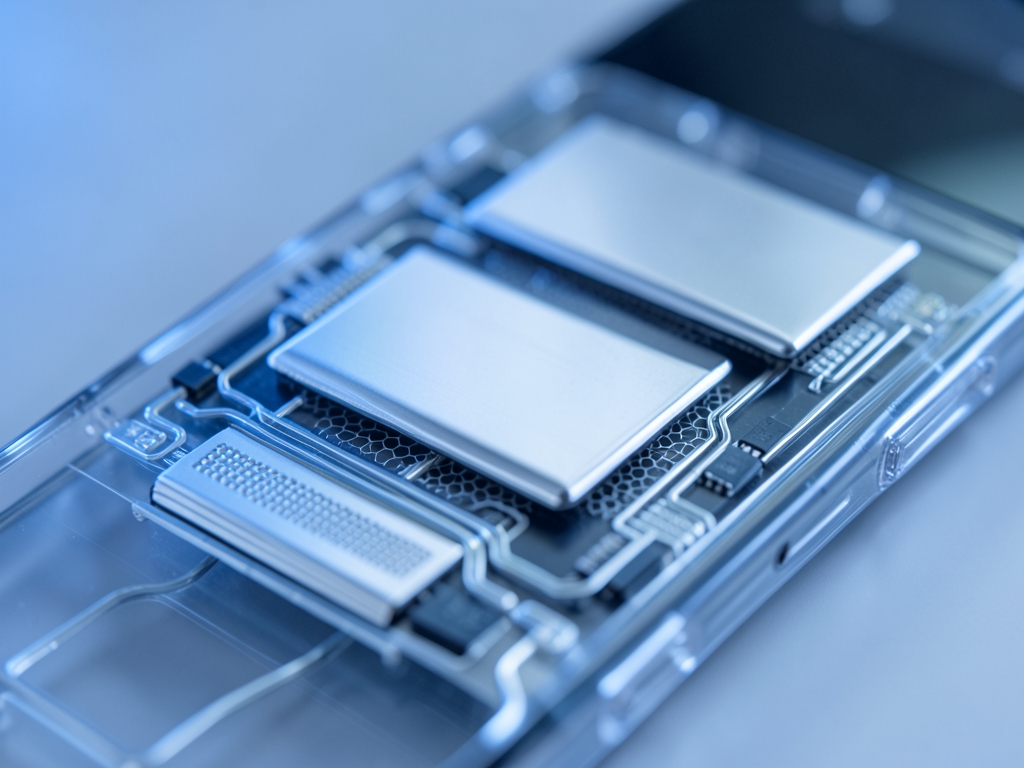
The pursuit of longer-lasting, safer, and faster-charging mobile power sources has driven decades of materials science research. For the past twenty-five years, conventional lithium-ion batteries featuring liquid organic electrolytes have served as the undisputed workhorses of the consumer electronics industry. While these liquid-based cells have successfully powered successive generations of increasingly capable mobile devices, they face fundamental chemical and physical limitations. Energy density gains have slowed down significantly, manufacturing costs for high-capacity cells remain high, and safety concerns regarding thermal runaway continue to present challenges for device engineers. In response to these enduring constraints, major device manufacturers, independent research institutions, and specialized chemical firms have accelerated the development of solid-state battery technology for integration into commercial smartphones.
Recent breakthroughs in solid-state chemistry and manufacturing processes indicate that the transition from liquid electrolytes to solid ionic conductors is moving out of the laboratory and toward commercial viability. Industry announcements from prominent mobile processors and cell manufacturers highlight substantial progress in addressing long-standing technical hurdles, such as interfacial resistance between solid layers and high-volume production yields. This comprehensive examination explores the core engineering principles behind solid-state battery integration, evaluates recent industry milestones, analyzes the practical impacts on future smartphone designs, and outlines the timeline for consumer availability across global markets.
Understanding the Core Limitations of Liquid Lithium-Ion Cells
To fully appreciate the significance of solid-state battery developments, it is essential to examine the operational mechanics and inherent vulnerabilities of traditional lithium-ion batteries. A standard lithium-ion cell comprises a positive electrode (cathode), a negative electrode (anode), a porous polymer separator, and a liquid organic electrolyte solution. During the charging cycle, lithium ions travel through the liquid electrolyte from the cathode to the anode. During discharge, the reverse process occurs, releasing electrical energy to power the smartphone's processor, display, and cellular transceivers.
Despite their widespread adoption, liquid electrolytes introduce several critical engineering compromises:
- Thermal Vulnerability: Organic liquid electrolytes are highly flammable. When a battery suffers physical puncture, internal manufacturing defects, or severe electrical overcharging, localized heating can trigger an uncontrolled exothermic reaction known as thermal runaway.
- Volume Expansion and Contraction: During rapid charging and heavy discharge cycles, anode materials—particularly those utilizing high-capacity silicon or pure lithium metal—undergo significant volumetric changes. This mechanical stress causes microscopic cracking and degradation over time.
- Dendrite Formation: Over repeated charge cycles, microscopic metallic lithium fibers called dendrites can form on the anode surface. If these dendrites pierce the porous polymer separator, they cause an internal short circuit, leading to catastrophic failure.
- Energy Density Plateaus: Liquid systems require heavy containment packaging, safety vents, and thick separators to mitigate short-circuit risks, which imposes strict upper limits on overall gravimetric and volumetric energy density.
Solid-state batteries replace the volatile liquid electrolyte and polymer separator with a solid ionic conductor. This solid matrix can be composed of ceramic oxides, glassy sulfides, or specialized solid polymers. By eliminating flammable liquids, engineers can radically redesign mobile power storage architectures, unlocking unprecedented performance metrics for next-generation mobile devices.
Recent Research Milestones and Material Science Advancements
The journey from concept to commercial product has been protracted due to extreme manufacturing complexities. For many years, solid-state cells suffered from high internal resistance at the boundaries between solid components, which severely limited charge and discharge speeds. However, recent developments published by international materials science groups have demonstrated viable pathways around these obstacles.
Recent innovations focus primarily on three distinct classes of solid electrolytes:
- Sulfide-Based Electrolytes: These materials exhibit exceptionally high ionic conductivity at room temperature, often matching or exceeding the conductivity of traditional liquid electrolytes. Recent chemical stabilization techniques have successfully reduced moisture reactivity, making large-scale factory production more feasible.
- Oxide-Based Electrolytes: Offering superior thermal stability and structural rigidity, oxide ceramics provide an exceptional physical barrier against lithium dendrite penetration. Recent thin-film manufacturing breakthroughs have reduced internal resistance significantly.
- Solid Polymer Electrolytes: By blending ion-conducting polymers with ceramic nanoparticles, researchers have developed flexible composite separators that can withstand the mechanical flexing inherent in modern foldable and ultra-thin smartphone designs.
Info! Recent manufacturing trials have demonstrated that roll-to-roll processing techniques, traditionally used in capacitor production, can be adapted for solid-state electrolyte layers, potentially lowering production costs to parity with conventional liquid cells within the decade.
Furthermore, the integration of high-purity lithium metal anodes has become increasingly viable. Because solid-state electrolytes are mechanically rigid, they can suppress lithium dendrite propagation far more effectively than liquid systems. This allows manufacturers to utilize pure lithium metal anodes, effectively doubling the theoretical energy storage capacity per unit volume compared to conventional graphite anodes.
Implications for Future Smartphone Design and Performance
The successful commercialization of solid-state batteries will instigate profound changes in smartphone engineering, influencing form factors, thermal management, and daily user experience.
Form Factor Optimization and Ultra-Thin Designs
Because solid-state batteries do not require rigid metallic casing for liquid containment or specialized safety venting chambers, device architects gain extraordinary spatial freedom. Smartphone manufacturers can construct significantly thinner chassis without sacrificing battery capacity, or conversely, pack substantially larger energy reserves into standard device dimensions. Devices featuring 6,000 milliampere-hour capacities within a six-millimeter thickness profile transition from theoretical concepts to achievable manufacturing goals.
Revolutionary Charging Speeds and Longevity
Solid-state electrolytes facilitate significantly faster ion transfer kinetics without the risk of accelerated degradation associated with high-current liquid charging. Industry benchmarks from recent prototype evaluations indicate that solid-state cells can achieve a zero-to-eighty-percent charge in under ten minutes without inducing severe thermal stress. Additionally, cycle life expectancy increases threefold, as solid-state cells do not suffer from the electrolyte depletion and chemical breakdown that plague conventional lithium-ion batteries after several hundred charge cycles.
| Feature | Traditional Liquid Lithium-Ion | Next-Gen Solid-State Technology |
|---|---|---|
| Electrolyte Type | Flammable organic liquid solution | Inorganic ceramic, sulfide, or polymer solid |
| Energy Density | Typically 250 - 300 Wh/kg | Projected 450 - 550 Wh/kg |
| Charging Speed | Standard fast charging (30-60 minutes) | Ultra-fast charging (Under 10-15 minutes) |
| Thermal Safety | Risk of thermal runaway under puncture | Inherent thermal stability and non-flammability |
| Operating Temperature Range | -20°C to 60°C with performance drop | -30°C to 85°C with stable output |
Commercialization Timeline and Market Deployment Challenges
Despite promising laboratory outcomes, transitioning solid-state technology from scientific research to mass-market consumer electronics presents considerable logistical and economic challenges. Building dedicated fabrication facilities capable of producing millions of defect-free ceramic or sulfide electrolyte layers requires multibillion-dollar capital investments.
Industry analysts project a phased commercial rollout. Early implementations are expected to appear in specialized, premium-tier flagship smartphones and ruggedized enterprise devices where production costs can be more easily absorbed. Initial boutique smartphone releases featuring hybrid semi-solid designs—which utilize a minimal amount of gel electrolyte to bridge manufacturing gaps—are currently entering early production runs. True all-solid-state commercial smartphones equipped with high-purity lithium metal anodes are widely anticipated to enter broader commercial circulation toward the latter half of the decade as supply chains for specialized ceramic powders mature.
The integration of solid-state energy storage represents the single most significant materials science transition in the history of mobile computing, promising to redefine consumer expectations for device autonomy and safety.
Practical Considerations for Consumers
As device manufacturers begin incorporating solid-state power systems into upcoming product roadmaps, consumers should understand how these advancements will affect purchasing decisions and device maintenance.
- Evaluate Battery Longevity Claims: Verify whether a newly announced device utilizes a hybrid semi-solid architecture or a true all-solid-state system, as performance metrics will vary significantly between transitional and fully realized designs.
- Assess Environmental Durability: Recognize that solid-state cells exhibit vastly superior performance in extreme cold and hot environments, reducing the unexpected shutdown phenomena common in older liquid-based smartphones during winter conditions.
- Review Thermal Management: Appreciate that lower internal resistance translates to cooler operating temperatures during intensive tasks such as mobile gaming, augmented reality rendering, and high-resolution video capture.
What is the primary difference between liquid lithium-ion and solid-state batteries?
Solid-state batteries replace the flammable liquid organic electrolyte and porous polymer separator found in traditional lithium-ion cells with a solid ionic conductor made of ceramic, sulfide, or solid polymer materials, resulting in higher safety and energy density.
When will solid-state batteries be available in commercial smartphones?
Early hybrid semi-solid designs are currently entering limited production, while fully realized all-solid-state commercial smartphones are projected to arrive in premium flagship devices during the latter half of the decade as manufacturing yields improve.
Do solid-state batteries completely eliminate the risk of thermal runaway?
Because solid-state electrolytes are non-flammable and structurally robust, they dramatically reduce the risk of thermal runaway and eliminate the chemical instability associated with liquid organic solvents under extreme physical or electrical stress.
How do solid-state batteries improve smartphone charging speeds?
Solid-state ionic conductors exhibit lower internal resistance and stable structural integrity, allowing lithium ions to move rapidly between electrodes under high electrical currents without inducing accelerated chemical degradation or dangerous overheating.
The ongoing evolution of mobile power storage marks a pivotal turning point in consumer electronics engineering. By systematically resolving the inherent limitations of liquid chemistry, solid-state battery technology paves the way for smartphones that charge in minutes, operate safely under extreme conditions, and offer significantly extended operational lifespans. As manufacturing scale increases and material costs decline, these innovations will transition from high-end novelties to industry-standard architecture, fundamentally enhancing the daily mobile experience for users worldwide.
