

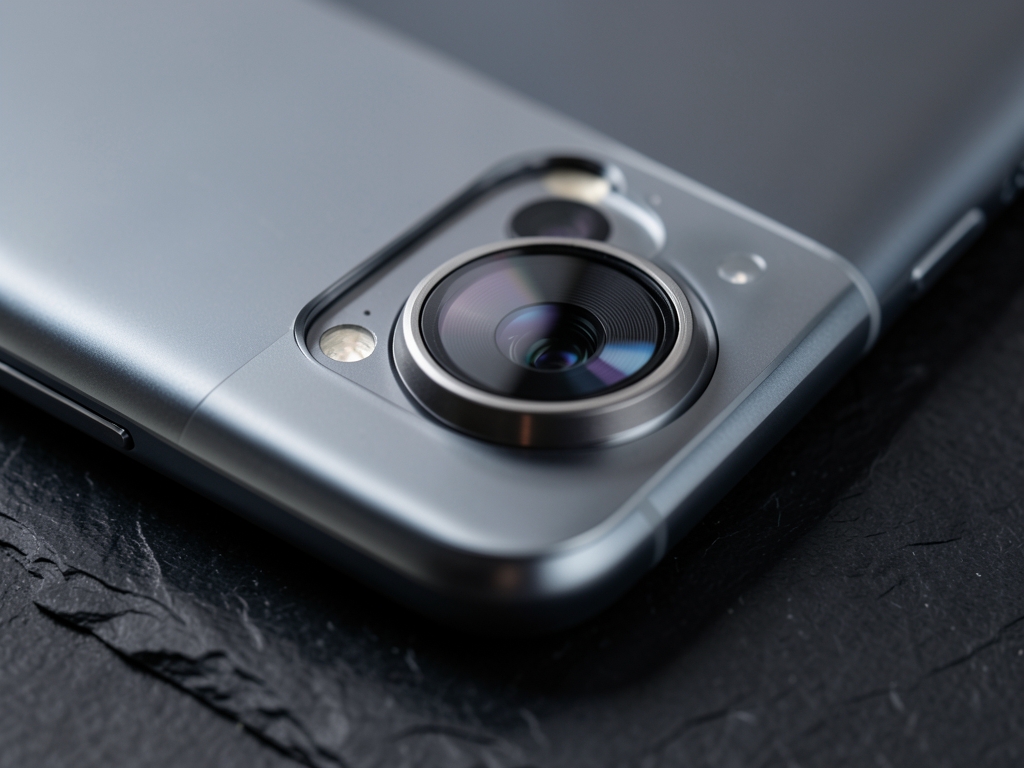
Mobile photography has undergone a staggering evolution over the past decade, transforming pocket-sized communication devices into powerful computational cameras capable of producing breathtaking imagery. For years, the primary limitation holding back smartphone sensors was not raw megapixel count or processing power, but rather the physics of light gathering through fixed physical apertures. Traditional smartphone cameras relied on static openings that forced software algorithms to compensate for excessive light or poor illumination through digital trickery. However, recent engineering breakthroughs have introduced physical variable aperture technology directly into mobile handsets, completely altering how pocket cameras manage depth of field, exposure, and optical clarity.
Understanding how mechanical iris systems operate within ultra-slim smartphone chassis requires a deep dive into optical engineering and micro-mechanics. For generations, compact digital cameras and professional DSLR bodies utilized physical blades to contract or expand the lens opening. Translating this mechanical complexity into a device as thin as a modern smartphone presented formidable manufacturing challenges. Engineers had to design microscopic stepper motors and ultra-thin titanium or plastic alloy blades capable of cycling millions of times without failing, all while maintaining precise alignment with multi-element lens assemblies and high-resolution sensors.
The Physics of Aperture and Mobile Photography
In traditional photography, the aperture controls two fundamental elements of an image: the amount of light reaching the sensor and the depth of field. A wider physical opening lets in more photons, making it ideal for low-light environments, but it also creates a very shallow depth of field where only a tiny slice of the subject remains in sharp focus. Conversely, a narrower opening reduces light intake but increases the depth of field, ensuring that complex multi-person portraits or sweeping landscapes remain sharp from foreground to background.
For years, smartphone manufacturers skirted around this physical limitation by installing ultra-wide fixed apertures, typically around f/1.7 or f/1.8. While these wide openings excelled in dim conditions, they created optical dilemmas. When attempting to photograph a close-up object, such as a meal or a document, the extremely shallow depth of field often resulted in unnatural background blur or edges of the subject falling out of focus. Software-generated portrait modes attempted to fix this digitally, but artificial background separation frequently produced awkward artifacts around hair and clothing.
By integrating physical variable apertures that can mechanically shift between f/1.4 and f/4.0, modern smartphones bypass many limitations of purely computational photography. When capturing a sweeping landscape during bright daylight, the mechanical iris contracts to a narrow setting like f/4.0. This physical adjustment reduces diffraction artifacts and ensures edge-to-edge sharpness without overloading the sensor with unnecessary light or forcing the electronic shutter speed to work at extreme limits.
Engineering Breakthroughs Enabling Micro-Iris Systems
Designing a mechanical iris for a smartphone requires overcoming immense space and durability constraints. Inside a phone chassis measuring less than eight millimeters in thickness, every fraction of a millimeter is fiercely contested by battery cells, cooling vapor chambers, and periscope telephoto modules. To fit a variable aperture mechanism into this cramped environment, optical engineers rely on piezoelectric actuators or electromagnetic micro-motors that drive interlocking curved blades across an aperture ring.
These micro-blades must be engineered with extreme precision. A variance of even a few micrometers can cause uneven light distribution across the sensor plane, resulting in vignetting or distorted bokeh shapes. Furthermore, the materials chosen for the iris blades must withstand extreme temperature fluctuations and continuous mechanical friction over years of daily usage. Manufacturers rigorously test these mechanisms through hundreds of thousands of actuation cycles to guarantee long-term reliability.
Another critical engineering consideration is the integration of optical image stabilization (OIS). In modern camera modules, the entire lens assembly or sensor floats on magnetic suspensions to compensate for hand tremors. Adding a complex mechanical aperture inside a moving lens assembly adds weight and shifts the center of gravity, requiring highly sophisticated closed-loop control algorithms to ensure that stabilization remains flawless even while the aperture blades are actively adjusting their position.
Comparing Fixed Versus Variable Aperture Performance
To fully appreciate the impact of variable aperture technology, it helps to examine real-world shooting scenarios where fixed-lens systems struggle. The following structured breakdown illustrates how physical aperture adjustment changes photographic outcomes across different lighting conditions.
| Shooting Scenario | Fixed Aperture Behavior | Variable Aperture Solution |
|---|---|---|
| Bright Daylight Landscape | Fixed wide opening lets in excess light, requiring high shutter speeds or digital neutral density filters, often introducing lens flare or edge softness. | Iris contracts to f/4.0, optimizing light intake, reducing optical aberrations, and maximizing overall scene sharpness. |
| Close-Up Macro Subject | Extremely shallow depth of field causes only the front edge of the subject to be in focus, blurring out important details. | Iris adjusts to a moderate f/2.8 or f/4.0, expanding the depth of field to keep the entire subject sharp. |
| Low-Light Night Portrait | Relies entirely on software noise reduction and multi-frame stacking, which can sometimes introduce smudged textures. | Iris opens wide to f/1.4, maximizing raw light collection physically before digital processing begins. |
| Bright Studio Product Shot | Prone to blown-out highlights or forced reliance on artificial lighting adjustments. | Precise physical aperture control manages exposure balance naturally without sacrificing sensor dynamic range. |
Synergy Between Hardware Optics and Computational Photography
A common misconception in modern tech discourse is that computational photography makes physical lens design obsolete. Critics often argue that if software can artificially generate depth of field and stack multiple exposures, spending engineering capital on mechanical iris blades is unnecessary. However, industry advancements prove the exact opposite: physical optics and computational algorithms operate in a symbiotic relationship where superior hardware directly enhances software output.
Computational photography relies heavily on clean, uncompressed optical data captured by the sensor. When a lens suffers from optical aberrations, chromatic fringing, or extreme diffraction caused by forcing an improper focal plane, AI algorithms must work overtime to clean up the resulting flaws. By allowing the physical camera to adjust its aperture to suit the environmental conditions natively, the sensor receives a cleaner, more optically accurate image to begin with.
Info! Mechanical aperture adjustment provides authentic optical bokeh with natural light roll-off, a quality that purely software-driven portrait modes often struggle to replicate convincingly.
This synergy is especially evident in video recording. When recording video in changing lighting conditions—such as walking from a dimly lit interior into bright outdoor sunlight—fixed-aperture smartphones often exhibit harsh exposure stepping or jarring ISO jumps. A smooth mechanical iris can continuously modulate light intake in real time, delivering professional-grade exposure transitions that mimic traditional cinema cameras.
Practical Considerations for Everyday Smartphone Users
For everyday consumers evaluating their next smartphone upgrade, understanding the practical benefits of variable aperture technology helps cut through marketing terminology. While spec sheets often highlight megapixels and sensor sizes, physical aperture flexibility directly impacts the versatility of the camera in daily life.
Users who frequently photograph fast-moving subjects, pets, or children indoors will notice significant improvements. The ability to utilize a wider physical opening allows faster shutter speeds in dim indoor lighting without unnecessarily cranking up ISO sensitivity, thereby reducing digital noise and preserving fine skin textures and fabric details.
Travel and landscape enthusiasts also benefit immensely. The transition to a narrower aperture during daytime outdoor shoots eliminates the washed-out highlights and blown-out skies that frequently plague ultra-fast fixed lenses. Combined with advanced multi-prism periscope zoom modules, variable aperture technology ensures that mobile shooters have professional-grade optical control in a device that fits comfortably inside a jacket pocket.
What is a variable aperture in a smartphone camera?
A variable aperture is a mechanical system of physical blades inside the camera lens module that can expand or contract to alter the size of the opening through which light passes, similar to the iris in a human eye or a traditional DSLR camera.
How does a physical variable aperture improve low-light photography?
By opening up to a wide setting such as f/1.4, the physical iris allows significantly more ambient light to reach the sensor naturally, reducing the need for heavy digital noise reduction and enabling faster shutter speeds in dark environments.
Does variable aperture technology affect depth of field in mobile photos?
Yes, adjusting the physical aperture directly controls depth of field. A wider opening creates a shallow focus effect with blurred backgrounds, while a narrower opening keeps both foreground and background elements sharp and in focus.
Are mechanical iris blades durable enough for daily smartphone use?
Manufacturers subject these micro-mechanical components to rigorous durability testing, ensuring that the precision actuators and alloy blades can cycle hundreds of thousands of times without failure over the typical lifespan of a smartphone.
As smartphone manufacturers continue pushing the boundaries of mobile imaging, the integration of mechanical optical controls marks a mature turning point in the industry. By combining precision hardware engineering with advanced computational intelligence, modern handsets are bridging the historical gap between pocket convenience and professional studio capability.
