

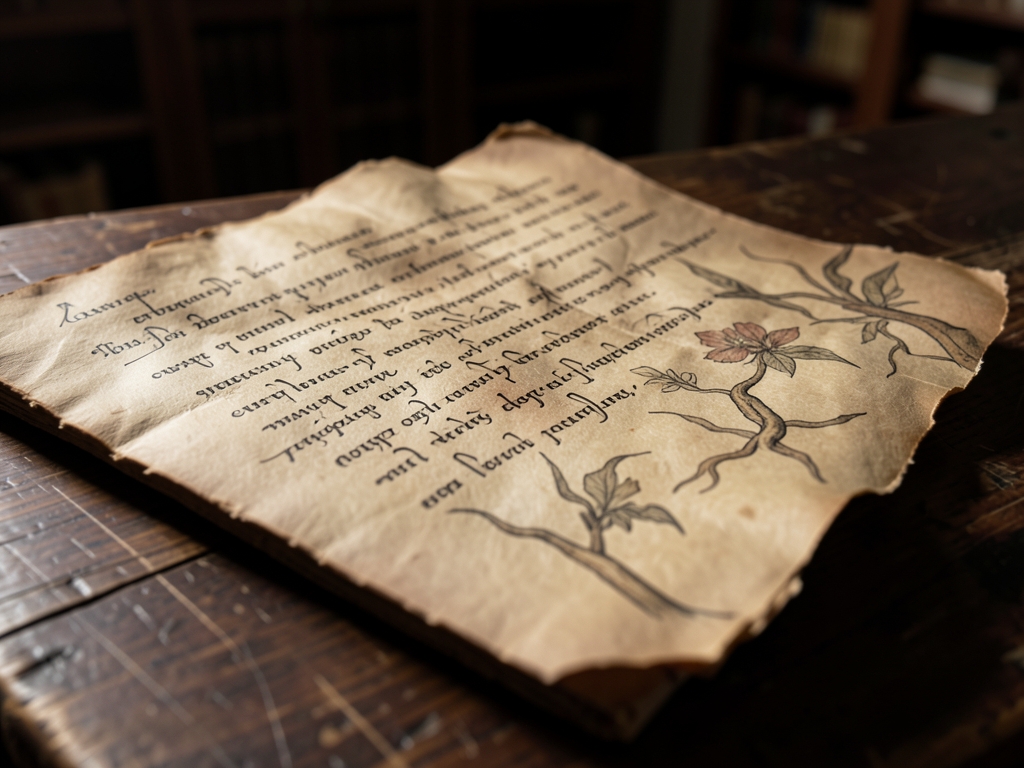
Few historical artifacts possess the enduring allure, baffling complexity, and frustrating impenetrability of the Voynich Manuscript. Housed in the Beinecke Rare Book and Manuscript Library at Yale University, this small, illustrated codex has confounded linguists, historians, cryptographers, and amateur sleuths for over a century. Radiocarbon dating places its creation in the early 15th century, yet the language or cipher in which it is written remains completely undecoded. It features no recognizable writing system, no confirmed author, and no clear historical record prior to the 17th century. Despite decades of intense computational analysis and cryptographic attacks, the manuscript continues to guard its secrets, standing as a monument to human ingenuity and the limits of modern decipherment.
The Discovery and Modern Provenance
The modern history of the manuscript began in 1912 when Wilfrid Voynich, a Polish-American rare book dealer, purchased a collection of manuscripts from the Jesuit college of Frascati near Rome. Voynich recognized that he had stumbled upon something extraordinary. The book was physically unlike any other manuscript in his possession, bound in plain vellum and filled with bizarre drawings of unidentifiable plants, astronomical charts, biological diagrams, and marching rows of naked women bathing in strange green liquids.
While Voynich spent the remaining decades of his life trying to uncover its origin and decode its text, the early paper trail of the manuscript offers tantalizing clues. A letter dated 1665 or 1666, found tucked inside the front cover of the book, was written by Joannes Marcus Marci, a rector of the University of Prague, and addressed to the famous Jesuit scholar Athanasius Kircher. In this letter, Marci stated that the book had once belonged to Emperor Rudolf II of Habsburg, who purchased it for 600 gold ducats. Marci explained that the previous owner, a man named Jacobus Horcicky de Tepenech, believed the book was the work of the 13th-century English friar and polymath Roger Bacon.
Info! Radiocarbon dating of the vellum pages performed in 2009 confirmed that the animal skin used to make the manuscript was produced between 1404 and 1438, definitively ruling out a direct authorship by Roger Bacon, who died around 1292.
Before Rudolf II acquired the codex, its whereabouts are virtually untraceable. Some scholars suggest it may have passed through the hands of John Dee, a famous English mathematician and astrologer at the court of Queen Elizabeth I, who was known to collect esoteric texts and traveled extensively through Central Europe. However, tangible documentation connecting Dee to the manuscript remains circumstantial.
Physical Characteristics and Structure
Understanding the Voynich Manuscript requires examining its physical construction. The book measures roughly 23.5 by 16.2 centimeters and is about five centimeters thick, consisting of nearly 240 vellum pages, though original gatherings suggest several pages are missing. The entire volume is handwritten and hand-illustrated using quill pens and vibrant pigments. The ink used for the text appears to be iron gall ink, which was standard for the medieval period.
The manuscript is traditionally divided by modern scholars into six distinct thematic sections based on the nature of its illustrations:
- Botanical Section: Comprising over half the book, this section features meticulously drawn plants, roots, and leaves that defy precise botanical classification. Most species appear to be fantastical hybrids or heavily stylized representations.
- Astronomical Section: Features circular diagrams, some folding out into multi-page spreads, depicting suns, moons, zodiac symbols, and cosmic phenomena, often featuring women peering out from astral rings.
- Biological Section: Contains dense arrangements of miniature female figures interacting with complex networks of green tubes, siphons, and pools of liquid, reminiscent of alchemical or balneological processes.
- Cosmological Section: Features abstract circular maps and geographical formations, suggesting islands, towers, or interconnected basins linked by causeways.
- Pharmaceutical Section: Displays hundreds of smaller drawings of jars, vessels, and medicinal roots, arranged neatly alongside paragraphs of text.
- Recipe Section: Consists entirely of continuous text blocks, broken only by small star-like markers in the left margin, traditionally interpreted as a collection of short recipes or formulas.
The Cryptographic Enigma
The core mystery of the Voynich Manuscript lies in its script. The text is written from left to right in a fluent, practiced hand, suggesting that the scribe was writing quickly and comfortably in a system they fully understood. The alphabet consists of approximately 20 to 30 distinct characters, with very few symbols appearing outside this core set. The words are separated by spaces, and punctuation is largely absent.
Linguists and codebreakers have approached the text from numerous angles, leading to several prominent hypotheses regarding its nature:
| Hypothesis | Description | Primary Evidence |
|---|---|---|
| Simple Substitution Cipher | Each symbol represents a single letter of a known European language. | Tested extensively; standard statistical frequencies fail to match Latin, German, or Italian. |
| Exotic Natural Language | Written in an obscure, rare language or a specialized phonetic transcription. | Zipf's law is followed by the text, but internal word structure mimics no known linguistic family. |
| Artificial Constructed Language | A philosophical or a priori language invented before John Wilkins's 17th-century systems. | Rigid word structures and repeating suffixes suggest systemic rule-based generation. |
| An Elaborate Hoax | A meaningless string of symbols designed to deceive collectors and patrons. | High internal consistency and complex statistical patterns make a random hoax statistically difficult to maintain. |
Statistical analyses have revealed fascinating properties within the text. For instance, the manuscript obeys Zipf's law—a statistical rule governing word frequency in natural human languages. Furthermore, the distribution of words across pages shows a high degree of topic-specific vocabulary, which strongly supports the idea that the book communicates actual information rather than being a random scribble or mindless forgery.
"The Voynich Manuscript resists translation not because it lacks meaning, but because its creators constructed a system that successfully mimics the statistical texture of a real language while concealing its underlying rules."
Historical Theories of Origin and Authorship
Over the decades, dozens of historical figures and fringe theorists have been proposed as the mastermind behind the codex. While mainstream historians remain cautious, several leading theories continue to dominate academic discourse.
One prominent theory suggests the manuscript originated in Northern Italy during the early Renaissance. The architectural elements depicted in the biological section—specifically the crenellated battlements on the towers in the cosmological section—closely resemble Ghibelline-style fortifications found in 15th-century northern Italy. Additionally, the clothing worn by the figures in the biological section shares stylistic similarities with Italian fashion of the Quattrocento.
Another compelling theory points toward Jewish intellectual circles in Central Europe. Some researchers have argued that the script bears structural similarities to Hebrew abbreviations or kabbalistic systems of cryptography. In this view, a scholar working under the patronage of Rudolf II might have attempted to encode esoteric alchemical or medical knowledge to protect it from persecution or to preserve trade secrets.
Despite these compelling avenues, skeptics remind us that an ingenious modern or early modern hoaxer could easily incorporate authentic stylistic elements from multiple regions to create a convincing pastiche. The lack of grammatical errors in the flowing script suggests a high level of manual dexterity, yet the failure of every single linguistic decryption attempt keeps all historical attributions in the realm of speculation.
Recent Technological Breakthroughs and AI Analysis
In the 21st century, the advent of artificial intelligence, machine learning, and advanced computational linguistics has breathed new life into Voynich research. Researchers have applied natural language processing algorithms to search for hidden structures, semantic mappings, and phonetic equivalents that eluded human cryptographers.
In 2019, a researcher suggested through a controversial computational analysis that the manuscript was written in a lost Romance language using an agglomerative grammar system. However, this claim was met with immediate skepticism by professional historical linguists, who pointed out that the statistical methods used could easily extract spurious patterns from random noise.
Multispectral imaging has also revolutionized our physical understanding of the book. By illuminating the parchment with different wavelengths of light, conservators have discovered erased marginalia, corrections beneath ink blots, and details in the illustrations that had faded away over centuries of handling. These technological tools continue to refine our baseline data, even if a definitive translation remains elusive.
What is the Voynich Manuscript?
The Voynich Manuscript is a heavily illustrated, handwritten codex dating from the early 15th century, written in an entirely unknown script and language that has never been successfully deciphered.
Where is the Voynich Manuscript kept today?
It is housed in the Beinecke Rare Book and Manuscript Library at Yale University in New Haven, Connecticut, where it is preserved under strict climate-controlled conditions.
Has anyone ever successfully decoded the text?
No, despite claims by various cryptographers and computer scientists over the decades, no proposed translation has been accepted by the mainstream historical and linguistic community.
Is the Voynich Manuscript considered a hoax?
While some scholars argue it is an elaborate medieval or Renaissance hoax, statistical properties of the text such as Zipf's law suggest it follows complex structural rules uncommon in random forgeries.
Conclusion
The Voynich Manuscript remains one of history's greatest unsolved puzzles. Whether it is an encrypted botanical treatise, a lost alchemical manual, a constructed language experiment, or an elaborate historical hoax, its power to captivate the human imagination is undeniable. As computational techniques advance and new archival documents come to light, researchers edge closer to understanding the context of its creation. Until a breakthrough definitively unlocks its text, the manuscript will continue to stand as a silent testament to the mysteries of the past, inviting each new generation to try their hand at decoding its timeless secrets.
