

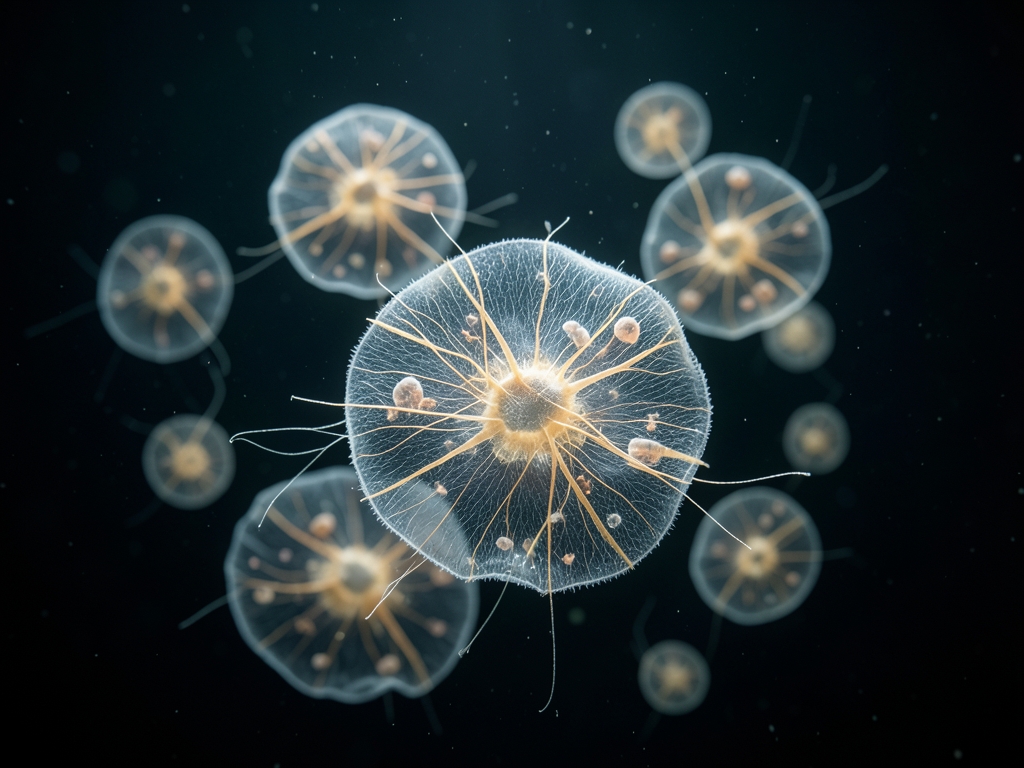
The vast expanse of the Earth's oceans continues to harbor microscopic secrets that challenge our fundamental understanding of life, evolution, and genetic economy. In a remarkable discovery that pushes the absolute boundaries of cellular biology, researchers have identified a tiny microbe hiding inside ocean plankton that possesses just 238,000 DNA base pairs. This astounding measurement officially establishes the organism as hosting the smallest archaeal genome on record, offering scientists a pristine window into the minimal requirements needed to sustain an independent, cellular living entity.
Microbial ecologists and evolutionary biologists have long sought to understand the lower limits of biological complexity. How small can a genome get before an organism can no longer maintain its own metabolic processes, replicate its DNA, or defend against environmental stress? For decades, symbiotic and parasitic bacteria have fascinated researchers with their heavily streamlined genomes, shedding non-essential genes as they grew dependent on host organisms. However, finding such extreme genetic reduction within the domain Archaea—one of the three fundamental domains of life alongside Bacteria and Eukaryota—presents entirely new questions regarding cellular minimalism and metabolic interdependence.
Unveiling the Smallest Archaeal Genome in Marine Plankton
The newly characterized microbe exists in an intimate, complex association with larger marine plankton floating in the world's oceans. Planktonic ecosystems are dense, highly competitive biological communities where viruses, bacteria, archaea, and unicellular eukaryotes interact in myriad ways. Within this soup of microscopic activity, researchers detected the presence of an exceptionally small archaeal lineage that had previously evaded detailed genetic sequencing due to its extreme scarcity and minute physical dimensions.
When genetic sequencing data was successfully assembled and analyzed, the findings stunned the research team. The organism's complete genomic blueprint consists of a mere 238,000 base pairs. To put this into perspective, many free-living bacteria possess millions of base pairs, while the human genome boasts approximately 3 billion base pairs. Even among streamlined intracellular parasites, a genome of under 250,000 base pairs is exceptionally rare, placing this marine archaeon near the theoretical floor of biological complexity.
This ultra-compact genome means the microbe encodes only a fraction of the proteins typically found in cellular life. It has discarded virtually all pathways for synthesizing essential amino acids, nucleotides, and cofactors independently. Instead, it relies heavily on its planktonic host or the surrounding aquatic environment to supply these vital biochemical building blocks. Yet, despite this heavy reliance, it retains the core machinery required for DNA replication, transcription, and translation—the absolute non-negotiable pillars of cellular reproduction.
| Biological Metric | Typical Free-Living Microbe | Record-Breaking Marine Archaeon |
|---|---|---|
| Genome Size (Base Pairs) | 3,000,000 to 5,000,000+ | 238,000 |
| Estimated Protein-Coding Genes | 3,000 to 5,000+ | Fewer than 300 |
| Metabolic Autonomy | High (Synthesizes most compounds) | Extremely Low (Relies on host/environment) |
| Cellular Domain | Bacteria or Archaea | Archaea |
The Evolutionary Significance of Extreme Genomic Reduction
The discovery of this record-breaking archaeal genome is far more than a biological curiosity; it provides profound insights into evolutionary biology. In stable environments where nutrients or hosts are reliably present, natural selection often favors gene loss over gene retention. Maintaining unnecessary genes carries an energetic cost, as every base pair must be replicated and every unused protein manufactured or degraded. Over evolutionary timescales, organisms that shed superfluous genetic baggage can reproduce more efficiently, outcompeting their burdened neighbors.
However, this reductive evolution creates a razor-thin tightrope walk. If an organism sheds too many genes, it crosses a physiological precipice into oblivion. The fact that this marine archaeon has successfully stabilized at 238,000 base pairs indicates that it has found a remarkably stable ecological niche within ocean plankton. It represents an exquisite evolutionary compromise—outsourcing complex metabolic labor to its environment while retaining just enough internal machinery to persist and multiply.
Understanding how life operates at the absolute minimum threshold of genetic information expands our comprehension of what is biologically possible and redefines the boundaries of cellular autonomy.
Furthermore, studying these streamlined genomes aids astrobiologists in modeling what early life forms or potential extraterrestrial microbial life might look like. If simple life forms on other worlds evolved under similar energetic pressures, they too might exhibit extreme genomic miniaturization, prioritizing hyper-efficient replication over metabolic independence.
Metabolic Strategies of Ultra-Small Microbes
Living with fewer than 300 predicted protein-coding genes requires specialized physiological adaptations. Traditional cellular pathways that involve ten or twelve enzymatic steps are often truncated or entirely absent in such minimized organisms. Instead, these microbes operate as metabolic specialists, scavenging ready-made molecules directly from their surroundings.
In the context of ocean plankton, this strategy is remarkably effective. Planktonic microenvironments are rich in dissolved organic carbon, amino acids, and other metabolic intermediates released by surrounding algal blooms and bacterial communities. By positioning itself in close physical proximity to—or directly inside—larger host cells, the microbe gains immediate access to a steady stream of nutrients without expending genomic real estate on biosynthetic pathways.
Info! Extreme genome reduction is most frequently observed in symbiotic or parasitic organisms, where the host provides a buffered, nutrient-rich environment that compensates for lost metabolic functions.
The energy savings of possessing such a small genome are substantial. Replicating a 238,000-base-pair chromosome requires drastically fewer resources and time than copying a massive bacterial genome. This efficiency allows the organism to rapidly proliferate when conditions are favorable, matching the growth dynamics of the planktonic populations upon which it depends.
Implications for Marine Ecology and Global Biogeochemical Cycles
While individual microbes with tiny genomes are infinitesimal in size, their collective impact on marine ecosystems and global biogeochemical cycles is profound. Ocean plankton form the foundation of marine food webs and drive the biological carbon pump, sequestering carbon from the atmosphere into the deep ocean. Microbes associated with plankton actively modulate these processes, influencing nutrient cycling, nitrogen fixation, and carbon turnover.
Uncovering new lineages of archaea within planktonic communities demonstrates that our cataloging of marine biodiversity remains incomplete. Traditional metagenomic surveys often overlook ultra-small cells or organisms with highly divergent sequences because standard primers fail to bind to their unique DNA structures. Advanced sequencing technologies and single-cell genomics are now tearing down these observational barriers, revealing a hidden majority of microbial life that operates beneath the threshold of classical microbiology.
As researchers continue to sequence environmental samples from diverse marine habitats, it is likely that other record-breaking genomes will emerge. Each discovery refines our understanding of the lower limits of life and highlights the incredible adaptability of microorganisms in Earth's most dynamic ecosystems.
What makes this newly discovered marine microbe unique?
This microbe possesses an exceptionally compact genome of just 238,000 DNA base pairs, making it the smallest archaeal genome ever recorded in scientific history.
Where was this ultra-small archaeon found?
The microbe was discovered hiding inside ocean plankton, living in an intimate association with larger marine organisms that supply its metabolic needs.
How does such a small genome affect the microbe's survival?
With fewer than 300 protein-coding genes, the organism has discarded most metabolic pathways and relies on its host or environment for essential nutrients while retaining core DNA replication machinery.
Why is this discovery important for evolutionary biology?
It provides critical insights into the absolute lower limits of cellular complexity, evolutionary gene loss, and the physiological trade-offs of metabolic dependence in natural environments.
The identification of the smallest archaeal genome on record underscores the endless capacity of marine ecosystems to surprise the scientific community. By examining how life functions with minimal genetic instructions, researchers unlock profound truths about biological organization, evolution, and the resilient web of interactions sustaining life in our planet's oceans.
