

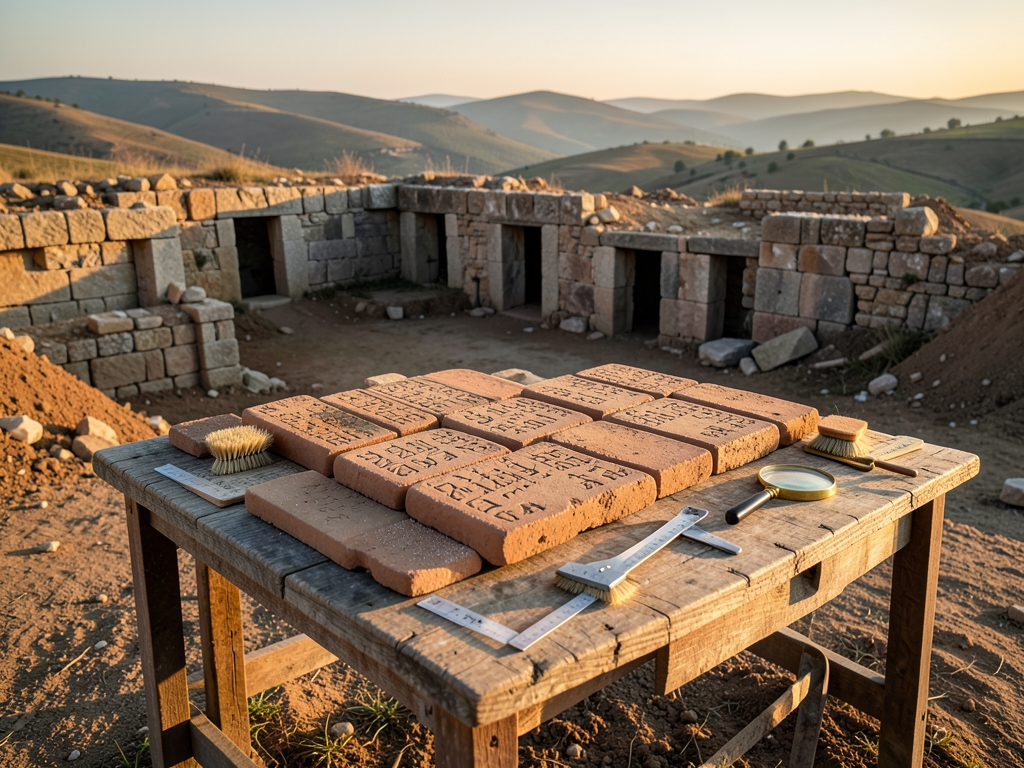
Archaeology continually rewrites our understanding of the ancient world, bringing long-forgotten civilizations back into the light through the patient decipherment of material culture and written records. Recent excavations in Anatolia have once again captured global attention following a significant discovery within the historic heartlands of the Hittite Empire. Among the dust of centuries, researchers working inside the legendary royal archives uncovered a cache of 184 cuneiform tablets, offering unprecedented insights into the administrative structures, diplomatic maneuvers, and daily struggles of one of antiquity's most formidable Bronze Age superpowers. This extraordinary find bridges the gap between myth and historical reality, shedding light on a society that once rivaled ancient Egypt and Mesopotamia.
The Significance of the Hittite Royal Archives
To understand the magnitude of this discovery, one must look at the unique nature of Hittite record-keeping. Unlike many contemporary civilizations that recorded only royal triumphs and religious hymns, the Hittites maintained meticulous bureaucratic records. Their archives contained state treaties, land grants, legal codes, ritual instructions, and extensive correspondence with foreign courts across the ancient Near East. The newly recovered 184 cuneiform tablets expand this corpus significantly, providing epigraphers and historians with fresh primary source material written in the cuneiform script.
Scholars working on the excavation site noted that these texts span multiple administrative categories. Some tablets detail complex economic transactions, tracking the movement of grain, textiles, and precious metals across the empire's vast network of provincial stations. Others preserve diplomatic correspondence between Hittite kings and vassal states, illustrating the intricate web of alliances and military deterrents that maintained imperial stability during periods of regional turmoil. By examining these fragile clay documents, modern researchers can reconstruct the socioeconomic fabric of Anatolia with remarkable precision.
Deciphering Ancient Anatolian Scripts
The process of reading and translating Hittite cuneiform is an arduous task that requires specialized linguistic expertise. The Hittite language itself is the oldest attested Indo-European tongue, written primarily in borrowed Mesopotamian cuneiform signs adapted to suit native grammatical structures. Epigraphers must carefully clean each tablet, stabilize the clay, and create high-resolution photographic and digital scans to capture every wedge-shaped impression.
The recovery of hundreds of intact cuneiform tablets within a single archive context provides epigraphers with invaluable comparative data for paleography, linguistics, and political history.
Preliminary analyses of the recent find indicate references to administrative reforms and royal decrees previously known only through fragmentary secondary sources. As epigraphers complete the transcription process, historians anticipate a clearer chronology of events during pivotal reigns within the Hittite New Kingdom. Each tablet acts as a time capsule, preserving the exact wording and administrative intent of scribes who lived more than three millennia ago.
Imperial Administration, Wars, and Epidemics
Beyond routine bureaucracy, the newly unearthed archives touch upon profound historical turning points, including military campaigns and public health crises. Historical records from the Late Bronze Age frequently mention how sudden geopolitical shifts were intertwined with environmental and biological pressures. Recent evaluations of contemporary excavations highlight how Hittite state archives preserve vivid accounts of regional epidemics and protracted conflicts that tested the resilience of the imperial center.
Epidemics during the ancient period could rapidly destabilize frontier defenses and disrupt agricultural production, forcing central authorities to issue emergency decrees and perform elaborate appeasement rituals. The Hittites recorded these crises not merely as clinical facts, but through a religious lens that interpreted natural disasters and widespread illness as expressions of divine displeasure. The newly found texts reinforce this dual perspective, offering a rare window into how ancient statecraft grappled with existential threats.
| Aspect of Hittite Society | Historical Evidence from Tablets | Modern Archaeological Significance |
|---|---|---|
| Diplomacy | Treaties and foreign correspondence | Illuminates Bronze Age international relations |
| Economy | Grain tallies and tax records | Demonstrates centralized state distribution systems |
| Public Health | Ritual texts addressing epidemics | Provides context on ancient responses to crisis |
| Law | Royal codes and property disputes | Outlines societal norms and judicial processes |
Preservation and Museum Conservation Challenges
Excavating ancient clay tablets is only the first step in a complex preservation pipeline. Once exposed to modern air and humidity levels, unbaked or partially fired clay can rapidly deteriorate due to soluble salts and internal moisture shifts. Conservation specialists must employ meticulous stabilization techniques in controlled laboratory environments to prevent flaking and structural collapse.
- Initial Recovery: Carefully extracting fragile clay tablets from the surrounding archaeological matrix without mechanical damage.
- Environmental Stabilization:Slow drying and controlled humidity reduction to prevent cracking of the ancient clay.
- Digital Documentation: Creating 3D photogrammetry models and high-contrast RTI images to reveal faint incisions.
- Epigraphic Analysis: Translating signs, identifying personal and geographic names, and publishing findings in academic journals.
Info! Specialized conservation protocols ensure that these 3,400-year-old artifacts remain accessible for future generations of historians and museum visitors.
Broader Impact on Ancient Near Eastern Studies
The discovery of 184 cuneiform tablets in Türkiye reinforces the vital role that continuous archaeological fieldwork plays in historical research. While museums around the world house extensive collections of Near Eastern antiquities, in-situ discoveries within stratified archaeological contexts yield critical contextual data that looted or unprovenanced artifacts can never provide. Knowing the exact room, layer, and association of each tablet allows researchers to reconstruct the functional layout of the royal archives.
As international teams of archaeologists, linguists, and historians continue to publish translations of these texts, our comprehension of Bronze Age geopolitics will undoubtedly deepen. The Hittites, once known primarily through biblical references and scattered Egyptian inscriptions, stand revealed as a sophisticated, highly literate civilization whose institutional memory survived beneath the Anatolian soil for millennia.
What are the Hittite royal archives?
The Hittite royal archives are collections of clay tablets containing state correspondence, legal codes, treaties, and administrative records from the ancient Hittite Empire in Anatolia.
What language are the newly discovered cuneiform tablets written in?
The tablets are written primarily in Hittite, the oldest attested Indo-European language, utilizing adapted Mesopotamian cuneiform script.
Why are these newly found tablets important to historians?
They provide fresh primary evidence regarding ancient administrative practices, economic structures, military campaigns, and responses to historical epidemics.
How are fragile clay tablets preserved after excavation?
Conservators use controlled drying environments, remove harmful soluble salts, and create high-resolution digital 3D models to protect the artifacts from further decay.
Conclusion
The recovery of 184 cuneiform tablets from the Hittite royal archives represents a triumph of modern archaeology and historical persistence. By preserving and translating these ancient documents, researchers honor the administrative legacy of a civilization that shaped the ancient Near East. As ongoing studies unfold, these clay tablets will continue to bridge the vast distance between our modern world and the complex societies of the Bronze Age.
