

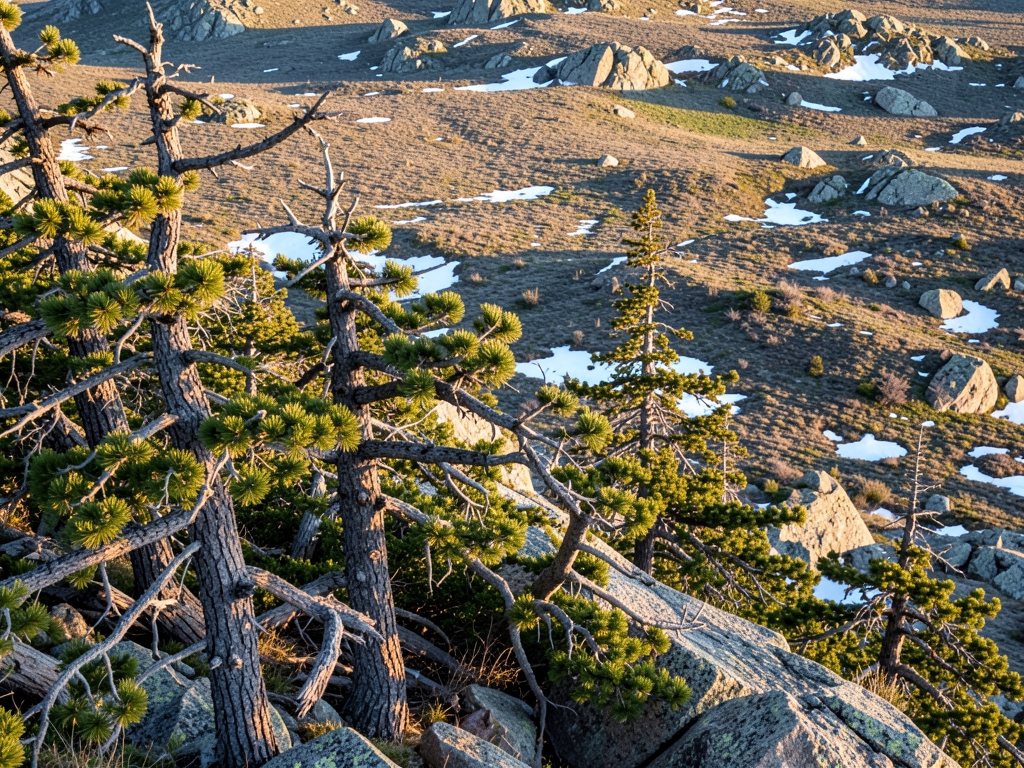
The transition zone between continuous forest and barren alpine tundra stands as one of the most striking and dynamic ecological boundaries on Earth. Known as the alpine timberline, tree line, or forest limit, this complex ecotone represents the extreme physiological threshold beyond which trees can no longer maintain upright, arboreal growth. For centuries, naturalists, geographers, and ecologists have observed this dramatic boundary where towering conifers give way to low-growing shrubs, grasses, and cushion plants. Yet, beneath the aesthetic appeal of these mountain vistas lies a complex web of climatological, physiological, and ecological interactions that dictate why forests abruptly stop growing at specific elevations.
Understanding the timberline requires looking past simplistic explanations. While early observers often attributed the absence of trees at high altitudes solely to extreme cold, modern plant ecology reveals a much more nuanced interplay of factors. Temperature, wind abrasion, snowpack duration, moisture availability, and soil chemistry all converge at high altitudes to create a hostile environment for woody plants. As global climate patterns shift, these high-altitude boundaries are responding in fascinating ways, offering critical insights into broader ecological changes happening across mountain ranges worldwide.
Defining the Alpine Timberline Ecotone
To study the timberline effectively, scientists must first define its physical and biological components. Rather than an abrupt line drawn across a mountainside, the timberline is typically a wide transition zone or ecotone. This zone bridges the subalpine forest below and the alpine tundra above, encompassing distinct structural sub-zones that ecologists categorize to track vegetation changes over time and elevation.
At the lower boundary of this ecotone lies the timberline proper, which marks the upper limit of continuous forest where tree crowns touch and form a closed canopy. Moving higher up the slope, the forest fragments into the Krummholz zone, a German word meaning crooked wood. In this harsh belt, trees take on bizarre, wind-sculpted dwarf forms. Stunted spruces, firs, and pines grow horizontally along the ground, hugging the earth to stay beneath the protective blanket of winter snowpack. Beyond the Krummholz zone lies the tree species limit, the absolute highest elevation where isolated, stunted individual trees can still manage to survive.
To fully appreciate the structural complexity of this zone, researchers often divide the ecotone into smaller gradients, such as the subalpine forest-tundra ecotone. Within this space, microtopography plays a massive role. Depressions collect more snow and retain moisture, allowing patches of taller trees to survive hundreds of meters higher than their counterparts on exposed ridges. Conversely, wind-swept knolls are dominated exclusively by dwarf shrubs and non-vascular plants like lichens and mosses. This mosaic pattern creates an intricate tapestry of microhabitats that support a surprisingly high level of biodiversity within a compressed vertical space.
Info! The exact elevation of the alpine timberline varies dramatically depending on latitude, continentality, and local topography. While timberlines sit near sea level in polar regions like Scandinavia and Alaska, they can soar above 4,000 meters in tropical mountain ranges such as the Andes and the Himalayas.
Physiological Challenges of High-Altitude Tree Growth
Why trees cannot survive above a certain elevation ultimately comes down to plant physiology and carbon balance. Trees are massive organisms that require substantial energy to build and maintain woody stems, extensive root systems, and vascular networks. At high altitudes, environmental stressors severely disrupt this metabolic balance.
Temperature and Carbon Limitation
The thermal limitation hypothesis is widely considered the leading explanation for alpine timberlines. Research suggests that a critical summer soil or air temperature is required for proper root growth, cell division, and tissue maturation. When mean growing season temperatures drop below approximately 5.5 to 6.7 degrees Celsius, trees cannot generate enough photosynthetic energy to offset the metabolic costs of maintaining their woody biomass. While needles and leaves can photosynthesize, cold soils severely restrict water uptake and nutrient transport, leaving the upper canopy starved of resources during critical developmental windows.
Furthermore, respiration rates remain high during cool nights, which can quickly consume the limited carbohydrates manufactured during the day. In a normal forest environment, a tree builds a substantial surplus of sugars and starches to store in its roots and trunk. At the timberline, however, the margin between carbon gain through photosynthesis and carbon loss through respiration narrows drastically. During particularly cold summers, trees may spend all their energy merely surviving, leaving nothing left to produce new shoots, needles, or rings of wood.
Wind Abrasion and Desiccation
Wind is another formidable adversary for high-altitude trees. Above the forest canopy, winds blow with relentless force, carrying ice crystals and snow particles that act like sandpaper. This abrasive action strips away protective cuticles and buds on the windward side of the tree, effectively pruning them into asymmetric shapes known as flag trees. Furthermore, frozen soils during winter prevent roots from replacing moisture lost through transpiration, leading to severe winter desiccation and tissue death on exposed branches.
When a tree's foliage is exposed above the surface of the winter snowpack, dry winter winds sweep across the mountain, drawing moisture out of the needles faster than the frozen root system can absorb water from the ground. This phenomenon, often referred to as freeze-drying or winter desiccation, results in the characteristic brown, dead needles on the windward side of high-altitude evergreens. Only the parts of the tree protected beneath the snowpack survive the winter unscathed, dictating the creeping, multi-stemmed growth habit characteristic of Krummholz formations.
The Critical Role of Winter Snowpack
Snowpack is both a protective shield and a limiting factor for timberline vegetation. The depth and duration of snow cover dictate which plants can establish and survive in the subalpine-alpine ecotone.
When snow lingers late into the summer, it dramatically compresses the growing season. Trees require a minimum number of frost-free days to push out new shoots, harden them off, and store adequate carbohydrate reserves before autumn freezes return. If snow persists into July, the remaining growing window becomes too short for woody plants to complete their annual life cycle.
Conversely, areas with optimal snow accumulation receive a vital thermal blanket. Ambient air temperatures high in the mountains can plummet to extreme sub-zero levels, which would easily kill the tender meristematic tissues of young trees. A thick layer of snow insulates the ground, keeping soil temperatures closer to freezing and protecting the prostrate stems of Krummholz trees from lethal frost damage. This delicate balance means that even minor shifts in winter precipitation patterns can have massive cascading effects on timberline forest health and distribution.
Soil Development and Nutrient Cycling at High Altitudes
Beyond climate and wind, the physical and chemical nature of high-altitude soils plays a profound role in shaping the timberline ecotone. Soils in alpine and subalpine environments are typically young, thin, and poorly developed. Because glaciers retreated relatively recently in geological terms—and because steep mountain slopes constantly shed debris via erosion and avalanches—soils lack the deep organic profiles found in lowland temperate forests.
Nutrient cycling is exceptionally slow at high altitudes due to the cold temperatures, which inhibit the microbial activity necessary to break down organic matter and release plant-available nitrogen and phosphorus. Consequently, high-altitude trees must forge symbiotic relationships with mycorrhizal fungi to extract scarce nutrients from the rocky substrate. These fungi weave an intricate network around or inside the tree's roots, vastly expanding the surface area for water and mineral absorption in exchange for photosynthesized sugars. Without these subterranean fungal partners, most timberline tree species would be entirely unable to survive in such nutrient-poor soils.
Fauna of the Timberline Ecotone
The harsh conditions of the alpine timberline support a specialized community of animals adapted to extreme seasonal fluctuations. Unlike migratory species that move to lower elevations during winter, resident animals have evolved remarkable physiological and behavioral adaptations to survive.
- American Pika: These small, rotund mammals do not hibernate. Instead, they spend the fleeting summer months harvesting and drying grasses and wildflowers into 'haypiles,' which they store beneath rocks to feed on through long, freezing winters.
- Ptarmigan: These alpine grouse species undergo seasonal camouflage molts, transitioning from mottled brown summer plumage to pure white winter feathers. Their feathered feet act as natural snowshoes, allowing them to walk across deep drifts without sinking.
- Clark's Nutcracker: Closely associated with high-altitude pine forests, these intelligent corvids cache thousands of seeds each autumn, playing a vital role in regenerating whitebark pine and other timberline tree species.
- Bighorn Sheep: Sure-footed ungulates that navigate steep, rocky cliffs just above and within the timberline, using their specialized hooves to escape predators and find sparse winter forage.
In addition to these permanent residents, many large mammals such as elk, mule deer, and grizzly bears utilize the timberline ecotone during the summer months. They follow the green-up wave of emerging vegetation as snow melts upslope, feeding on succulent forbs and shrubs before retreating to lower elevations ahead of autumn snowstorms. Birds of prey, including golden eagles and prairie falcons, also patrol the open expanses of the timberline, hunting for pikas, marmots, and other small mammals that thrive among the rocky talus slopes.
Climate Change and Timberline Shifts
As global temperatures rise, the alpine timberline is experiencing notable transformations. Because tree limits are fundamentally controlled by temperature, warming climates theoretically allow trees to march higher up mountain slopes, encroaching upon traditional alpine tundra ecosystems.
Numerous field studies across the European Alps, the Rocky Mountains, and the Scandinavian fells have documented upward shifts in tree establishment and increased density within the Krummholz zone. However, this process is not uniform or simple. While warming temperatures favor upward expansion, other factors such as summer droughts, changes in precipitation patterns, and historical land-use practices like livestock grazing can complicate or inhibit migration. In some arid mountain ranges, increased heat without corresponding moisture increases can actually stress existing trees, leading to diebacks rather than expansion.
The alpine timberline serves as an Earth-scale thermometer, recording the impacts of climate change in real-time through the shifting boundaries of our mountain forests.
The potential loss of alpine tundra habitat due to encroaching forests poses significant conservation concerns. Many endemic alpine plant and animal species rely on open, cold-adapted habitats and have nowhere higher to go as temperatures warm, a phenomenon often described as the elevator effect of mountain ecology. As trees advance upward, they compete with low-growing tundra flora for space, light, and soil nutrients, potentially driving vulnerable alpine specialists toward localized extinction.
Furthermore, shifting timberlines can alter hydrological cycles. Forests intercept more snow and transpire more water than open tundra, which can change downstream water yields and timing of spring snowmelt runoff. Watershed managers and conservationists must closely monitor these ecological shifts to anticipate changes in freshwater availability for downstream human communities.
What exactly defines the alpine timberline?
The alpine timberline is the ecological boundary or ecotone where continuous forest cover transitions into open, treeless alpine tundra due to environmental harshness at high elevations.
Why do trees stop growing above a certain altitude?
Trees stop growing primarily due to thermal limitations during the growing season, where low soil and air temperatures prevent trees from generating enough photosynthetic energy to maintain their woody biomass.
What does the term Krummholz mean?
Krummholz is a German term meaning crooked wood. It describes the stunted, wind-sheared, and prostrate growth form that trees take on near the upper limits of the timberline ecotone.
How is climate change affecting alpine timberlines?
Warming global temperatures are generally causing timberlines to shift upward to higher elevations and increase in density, which threatens specialized alpine tundra ecosystems and endemic species.
The alpine timberline remains one of nature's most captivating ecological laboratories. By examining the delicate balance that allows trees to survive against overwhelming odds, scientists gain vital perspective on plant resilience, climate sensitivity, and mountain conservation. Protecting these fragile boundary zones ensures that the rich biodiversity of both subalpine forests and alpine tundras endures for generations to come.
