

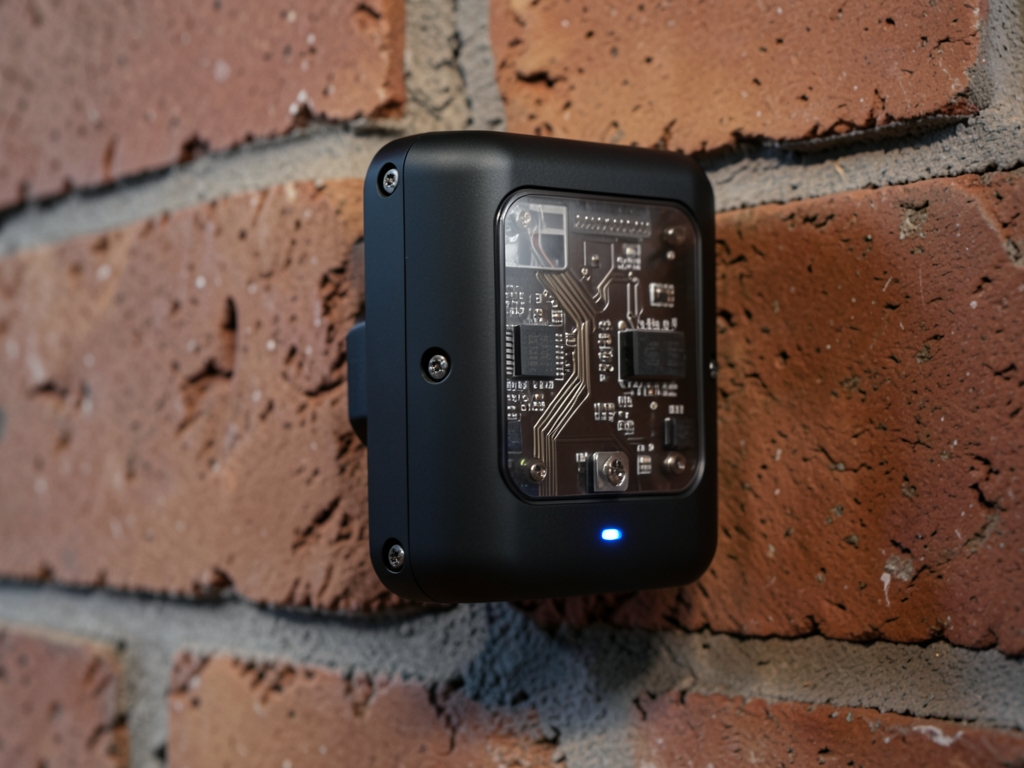
The proliferation of the Internet of Things has fundamentally reshaped how residential, commercial, and industrial environments interact with data. From smart utility meters tracking resource consumption across sprawling municipal grids to remote agricultural sensors monitoring soil moisture levels in expansive rural fields, modern connectivity demands have never been more diverse or challenging. For years, traditional wireless protocols operated under a rigid architectural compromise. Engineers and network architects were perpetually forced to choose between high-data-rate, short-range transmission technologies like conventional Wi-Fi, or low-power, long-range proprietary protocols such as LoRaWAN and Sigfox, which suffer from severely restricted throughput capabilities. This historical dichotomy created a massive technological gap in the wireless landscape, leaving countless smart applications without an optimal networking solution. Enter Wi-Fi HaLow, the commercial name for the IEEE 802.11ah standard, which was engineered precisely to bridge this divide by operating in sub-gigahertz license-exempt frequency bands to deliver unprecedented range, exceptional power efficiency, and robust penetration capabilities while maintaining compatibility with Internet Protocol frameworks.
The Fundamental Engineering Principles of IEEE 802.11ah
To understand why Wi-Fi HaLow represents such a profound paradigm shift in wireless engineering, one must examine the physics governing radio frequency propagation. Conventional Wi-Fi networks typically operate within the 2.4 GHz, 5 GHz, and 6 GHz frequency bands. While these higher frequencies enable rapid data transmission speeds capable of streaming high-definition video and facilitating lightning-fast web browsing, they face severe physical limitations when deployed over extended distances or in heavily obstructed environments. High-frequency radio waves experience rapid attenuation when encountering physical barriers such as concrete walls, dense foliage, and heavy industrial machinery. Furthermore, free-space path loss increases exponentially as the operating frequency rises, rendering traditional Wi-Fi impractical for outdoor or wide-area IoT deployments without a dense mesh of power-hungry repeaters.
Wi-Fi HaLow fundamentally alters this equation by shifting operations down into the sub-gigahertz spectrum, typically utilizing frequencies between 850 MHz and 928 MHz depending on regional regulatory allocations. Operating in these lower frequency bands provides two immediate physical advantages. First, sub-GHz radio waves possess significantly longer wavelengths, allowing them to bend around obstacles and penetrate dense materials with vastly superior efficacy compared to their high-frequency counterparts. Second, the free-space path loss is substantially reduced, enabling signals to travel up to ten times farther than standard 2.4 GHz Wi-Fi signals transmitted at equivalent power levels. This extraordinary propagation characteristic allows a single Wi-Fi HaLow access point to cover an expansive geographic radius of up to one kilometer, effectively eliminating the need for costly infrastructure buildouts in large-scale enterprise and agricultural environments.
Beyond basic propagation physics, the physical layer (PHY) of IEEE 802.11ah is specifically tailored to mitigate the challenges of long-distance wireless communication. By scaling down the orthogonal frequency-division multiplexing (OFDM) numerology derived from traditional Wi-Fi standards, HaLow utilizes narrower subcarrier spacing. This design choice inherently increases symbol duration, making the transmission much more resilient to multipath interference and signal reflections caused by large buildings or rolling terrain. Consequently, network operators experience significantly fewer dropped packets and more stable link budgets, even when devices are positioned at the extreme edges of the coverage zone.
Channel Bandwidths and Throughput Scalability
A common misconception among technology observers is that sub-GHz wireless technologies are universally restricted to crawling data rates. While narrowband IoT protocols are optimized exclusively for tiny, sporadic telemetry packets, Wi-Fi HaLow was architected with extreme scalability in mind. The IEEE 802.11ah standard introduces flexible channel bandwidths scaling from 1 MHz and 2 MHz up to 4 MHz, 8 MHz, and 16 MHz. When operating on narrower 1 MHz or 2 MHz channels, the system maximizes transmission range and signal robustness, making it ideal for distant sensors transmitting simple temperature or status updates. However, when deployed across wider channel configurations, Wi-Fi HaLow can achieve data rates exceeding several tens of megabits per second.
This unique scalability empowers organizations to deploy a unified wireless network capable of handling disparate workloads simultaneously. A single access point can seamlessly stream compressed security camera footage or download firmware updates to edge devices at higher bandwidths, while simultaneously managing thousands of low-power sensor nodes operating on narrow channels. This eliminates the operational complexity of maintaining disparate networking technologies for different device tiers, significantly reducing hardware acquisition costs, installation labor, and ongoing maintenance overhead for IT and operational technology teams.
For instance, in a smart manufacturing facility, a single HaLow network can simultaneously handle real-time alerts from vibration sensors monitoring high-speed industrial assembly lines on narrow channels, while transmitting high-resolution inspection images or telemetry logs from automated guided vehicles (AGVs) over wider channels. This dynamic channel allocation ensures that high-priority control traffic never starves background data tasks, ensuring optimal network utilization without requiring separate radio access networks for different operational tiers.
Power Efficiency and Battery Longevity in Edge Devices
In large-scale IoT deployments, physical accessibility is frequently a major logistical hurdle. Changing batteries in thousands of remote environmental sensors mounted atop industrial smoke stacks, buried underground in utility vaults, or scattered across vast agricultural fields represents a massive labor expense. Traditional Wi-Fi chipsets are notorious power guzzlers, requiring continuous listening states and complex handshakes that rapidly drain battery reserves, making them completely unsuitable for maintenance-free, battery-operated edge devices.
Wi-Fi HaLow introduces several groundbreaking power-saving mechanisms directly derived from cellular and advanced wireless design principles to achieve multi-year or even decade-long battery lifespans. Central to this capability is the Target Wake Time feature, which enables an access point and a client device to negotiate specific schedules for communication. During periods of inactivity, the IoT device enters a deep sleep state, shutting down its radio transceiver entirely. The device wakes up only at the pre-scheduled interval to transmit or receive data before immediately returning to sleep. Additionally, the standard incorporates restricted access window mechanisms that group devices into designated time slots, preventing network congestion and eliminating the energy-wasting collisions that plague densely populated wireless environments.
Furthermore, IEEE 802.11ah incorporates ultra-low power operational modes, such as the Sensor Association proxy and streamlined polling protocols, which drastically minimize the signaling overhead associated with maintaining network association. Unlike conventional Wi-Fi devices that must constantly transmit beacon frames and keep power amplifiers active, HaLow client devices can remain dormant for extended periods—sometimes hours between transmissions—while maintaining secure synchronization with the parent access point. This reduction in active duty cycle translates directly into tangible operational savings, allowing deployments to run on small coin-cell batteries for years without human intervention.
Network Density and Client Scalability
Deploying thousands of connected devices within a single broadcast domain has historically crippled traditional Wi-Fi networks due to excessive management overhead, beacon congestion, and channel access contention. Conventional routers typically experience severe performance degradation or connection drops when attempting to manage more than a few dozen active client devices simultaneously. Industrial and smart city applications, however, routinely require single access points to coordinate thousands of concurrent endpoints without latency spikes or packet loss.
The IEEE 802.11ah standard was specifically engineered to overcome this limitation by introducing hierarchical station grouping and short MAC frame formats. By organizing connected devices into smaller logical groups, the access point can efficiently poll specific clusters of nodes without forcing every device on the network to process every broadcast frame. Furthermore, Wi-Fi HaLow supports up to 8,192 connected devices per single access point. This massive scalability makes the technology uniquely suited for high-density smart building management systems, automated factory floors, and expansive campus-wide deployments where thousands of actuators, meters, and sensors must communicate reliably in real-time.
To put this into perspective, consider a modern commercial high-rise building equipped with smart lighting, climate control vents, occupancy detectors, and air quality monitors on every floor. A traditional Wi-Fi deployment would require dozens of overlapping access points and complex sub-netting configurations to handle the sheer volume of client associations. With Wi-Fi HaLow, a minimal number of centralized access points can effortlessly ingest telemetry and deliver control commands across thousands of distinct endpoints, substantially simplifying network topology while maintaining robust quality of service across all connected zones.
| Feature | Traditional Wi-Fi (2.4 GHz) | Wi-Fi HaLow (Sub-GHz) | LoRaWAN |
|---|---|---|---|
| Maximum Range | ~100 meters | Up to 1 kilometer | 10+ kilometers |
| Data Throughput | High (Up to hundreds of Mbps) | Moderate (Up to tens of Mbps) | Very Low (Kbps range) |
| Client Capacity | Moderate (~30-50 devices) | Massive (Up to 8,192 devices) | High (Density-dependent) |
| IP Compatibility | Native IP Support | Native IP Support | Requires Gateway Translation |
| Power Consumption | High | Extremely Low (Sleep modes) | Extremely Low |
Native IP Architecture and Security Integration
One of the most compelling architectural advantages of Wi-Fi HaLow over proprietary long-range IoT protocols is its native support for the Internet Protocol. Traditional low-power wide-area networks often require proprietary gateways, translation layers, and complex middleware to route sensor data into standard cloud infrastructure or enterprise databases. This added architectural complexity introduces potential security vulnerabilities, increases latency, and complicates software development.
Because Wi-Fi HaLow is an official IEEE 802.11 standard, it inherently supports IPv4 and IPv6 networking protocols. An edge sensor communicating via Wi-Fi HaLow can establish a secure, end-to-end IP connection directly with cloud servers or local enterprise applications without requiring specialized protocol translators. This seamless integration allows network administrators to leverage familiar, battle-tested security frameworks, including WPA3 encryption, enterprise-grade authentication protocols, and standard firewall configurations. Consequently, organizations can secure their sprawling IoT ecosystems using the exact same cybersecurity policies and monitoring tools already deployed across their traditional corporate IT infrastructure.
This native IP capability also streamlines software development and device onboarding. Technicians do not need to master proprietary application layer gateways or handle complex payload translations when integrating new sensor types into existing enterprise dashboards. Standard REST APIs, MQTT brokers, and web socket architectures can interact with HaLow-enabled endpoints natively, drastically cutting down deployment timelines and reducing the total cost of ownership for large-scale digital transformation initiatives.
What frequency bands does Wi-Fi HaLow utilize?
Wi-Fi HaLow operates in license-exempt sub-gigahertz frequency bands, typically ranging between 850 MHz and 928 MHz depending on regional spectrum regulations established by authorities such as the FCC in the United States and ETSI in Europe.
How does Wi-Fi HaLow achieve such long transmission ranges?
By utilizing sub-gigahertz frequencies, Wi-Fi HaLow benefits from longer wavelengths that experience significantly less free-space path loss and superior physical obstacle penetration compared to traditional 2.4 GHz or 5 GHz Wi-Fi signals.
Can traditional Wi-Fi routers connect to Wi-Fi HaLow devices?
No, standard Wi-Fi routers operating on 2.4 GHz, 5 GHz, or 6 GHz cannot communicate directly with Wi-Fi HaLow devices because they utilize entirely different physical layer specifications and sub-gigahertz frequencies requiring dedicated hardware chipsets.
How many devices can a single Wi-Fi HaLow access point support?
A single Wi-Fi HaLow access point is engineered to support up to 8,192 concurrent client devices, making it exceptionally well-suited for high-density industrial and smart city deployments.
Conclusion
As the demand for ubiquitous connectivity continues to accelerate across global industries, the limitations of traditional networking topologies have become increasingly apparent. Wi-Fi HaLow represents a monumental leap forward by successfully merging the long-range propagation and exceptional power efficiency of sub-GHz radio waves with the high throughput, security depth, and native IP compatibility of traditional wireless networking standards. By eliminating the historical compromise between range, bandwidth, and power consumption, IEEE 802.11ah empowers enterprises, smart cities, and agricultural operators to deploy robust, scalable, and secure IoT ecosystems with unprecedented ease. As hardware adoption broadens internationally, Wi-Fi HaLow is poised to become the foundational infrastructure underpinning the next generation of intelligent, connected environments.
