

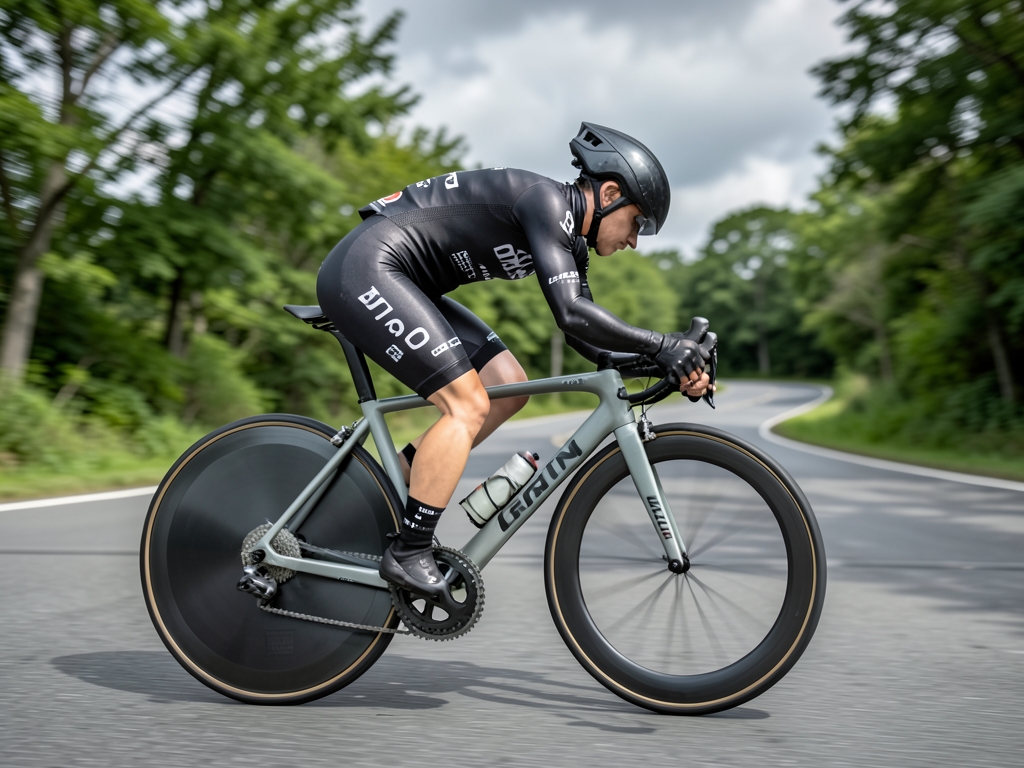
Cycling time trials are frequently described by elite endurance athletes and coaches as the ultimate test of physical and mental fortitude. Often referred to simply as the race of truth, this discipline strips away the tactical complexities, drafting benefits, and team alliances that characterize traditional road races. Instead, every participant faces a starkly straightforward challenge: cover a designated course against the clock in the fastest possible time. Success in a time trial is not determined by explosive sprint finishes or tactical wheel-sucking; rather, it is forged through an uncompromising blend of aerodynamic optimization, precise physiological pacing, and relentless psychological endurance.
To truly understand why time trials hold such a revered and feared status within professional and amateur cycling, one must examine the intricate variables that dictate speed. While raw physical output is undeniably critical, two riders producing identical power numbers can finish minutes apart over a long-distance course simply due to differences in equipment setup, body position, and pacing discipline. This comprehensive exploration delves into the biomechanical, aerodynamic, and physiological principles that govern modern time-trialling success.
The Anatomy of Aerodynamic Efficiency
In the physics of cycling, aerodynamic drag represents the single greatest barrier to forward momentum. As speed increases, the resistance exerted by the surrounding air multiplies exponentially, consuming the vast majority of a rider's total energy output. At professional speeds, overcoming aerodynamic drag accounts for roughly eighty to ninety percent of the total resistance a rider faces on flat terrain. Consequently, aerodynamic optimization is not merely an optional performance enhancement; it is the absolute cornerstone of time-trial performance.
The quest for aerodynamic superiority begins with the rider's position on the machine. Traditional road bikes position the rider in an upright posture, which creates a large frontal surface area that traps and pushes air. Time trial bikes, by contrast, are engineered to allow a radically different geometry. Through the use of clip-on aero bars or integrated cockpit systems, riders rest their forearms horizontally while drawing their elbows inward. This narrow, flattened profile drastically reduces the frontal surface area exposed to the oncoming wind.
Aerodynamic drag is the invisible opponent in every time trial. Minimizing frontal surface area and smoothing airflow over the body and equipment yields significantly greater speed gains than increasing raw muscular power output alone.
Beyond body position, equipment choice plays a pivotal role in slicing through the air. Time trial frames feature teardrop-shaped tube profiles designed to delay airflow separation, creating a smoother wake behind the moving bicycle. Wheels also undergo a dramatic transformation. Deep-section carbon rims and solid disc rear wheels manage airflow turbulence far more effectively than standard shallow-spoked wheels. Furthermore, specialized aerodynamic helmets—often featuring a long tail designed to bridge the gap between the rider's back and head—help laminar airflow remain attached for a longer duration, reducing wake turbulence and saving precious seconds over a long course.
Physiological Demands and Energy Systems
While aerodynamics dictate how efficiently a rider moves through space, human physiology determines how much energy can be continuously generated. Time trials require an extraordinarily high level of sustained aerobic and anaerobic power. Depending on the distance—ranging from short prologue events lasting a few minutes to grueling individual tests spanning over an hour—riders operate right at, or slightly above, their functional threshold power.
Functional threshold power represents the maximum metabolic intensity a rider can maintain for an extended duration without experiencing a rapid accumulation of blood lactate and subsequent metabolic failure. During a longer time trial, a well-prepared athlete will push their cardiovascular system to its absolute ceiling. The heart pumps massive volumes of oxygenated blood to the working muscles in the quadriceps, hamstrings, and calves, while metabolic pathways convert stored glycogen into usable cellular energy.
Info! Maintaining a tucked aerodynamic position often compromises diaphragmatic movement, making efficient breathing mechanics vital for sustaining high oxygen delivery during maximal efforts.
Unlike road races, where surges and recoveries allow intermittent clearance of metabolic byproducts, a time trial demands an unyielding, steady-state effort. This constant pressure pushes the athlete's muscular and cardiovascular systems into a state of continuous strain. Lactate production and clearance must remain in a delicate equilibrium; tipping the balance too early in the race results in premature muscular fatigue and a catastrophic drop in power output during the closing kilometers.
The Science of Pacing Strategies
One of the most common pitfalls for developing time-trialists is improper pacing. Because adrenaline surges at the starting ramp, inexperienced riders frequently launch into the initial kilometers with excessive force, producing power numbers well above their physiological limits. This enthusiasm exacts a severe metabolic penalty later in the event.
Sports scientists and elite coaches generally advocate for specific pacing models depending on course topography and duration. The two primary pacing strategies utilized in professional time trials include:
- Even Pacing: Maintaining a virtually constant power output throughout the entire course. This is widely considered the most metabolically efficient strategy for flat courses, as it minimizes energy spikes that accelerate glycogen depletion.
- Variable Pacing: Adjusting power output based on course terrain. Riders slightly increase power on climbs and into headwinds, while recovering marginally on descents and tailwinds to optimize overall average speed without exceeding energy reserves.
Negative pacing—starting conservatively and finishing with higher power outputs—is exceedingly difficult to execute effectively in a pure time trial because aerodynamic resistance scales non-linearly with speed. Therefore, the vast majority of successful time trial performances rely on a strictly controlled, even-power distribution from the very first pedal stroke to the finish line.
Psychological Fortitude and the Mental Game
Beyond aerodynamics, physiology, and pacing, the race of truth demands a unique brand of mental resilience. There are no teammates to shield the rider from the wind, no tactical interactions with competitors to provide distractions, and no peloton to draft behind when physical suffering peaks. The time trialist is left entirely alone with their thoughts, their breathing, and the burning sensation in their legs.
Endurance psychologists note that time-trial performance is heavily mediated by perceived exertion and discomfort tolerance. As metabolic byproducts accumulate and core temperature rises, the brain continuously sends powerful neural signals urging the body to slow down. Overcoming this internal governor requires intense mental focus, often achieved through task-oriented coping strategies such as breaking the race down into manageable intermediate splits, monitoring cadence targets, and maintaining impeccable aerodynamic posture despite mounting muscular fatigue.
| Factor | Primary Objective | Performance Impact |
|---|---|---|
| Aerodynamics | Minimize frontal area and turbulence | High (saves up to 90% resistance) |
| Pacing | Maintain steady threshold output | Critical (prevents premature fatigue) |
| Equipment | Optimize rolling and wind resistance | Moderate (seconds to minutes saved) |
| Psychology | Sustain discomfort and focus | Essential (executing physical potential) |
Technological Evolution and Course Reconnaissance
The landscape of time-trialling has evolved dramatically over the past few decades, driven by advanced engineering and data analytics. Modern power meters allow riders to monitor their wattage output in real-time with pinpoint accuracy, eliminating guesswork and enabling precise execution of pre-planned pacing profiles. Wind tunnel testing, computational fluid dynamics simulations, and 3D motion capture have further refined the integration between human biomechanics and mechanical equipment.
Equally important is meticulous course reconnaissance. Professional teams inspect every inch of the race route prior to the event, cataloging corner radii, road surface quality, wind exposure corridors, and elevation profiles. Knowing precisely when a sharp descent leads into a tight hairpin turn allows a rider to carry optimal momentum through corners without taking unnecessary safety risks. In a discipline where victories are routinely decided by fractions of a second, leaving course familiarity to chance is simply not an option.
What makes a time trial bike different from a standard road bike?
Time trial bikes feature specialized aerodynamic frame geometries, steep seat tube angles that rotate the rider's hips forward, and aero handlebars that allow the rider to rest their forearms horizontally. This setup dramatically reduces frontal surface area and wind resistance compared to the upright posture of a standard road bike.
Why is even pacing so crucial in a time trial?
Because aerodynamic drag increases exponentially with speed, pushing too hard early in a race expends disproportionately more energy without yielding equivalent time gains. Even pacing ensures optimal utilization of glycogen stores and prevents premature muscular failure.
How do power meters change modern time-trial strategy?
Power meters provide real-time data on wattage output, allowing riders to adhere strictly to predetermined pacing thresholds based on their functional threshold power rather than relying solely on subjective feelings of exertion.
Does rider height impact aerodynamic setup choices?
Yes, taller riders face unique aerodynamic challenges due to larger frontal surface areas. Fitting specialists must carefully balance extreme aerodynamic tuck positions with hip angle openness to ensure power production is not compromised by an overly cramped posture.
Ultimately, the cycling time trial stands as a pure distillation of athletic endeavor. By stripping away external variables and placing the entire burden of performance on mechanical efficiency and physiological capacity, the race of truth offers an uncompromised measure of human capability. Whether executed on a grand tour stage or a local club evening event, mastering this discipline requires absolute dedication to science, training, and mental fortitude.
