

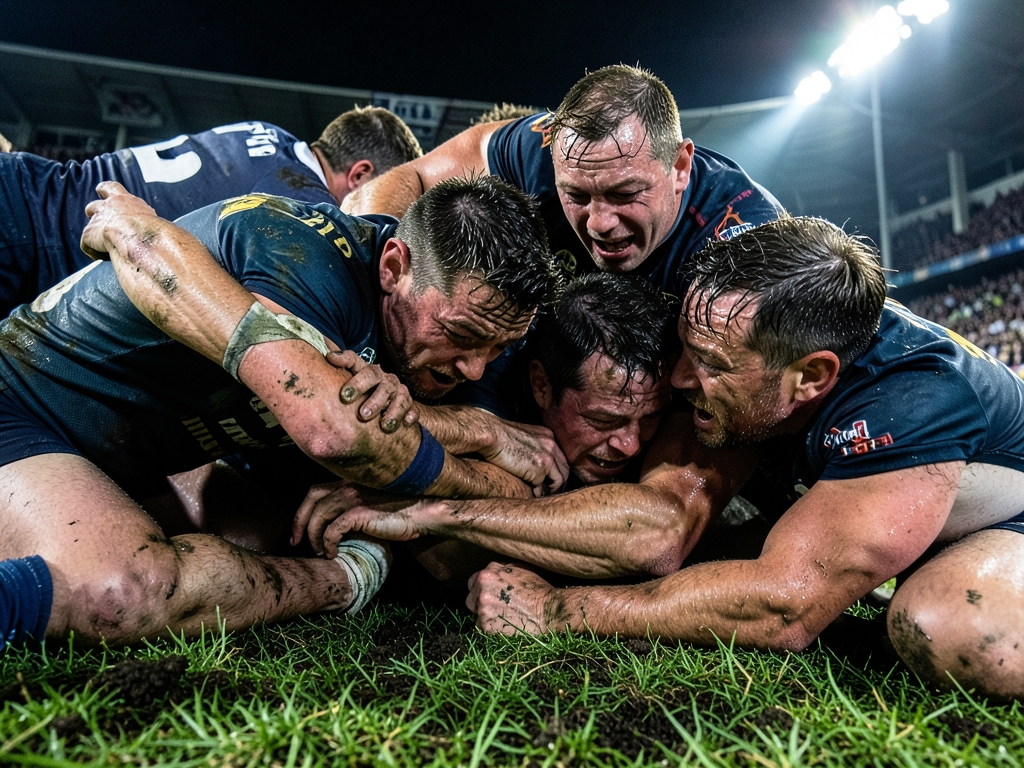
The rugby union scrum stands as one of the most iconic, complex, and physically demanding set-pieces in global team sports. Often misunderstood by casual observers as a chaotic pile of players pushing against one another, the modern scrum is actually a highly regulated architectural marvel of physics, biomechanics, and tactical coordination. When eight players from one forward pack bind together and lock horns with eight opposing players, they generate immense compressive forces that can exceed thousands of pounds of pressure. Understanding the mechanics behind this central pillar of rugby union reveals why it is frequently described as a game within a game, demanding specialized athletic training, precise timing, and uncompromising technical discipline.
The Evolution of the Rugby Scrum
To appreciate how contemporary scrums function, one must look at how the laws governing this set-piece have evolved over decades. Historically, the scrum was a dynamic contest where hooking the ball backward with the foot was paramount, and the engagement was often a loose, highly mobile affair. Over time, as professional conditioning transformed players into elite athletes with exceptional strength-to-weight ratios, the kinetic energy unleashed during the collision of two forward packs escalated dramatically. In response to safety concerns and a desire to maintain a fair contest for possession, rugby governing bodies introduced strict engagement sequences.
Info! The modern engagement sequence—Crouch, Bind, Set—was implemented by World Rugby to significantly reduce the impact forces experienced by front-row players during the initial collision.
This structured cadence ensures that players are stationary and properly bound before any pushing occurs, preserving the structural integrity of the human spine and neck while still allowing an intense contest of strength and leverage. Referees enforce these commands rigorously, penalizing any side that attempts to pre-engage, collapse the tunnel, or drive illegitimately.
Furthermore, the historical progression of the scrum has seen shifts in how packs are refereed regarding straight feeds, locking the ball, and wheeling. In earlier eras, the scrum half could roll the ball down the middle channels, but modern interpretations require the ball to be fed straight down the center line, though tactical variations in hooker striking techniques continue to adapt within these parameters. The evolution is a continuous balancing act between maintaining an open, running game of rugby and preserving the unique forward contest that defines the code's DNA.
Anatomy of a Forward Pack
Every position in a rugby scrum serves a distinct purpose, functioning much like the moving parts of an industrial engine. The front row consists of two props (loosehead and tighthead) and a hooker. Flankers and the number eight make up the loose forwards who bind from behind, while the second-row locks provide the primary driving power from the engine room.
- Loosehead Prop: Positioned on the left side of the front row, this player must withstand immense rotational forces while keeping a clear view of the referee and the tunnel for the incoming ball.
- Hooker: Positioned directly between the two props, the hooker bears the physical burden of the strike, attempting to win possession with a foot flick while maintaining solid structural support.
- Tighthead Prop: Situated on the right side of the front row, the tighthead faces perhaps the most physically grueling role, locked squarely between the opposition loosehead and hooker, absorbing crushing lateral and downward pressure.
- Second-Row Locks: Usually the tallest players on the pitch, the locks wedge their heads directly between the gaps of the front row, transferring the massive forward momentum generated by the back row into the scrum core.
- Loose Forwards: Flankers and the number eight bind tightly behind the locks, acting as the suspension system and directional rudder that keeps the scrum moving straight forward.
The interlocked nature of these positions means that a deficiency in technique by any single individual compromises the structural integrity of the entire pack. For instance, if a loosehead prop fails to establish a proper bind on the opposition tighthead's jersey, the gap created can allow the opposing pack to pivot or channel illegal pressure directly onto the hooker, neutralizing any chance of winning clean possession.
Biomechanics and Physics in the Tunnel
At the microscopic level of physics, a scrum is a contest of force vectors, center of gravity management, and friction coefficients. When players lower their body heights, they reduce their center of gravity, which is crucial for establishing leverage. A pack that manages to drive upward slightly beneath the opponent's chest plate can de-stabilize the opposition, lifting their studs off the turf and drastically reducing their traction.
Success in the scrum is rarely a matter of raw, unbridled muscle alone; it is the art of synchronized force application, where eight distinct bodies move as a single monolithic unit to displace an opposing wall of flesh.
Furthermore, foot placement on the turf determines how efficiently chemical energy from muscle contractions translates into linear propulsion. Players wear specialized boots with long metal studs designed to bite deep into damp grass turf, preventing slippage during the peak force phase of the push. If a front-row player's foot slips even a fraction of an inch, the entire defensive or offensive shape can buckle, leading to a penalty or a turnover.
The force exerted during an engagement is distributed across multiple skeletal points. Tighthead props, for example, experience lateral compressive forces that require immense neck and trapezius muscle development. Biomechanical analyses of top-tier props show that their isometric neck strength must withstand loads that rival those experienced by motor racing drivers navigating high-speed corners.
Tactical Variances and Strategies
Coaches and forward specialists spend countless hours analyzing opposition scrum tendencies. Different tactical approaches can dictate the outcome of a match. Some teams focus on rapid ball distribution, using a quick heel to feed their scrum-half instantly and launch a backline raid before the defensive line can reset. Other packs prefer a methodical approach, driving the opposition backward to secure a penalty try or force a turnover on the opponent's put-in.
The wheeling tactic is another sophisticated maneuver where a pack intentionally pushes the scrum at an angle, causing it to pivot around a central axis. If completed legally without illegal boring or collapsing, a successful wheel can result in a turnover of possession or render the opposing scrum-half's path to the ball illegal.
Another vital tactical consideration is the management of the put-in. When a team has possession at the scrum, they dictate the tempo. A clever number eight might delay the pick-up to draw defenders in close, creating space around the fringe, or the scrum-half might coordinate a blindside move that catches the defending back row out of position. Conversely, defensive scrums focus on disruption, attempting to destabilize the opposition platform so thoroughly that the attacking team cannot launch an effective play.
| Role | Primary Responsibility | Key Physical Attribute |
|---|---|---|
| Loosehead Prop | Stability and visibility | Explosive upper body strength |
| Hooker | Securing possession | Core stability and flexibility |
| Tighthead Prop | Absorbing pressure | Massive neck and shoulder resilience |
| Locks | Forward drive generation | Exceptional height and raw power |
| Back Row | Steering and support | Dynamic acceleration and endurance |
Safety and Regulation
Given the sheer physical forces involved, player safety remains paramount in the administration of the scrum. Medical research into spinal loading has led to continuous refinement of the laws. Referees are trained to spot early indicators of structural failure, such as a prop's arm dropping or a spine bending below parallel, and blow the whistle immediately to prevent collapses.
Warning! Improper engagement technique can lead to catastrophic neck and spinal injuries, which is why rigorous coaching accreditation and strict referee oversight are mandatory at all levels of the sport.
Academy coaches place immense emphasis on safe binding techniques, ensuring that players use their shoulders rather than their heads for initial contact, thereby protecting the cervical vertebrae from excessive axial loads. Referees also monitor the alignment of the tunnel to ensure that the ball is fed without bias, minimizing the need for dangerous, uncoordinated flailing by hookers who might otherwise be forced into vulnerable body positions.
Medical staffs work alongside scrum coaches to monitor player workloads, utilizing GPS tracking and impact sensors in training sessions to measure the cumulative strain placed on front-row players throughout a weekly training cycle. This data-driven approach helps prevent overuse injuries and ensures that athletes enter matchday with optimal physical reserves.
What is the difference between a loosehead and a tighthead prop?
A loosehead prop stands on the left side of the front row and has one shoulder exposed to the outside, giving them better visibility of the referee and tunnel. The tighthead prop stands on the right, sandwiched between two opponents, making their role significantly more physically demanding as they absorb pressure from both sides.
Why did World Rugby introduce the Crouch, Bind, Set sequence?
The sequence was introduced to reduce the velocity of the initial collision between opposing packs, thereby lowering the immense impact forces on the neck and spine and significantly improving overall player safety during the engagement phase.
How do flankers contribute to the scrum besides pushing?
Flankers bind tightly to the outside of the second-row locks, providing essential structural stability, preventing the scrum from wheeling illegitimately, and acting as a springboard to detach quickly and defend against the opposing backline once the ball is won.
What is a wheeling scrum and is it legal?
A wheeled scrum occurs when the entire mass rotates around a central point during the push. It is completely legal provided the rotation happens naturally through forward momentum without players intentionally collapsing, boring in, or twisting the formation illegally.
Ultimately, the rugby union scrum is much more than a method for restarting play after a minor infringement; it is a profound test of collective human capability. It requires eight individuals to sacrifice their personal comfort and synchronize their strength into a unified mechanical instrument. For fans and players alike, mastering the subtleties of the set-piece offers a deep appreciation for the tactical sophistication that underpins the sport of rugby union across the globe.
