

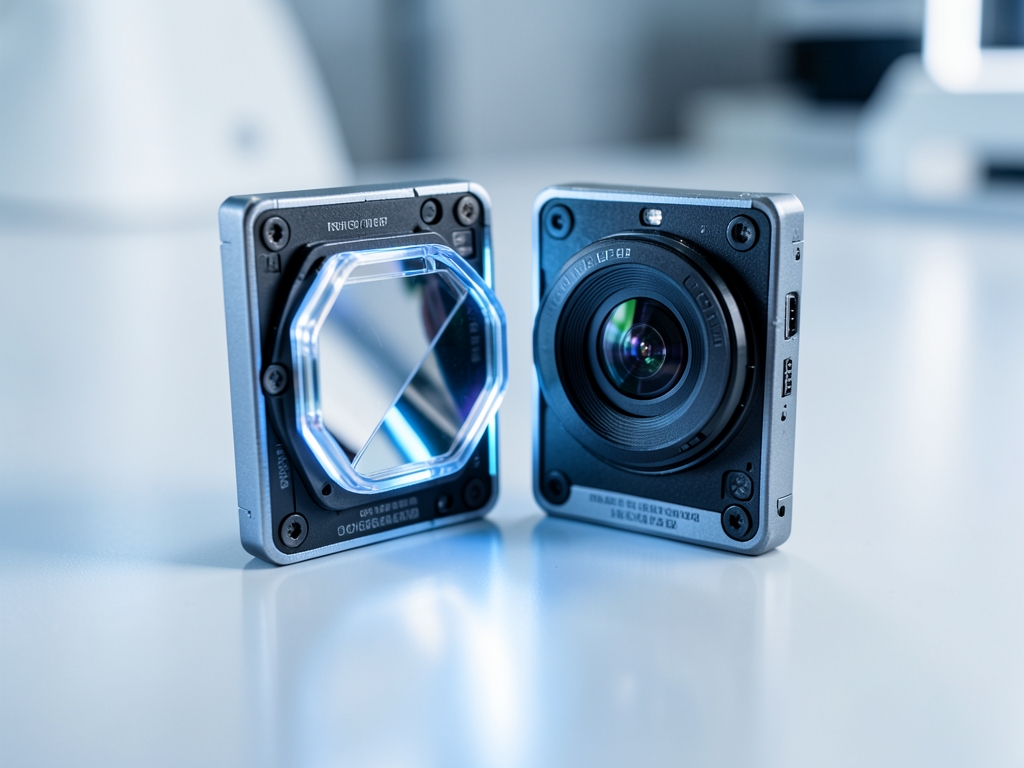
Mobile photography has undergone a radical transformation over the past decade, shifting from a convenient novelty into a primary imaging tool capable of competing with dedicated consumer cameras. One of the most significant engineering breakthroughs driving this evolution is the integration of periscope telephoto lenses into modern smartphones. For years, mobile manufacturers faced a strict physical limitation: smartphones needed to remain thin enough to fit comfortably in a pocket or hand, yet powerful zoom lenses required significant physical depth, or focal length, to magnify distant subjects without degrading image quality. Traditional telephoto configurations stacked glass elements linearly along the optical axis, directly restricting zoom capabilities to roughly two or three times magnification. To transcend these physical boundaries, optical engineers borrowed a page from naval history, adapting the periscope concept to redirect light within the ultra-slim chassis of a handheld phone.
The Fundamental Physics of Optical Zoom Versus Digital Zoom
To appreciate why periscope lenses represent such a monumental engineering achievement, one must first understand the fundamental mechanics of camera optics. In photography, focal length determines the angle of view and the degree of magnification. A longer focal length narrows the field of view, making distant objects appear larger and closer. In a traditional DSLR or mirrorless camera system, achieving a true optical zoom of five times, ten times, or higher requires physical space between the front lens element and the image sensor. Light travels straight through the lens barrel, and the distance must match the focal length.
When smartphone manufacturers attempted to offer higher optical zoom levels using traditional linear arrangements, they encountered the dreaded camera bump. As sensors grew larger and lenses more complex, these camera bumps protruded significantly from the back of the device, creating aesthetic and ergonomic challenges. Furthermore, relying solely on digital zoom—which simply crops into a wide-angle image and interpolates the pixels—results in severe degradation of detail, noticeable noise, and a loss of dynamic range. Periscope lenses solve this dilemma by decoupling optical zoom power from the thickness of the phone.
How Folded Optics Work Inside a Smartphone
The core mechanism behind a smartphone periscope lens is known as folded optics. Instead of allowing light to travel directly backward from the outer lens element to the sensor, a periscope system bends the path of light at a 90-degree angle. Light enters through a vertically or horizontally oriented exterior window on the back of the phone. It then strikes a highly reflective surface, typically a precision-engineered prism or an angled mirror. This optical component redirects the incoming light rays sideways, running parallel to the flat plane of the smartphone screen rather than perpendicular to it.
By routing the light horizontally or vertically across the interior width or length of the phone body, engineers suddenly gain access to several extra centimeters of physical space. This extended internal pathway allows them to arrange multiple glass lens elements in a linear sequence along the side of the device. Light passes through these moving optical elements, which adjust position to alter focus and magnification, before finally hitting the image sensor. This ingenious redirection of light enables true optical zoom capabilities ranging from five times to ten times magnification—and sometimes more through hybrid configurations—all while maintaining a remarkably slim phone profile.
| Zoom Type | Mechanism | Image Quality | Physical Impact |
|---|---|---|---|
| Digital Zoom | Software cropping and pixel interpolation | Low detail, high noise | None |
| Traditional Telephoto | Linear glass stack perpendicular to body | High optical quality | Pronounced camera bump |
| Periscope Telephoto | 90-degree light bend with internal folded optics | High optical quality | Minimal thickness impact |
Key Engineering Challenges in Periscope Design
Designing and manufacturing periscope telephoto systems is an immensely complex engineering endeavor that requires extreme precision. Every single component within the light path must be aligned down to the micrometer. Even the smallest thermal expansion or structural flex can result in catastrophic optical distortion, blurry images, or complete autofocus failure. Manufacturers must overcome several formidable hurdles:
- Light Loss and Reflectivity: Every time light reflects off a mirror or passes through an additional glass element, a fraction of the photons is lost. Engineers must apply specialized multi-layer anti-reflective coatings to prisms and lenses to maximize light transmission and maintain low-light performance.
- Miniaturization of Actuators: To achieve autofocus and optical image stabilization, the internal glass elements must physically move along the optical track. Designing tiny, ultra-fast magnetic or piezoelectric actuators that can shift these elements smoothly inside a cramped space is a major manufacturing feat.
- Sensor Real Estate: Because the light is turned sideways, the image sensor cannot be mounted flat against the main logic board in a standard configuration. Engineers often have to place the sensor perpendicular to the main board, utilizing flexible ribbon cables to transfer high-speed image data.
Info! The integration of periscope lenses is one of the primary reasons modern flagship smartphones can capture crisp, detailed photographs of wildlife, sports events, and architectural details from hundreds of feet away without bulky external equipment.
Optical Image Stabilization (OIS) and Sensor-Shift Technologies
One of the most critical aspects of long-range telephoto photography is stabilization. The higher the magnification, the more sensitive the camera becomes to even the tiniest hand tremors or micro-vibrations. At ten times optical zoom, a microscopic twitch of the hand translates into wild, disorienting jumps in the viewfinder, making it virtually impossible to frame a shot or capture a sharp image.
To combat this, periscope telephoto modules are equipped with advanced stabilization systems. There are two primary methods used in modern devices:
- Prism Stabilization: The angled mirror or prism at the entry point of the periscope module is mounted on flexible gimbals or magnetic actuators. It tilts dynamically in real-time, counteracting rotational hand movements by adjusting the angle of the incoming light before it even hits the internal lenses.
- Lens and Sensor-Shift Stabilization: In addition to—or instead of—stabilizing the prism, the internal lens elements or the image sensor itself can float on micro-springs, moving rapidly on multiple axes to compensate for lateral shakes.
When combined with computational photography algorithms—such as multi-frame stacking and machine learning-based motion correction—these stabilization systems allow users to shoot handheld telephoto images that rival the clarity of pictures taken on mounted DSLRs.
The Future of Mobile Telephoto Technology
As consumer demand for versatile mobile cameras continues to grow, engineers are already pushing beyond the current limits of periscope technology. One of the most exciting emerging developments is the continuous zoom periscope lens. Traditional smartphone periscopes usually offer fixed optical steps—such as three times and ten times—relying on digital zoom for the intermediate ranges. Newer continuous zoom mechanisms use fluid-like lens groups that slide smoothly along a track, providing true optical magnification at every single step between three times and twenty times.
Another area of rapid advancement involves liquid lens technology. By replacing rigid glass elements with deformable fluid cells manipulated by electrical voltage, engineers can alter the focal length and focus point instantly with zero mechanical wear and tear. This could drastically reduce the physical footprint of periscope modules while expanding their zoom range even further. Furthermore, as sensor manufacturing improves, larger sensors are being paired with periscope optics, drastically improving low-light telephoto performance, which has historically been the Achilles' heel of smartphone zoom cameras.
The evolution of smartphone periscope lenses proves that physical limitations in consumer technology are rarely permanent. By rethinking how light travels through a device, engineers have turned optical physics into a competitive advantage for mobile photography.
Ultimately, periscope telephoto lenses have redefined what is possible in the palm of your hand. They bridge the gap between pocket-sized convenience and professional-grade optical reach, empowering everyday users to capture distant worlds with stunning clarity. As optical engineering and computational processing continue to converge, the future of mobile zoom holds limitless potential for creative expression.
What is a periscope telephoto lens on a smartphone?
A periscope telephoto lens is an advanced camera system that uses a prism or angled mirror to bend incoming light at a 90-degree angle. This allows light to travel horizontally across the interior of the phone rather than straight through it, enabling high optical zoom levels without making the phone thicker.
Why is optical zoom better than digital zoom?
Optical zoom uses physical glass elements to magnify the image before it hits the sensor, preserving full resolution, sharpness, and dynamic range. Digital zoom simply crops an existing image and enlarges the pixels via software, which results in noticeable blurriness, loss of detail, and digital noise.
How do phones prevent blurry photos at high zoom levels?
High-zoom periscope modules rely heavily on advanced Optical Image Stabilization (OIS). They use microscopic actuators to dynamically tilt the internal prism or shift lens elements and sensors in real-time, counteracting hand tremors and keeping the image stable.
What is the difference between fixed periscope zoom and continuous zoom?
Fixed periscope zoom provides specific optical magnifications, such as three times or ten times, while using digital cropping for intermediate steps. Continuous zoom utilizes moving lens groups or liquid optics to offer seamless, true optical magnification across every focal length within its range.
Understanding the intricate physics and engineering behind folded optics highlights the immense innovation packed into modern mobile devices. Whether capturing distant landscapes or intimate architectural details, periscope telephoto lenses ensure that high-performance photography remains accessible to everyone.
