

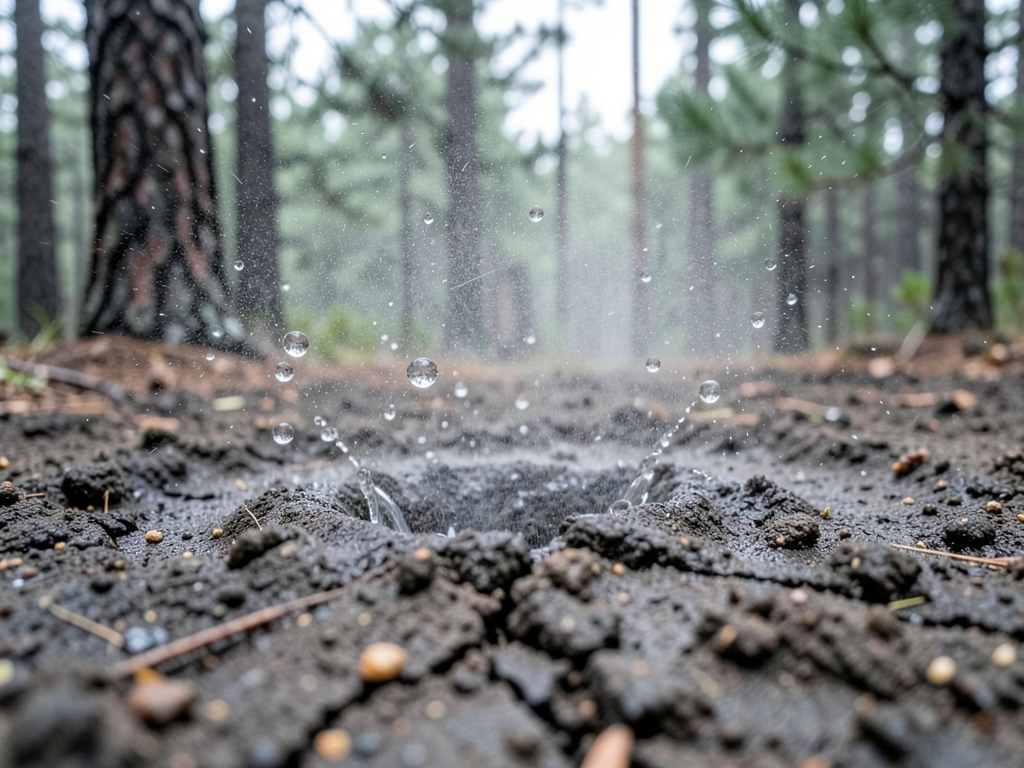
There are few sensory experiences as universally evocative and deeply comforting as the distinct, earthy aroma that fills the air immediately after a dry spell ends with a summer downpour. This unmistakable scent has accompanied human existence for millennia, deeply embedded in our evolutionary awareness, yet its true scientific nature remained an enigma until relatively recently. Long before modern chemistry unraveled the molecular architecture behind this fragrance, ancient cultures observed how the atmosphere transformed after rainfall. Today, scientists understand that this phenomenon is not a single chemical reaction, but rather a sophisticated interplay of geology, microbiology, meteorology, and organic chemistry.
Info! The term was coined in 1964 by Australian researchers Isabel Joy Bear and Richard Thomas, derived from the Greek words petra, meaning stone, and ichor, the fluid that flowed in the veins of the gods.
The Etymology and Discovery of Petrichor
In 1964, mineralogists Isabel Joy Bear and Richard Thomas published a groundbreaking paper in the scientific journal Nature that officially introduced the word petrichor to the scientific lexicon and the general public. Prior to their research, people simply referred to the phenomenon as the earthy smell after rain, or used regional colloquialisms without a unified definition. Bear and Thomas set out to investigate the origins of this persistent aroma, which seemed to emanate from rocks and soil exposed to prolonged periods of warm, dry weather.
Through rigorous laboratory extraction techniques, the researchers discovered that certain types of rocks, particularly argillaceous sediments like sandstone, clay, and shale, absorb organic compounds produced by vegetation during dry periods. When rainfall finally occurs, these absorbed compounds—along with specific microbial byproducts—are released into the surrounding atmosphere. The duo demonstrated that capturing and distilling this essence yielded a yellowish oil trapped within the rocks during dry spells. This foundational discovery opened the door for subsequent generations of atmospheric chemists to decode the exact molecular agents responsible for the beloved scent.
The Core Chemical Players: Geosmin and Plant Oils
While petrichor is a complex cocktail of multiple airborne molecules, two primary contributors dominate the chemical profile: geosmin and various plant-derived oils. Understanding each component reveals why the scent varies depending on geographic location, soil composition, and local flora.
Geosmin: The Microbial Mastermind
Geosmin is an organic compound produced by certain classes of microbes, most notably actinomycetes—filamentous bacteria found abundantly in healthy, damp soils. When soil dries out, these bacteria produce spores as a survival mechanism. As raindrops strike the ground, the violent impact aerosolizes these microscopic spores and the geosmin molecules attached to them, propelling them upward into the atmospheric boundary layer.
Human noses possess an extraordinary sensitivity to geosmin. Our olfactory receptors can detect concentrations as low as a few parts per trillion. This extreme sensitivity is believed to be an evolutionary adaptation inherited from our ancestors, who relied on the scent of damp earth to locate vital water sources across arid landscapes. Furthermore, many animals, including camels and various insects, utilize geosmin signatures to locate water or fertile terrain.
Plant-Derived Volatile Oils
During extended dry spells, various regional plants secrete natural oils into their surrounding soil and onto their leaves. These volatile organic compounds serve multiple protective functions for the flora, such as inhibiting seed germination in nearby competing plants during drought conditions or protecting delicate tissues from excessive heat loss. Over weeks or months of dry weather, these oils accumulate in the soil matrix.
When rain falls, the physical impact of water droplets—acting similarly to a microscopic atomizer—splatters these accumulated plant oils into the air alongside geosmin. The combination of bacterial geosmin and botanical oils creates the rich, multifaceted aroma we recognize as the smell of rain. In regions dominated by pine or eucalyptus forests, these botanical contributions become exceptionally prominent, infusing the petrichor profile with sharp, resinous undertones.
The following table outlines the primary chemical contributors to the rain scent phenomenon, their biological sources, and their distinct sensory characteristics:
| Chemical Component | Primary Source | Sensory Profile |
|---|---|---|
| Geosmin | Actinomycetes bacteria | Deeply earthy, damp soil, muddy |
| Plant Volatiles | Terpenes from trees and shrubs | Resinous, floral, herbal, woody |
| Ozone | Atmospheric electrical discharge | Fresh, sharp, clean, metallic |
The Role of Ozone in the Post-Rain Atmosphere
While geosmin and plant oils account for the deep, earthy undertones of petrichor, another distinct scent often accompanies storms: a sharp, clean fragrance frequently associated with electrical activity. This second scent is ozone, chemically designated as O3. Lightning discharges during thunderstorms possess enough energy to split atmospheric oxygen molecules (O2) into individual oxygen atoms. These free radicals quickly bond with existing diatomic oxygen molecules, forming ozone.
Downdrafts within thunderstorms rapidly transport this high-altitude ozone down to ground level, where humans can easily smell it before, during, and immediately after the precipitation reaches the surface. This ozone component provides the crisp, invigorating contrast to the heavy, muddy fragrance of geosmin, rounding out the complete sensory experience of a summer storm.
The Mechanics of Rain Aerosolization
The transition of chemical compounds from stationary soil particles into breathable air is a marvel of fluid dynamics. For decades, scientists suspected that rain released these smells, but the precise physical mechanism remained unproven until high-speed imaging technology became widely available.
In recent years, researchers at the Massachusetts Institute of Technology utilized high-speed cameras to film raindrops hitting porous surfaces. Their observations revealed a fascinating physical process:
- A falling raindrop makes initial contact with a porous, dry soil surface.
- Upon impact, a microscopic pocket of air is trapped underneath the falling droplet.
- This trapped air bubble rapidly travels upward through the center of the droplet, bursting through the top surface.
- As the bubble bursts, it releases dozens of tiny aerosols—microscopic liquid droplets containing geosmin and soil particles—into the surrounding air.
- Wind currents easily catch these aerosols, dispersing them downwind and bringing the scent to human noses even before the rain reaches them.
This aerosolization process explains why light to moderate rain produces a much stronger scent than heavy, torrential downpours. In a torrential downpour, the soil quickly becomes waterlogged, sealing the pores and preventing the effective trapping and release of air bubbles. Furthermore, excessive water dilutes the concentration of volatile compounds, washing them away into deeper groundwater systems rather than launching them into the atmosphere.
Evolutionary Significance and Human Perception
The intense human appreciation for petrichor is not merely a modern cultural quirk; it is deeply rooted in our evolutionary history. Anthropologists and evolutionary biologists suggest that early human survival depended heavily on recognizing the onset of rain. For nomadic hunter-gatherers, rain meant replenishing waterholes, renewed plant growth, and increased animal activity—all essential for survival.
Our olfactory system's extreme sensitivity to geosmin suggests that detecting moisture was as critical to survival as smelling smoke or identifying spoiled food.
Today, urban environments often dull our connection to these natural cycles, yet the psychological comfort associated with rain remains intact. Environmental psychologists have noted that the sensory experience of a rainstorm can trigger parasympathetic nervous system responses, lowering cortisol levels and promoting a sense of calm. The combination of visual dimming, acoustic masking of urban noise, and the distinct olfactory signature of petrichor creates a holistic sensory reset that many individuals find deeply therapeutic.
Warning! While the natural scent of rain is generally harmless and refreshing, extremely damp indoor environments with persistent musty smells caused by similar microbial volatile organic compounds can indicate dangerous mold growth requiring remediation.
Geographical Variations in Rain Scents
The scent of rain is remarkably democratic, yet it is never uniform across the globe. Because petrichor relies entirely on the local geological substrate, bacterial communities, and regional flora, a rainstorm in a dry pine forest smells vastly different from a downpour over a tropical rainforest or a sun-baked desert.
Desert Petrichor
In arid regions like the American Southwest or the Australian Outback, the first rain after a prolonged dry season produces an exceptionally potent burst of petrichor. The sun-baked soil and rocks have accumulated vast quantities of volatile oils and microbial byproducts over months of extreme heat. When the monsoon arrives, the sudden release creates an intense, sharp fragrance that locals instantly recognize as the herald of life-giving water.
Forest and Woodland Petrichor
In temperate and boreal forests, the scent is heavily influenced by conifers, decaying leaf litter, and rich humus layers. Here, the dominant notes lean toward resinous pine, damp moss, and deep organic decay, creating a heavier, more complex olfactory profile than what is typically experienced in urban parks or agricultural fields.
For those interested in exploring the broader context of atmospheric science and earth systems, further educational resources can be explored through professional organizations dedicated to environmental monitoring and meteorology.
Explore World Meteorological Organization Resources
What exactly causes the earthy smell of rain?
The earthy smell, known as petrichor, is caused primarily by the release of geosmin—a chemical produced by soil-dwelling actinomycetes bacteria—along with plant oils that accumulate during dry weather and are aerosolized when raindrops strike the ground.
Why can humans smell geosmin in such tiny amounts?
Human olfactory receptors have evolved an extraordinary sensitivity to geosmin, capable of detecting concentrations as low as a few parts per trillion, likely as an evolutionary adaptation to help our ancestors locate water sources in arid environments.
Does heavy rain smell stronger than light rain?
No, light to moderate rain actually produces a stronger scent because it optimizes the physical mechanism of aerosolization. Torrential downpours waterlog the soil, prevent air bubble formation, and dilute volatile compounds rather than releasing them into the air.
What is the difference between petrichor and ozone?
Petrichor refers specifically to the earthy, organic scent originating from soil bacteria and plant oils, whereas ozone is a clean, sharp-smelling gas created when atmospheric oxygen molecules are split by electrical lightning discharges during a thunderstorm.
In conclusion, petrichor represents a fascinating intersection of earth science, microbiology, and human sensory evolution. What we perceive as a simple fragrance is actually a complex atmospheric symphony driven by bacterial spores, botanical oils, and fluid dynamics. By understanding the intricate mechanisms behind this natural phenomenon, we gain a deeper appreciation for the complex interactions that constantly occur between the earth and our atmosphere during every rainstorm.
