

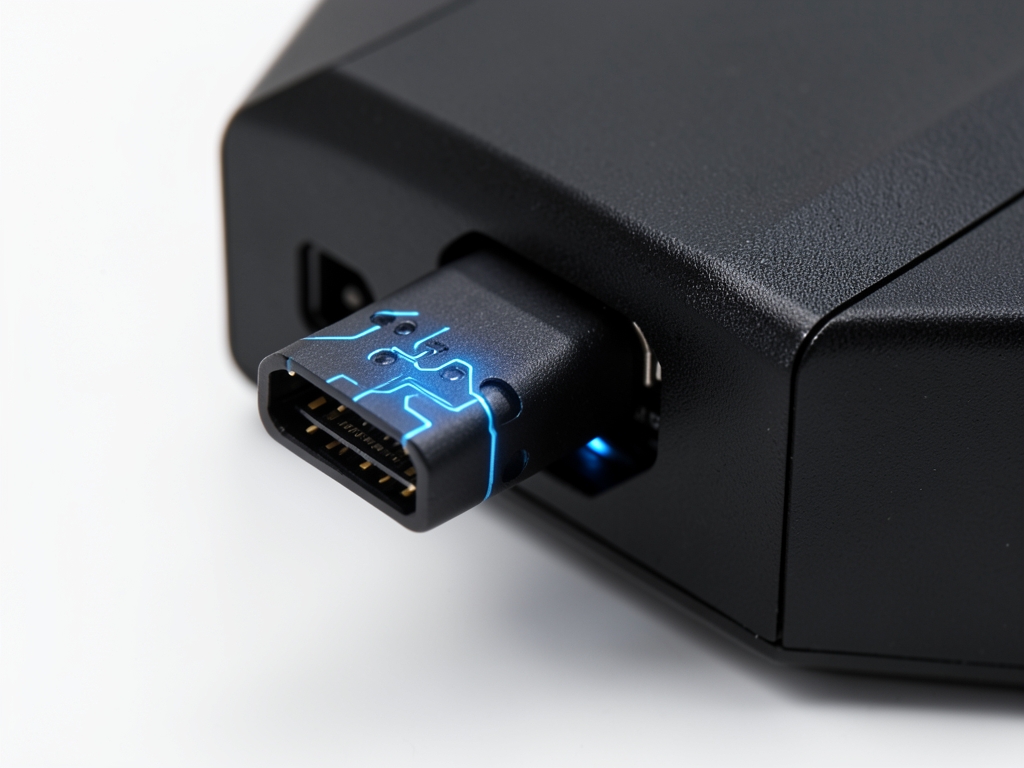
The evolution of universal serial connectivity has reached another major technical milestone with the official refinement and implementation rollout of the USB4 Version 2.0 architecture. Developed by the USB Implementers Forum (USB-IF), this next-generation standard doubles the maximum operating bandwidth of physical cable connections, pushing performance ceilings up to 80 gigabits per second over standard Type-C infrastructure. For international hardware manufacturers, systems engineers, and professional power users across Europe and the United States, this transition represents a fundamental restructuring of how peripheral devices, external graphics enclosures, high-resolution displays, and high-capacity storage arrays communicate with host computers.
Understanding the architectural shifts required to achieve 80 Gbps transmission speeds without compromising signal integrity requires examining the underlying physical layer signaling techniques. Previous iterations relied on traditional Non-Return-to-Zero modulation schemes, which encounter severe signal attenuation and electromagnetic interference over long copper runs at extremely high clock frequencies. The USB4 Version 2.0 standard overcomes these physical limitations by adopting a sophisticated three-level Pulse Amplitude Modulation scheme, commonly known as PAM3. This encoding method transmits more bits per clock cycle by utilizing three distinct voltage levels instead of two, optimizing data throughput while maintaining compatibility with certified 40 Gbps and passive Type-C cables under specific operational parameters.
Asymmetric Data Architecture and Dynamic Bandwidth Allocation
One of the most transformative engineering features integrated into the USB4 Version 2.0 specification is its support for asymmetric data flow. In legacy connection standards, physical lanes were symmetrically allocated for upstream and downstream traffic, which often created artificial bottlenecks when users transferred massive multi-terabyte files while simultaneously driving multiple high-refresh-rate external monitors. The updated architecture introduces a dynamic lane allocation protocol that can shift bandwidth distribution based on real-time system demands.
Under this dynamic framework, the physical link can reconfigure itself to direct up to 120 Gbps in a single direction while reserving the remaining capacity for essential return traffic. This capability is exceptionally valuable for professional video production workflows, data backup servers, and multi-display virtual reality setups where downstream bandwidth requirements vastly outweigh upstream transmission needs. Host controllers and peripheral devices negotiate these link parameters instantaneously upon connection, ensuring seamless operation across diverse operating systems and hardware platforms without requiring manual user intervention.
Info! The USB4 Version 2.0 architecture maintains full backward compatibility with USB 3.2, USB 2.0, and Thunderbolt 3 devices, though maximum speeds require certified hardware components and cables.
Enhanced DisplayPort and PCIe Tunneling Protocols
Modern computing heavily relies on protocol tunneling, a mechanism that encapsulates different data types—such as DisplayPort video streams, PCI Express peripheral commands, and USB data packets—into a single unified data stream. USB4 Version 2.0 significantly expands the bandwidth allocated to these tunneled protocols, enabling unprecedented performance for external expansion cards and visual interfaces.
| Specification Metric | USB4 Version 1.0 | USB4 Version 2.0 |
|---|---|---|
| Maximum Data Rate | 40 Gbps | 80 Gbps (Asymmetric up to 120 Gbps) |
| Signaling Modulation | NRZ (Non-Return-to-Zero) | PAM3 (Pulse Amplitude Modulation) |
| DisplayPort Tunneling | DisplayPort 1.4a / 2.0 support | Updated DisplayPort 2.1 support over UHBR |
| PCIe Tunneling Support | PCIe Gen 3 | PCIe Gen 4 and higher bandwidth integration |
| Backward Compatibility | Thunderbolt 3, USB 3.2, USB 2.0 | Thunderbolt 3/4, USB4 v1, USB 3.2, USB 2.0 |
With the integration of DisplayPort 2.1 protocol support, the updated standard effortlessly handles uncompressed high-resolution video feeds, including dual 8K displays running at high refresh rates without requiring separate video adapter cables. Furthermore, the enhancement of PCIe data tunneling allows external enclosures to run high-performance graphics processing units or enterprise-grade NVMe solid-state drive arrays with minimal latency overhead, bridging the performance gap between internal motherboard slots and external desktop connections.
Power Delivery and Thermal Management Considerations
Pushing significantly higher data volumes through compact Type-C physical interfaces introduces notable thermal and electrical challenges. To address these demands, the USB-IF has synchronized the USB4 Version 2.0 rollout with advanced power delivery revisions, ensuring that connected devices can negotiate precise wattage profiles up to 240 watts through USB Power Delivery Extended Power Range protocols.
Engineers designing next-generation hubs, docking stations, and external storage enclosures must implement rigorous thermal management strategies. Because high-speed PAM3 transceivers and active signal retimers generate localized heat during continuous heavy data transfers, modern peripheral housings increasingly incorporate aluminum heatsinks, internal copper shielding plates, and intelligent firmware-controlled thermal throttling to protect sensitive semiconductor components from overheating during prolonged enterprise workloads.
Warning! Users should verify cable certification markings. Standard uncertified Type-C cables lacking proper electronic marker chips may limit performance or fail to establish stable 80 Gbps links.
Implementation Roadmap for Consumer and Enterprise Hardware
The commercial integration of USB4 Version 2.0 is rolling out across high-end desktop motherboards, enterprise laptops, and professional workstation accessories. Semiconductor manufacturers have begun sampling native host controllers, while peripheral vendors prepare certified external storage solutions capable of sustaining read and write speeds exceeding 7,000 megabytes per second over external connections.
- Host Controller Integration: Silicon vendors incorporate native PAM3 physical layer support into upcoming processor chipsets and motherboard input/output controllers.
- Cable Certification and Testing: Independent testing laboratories validate active and passive Type-C cables against stringent signal attenuation and EMI shielding standards.
- Peripheral Ecosystem Deployment: Manufacturers release external NVMe enclosures, docking stations, and professional monitors equipped with updated interface controllers.
- End-user hardware upgrades provide seamless plug-and-play compatibility across enterprise and consumer computing environments.
As software applications, artificial intelligence workloads, and high-resolution media creation tools demand ever-increasing data transfer speeds, the deployment of this advanced connectivity standard ensures that hardware infrastructure remains capable of handling massive throughput without creating internal performance bottlenecks.
What is the maximum data transfer speed supported by USB4 Version 2.0?
USB4 Version 2.0 supports a maximum bidirectional data transfer speed of 80 Gbps, with the ability to dynamically configure lanes to achieve up to 120 Gbps in a single direction for heavy asymmetric workloads.
Do older USB cables work with USB4 Version 2.0 devices?
While older cables maintain backward compatibility for lower speeds, achieving the full 80 Gbps data rate requires newly certified USB Type-C cables designed to handle PAM3 signal modulation and higher frequency specifications.
How does PAM3 modulation improve data transmission?
PAM3 modulation utilizes three distinct voltage levels instead of two, allowing more bits to be transmitted per clock cycle and effectively doubling bandwidth capacity over standard copper cabling without increasing physical lane counts.
Is USB4 Version 2.0 backward compatible with previous standards?
Yes, the architecture is fully backward compatible with Thunderbolt 3 and Thunderbolt 4, as well as previous generations of USB4, USB 3.2, and USB 2.0 devices and peripherals.
Ultimately, the maturation of the USB4 Version 2.0 specification marks a pivotal step forward in computer hardware engineering. By resolving traditional bandwidth and signaling limitations, the standard empowers engineers and creators to build faster, more efficient, and highly integrated peripheral ecosystems for years to come.
