

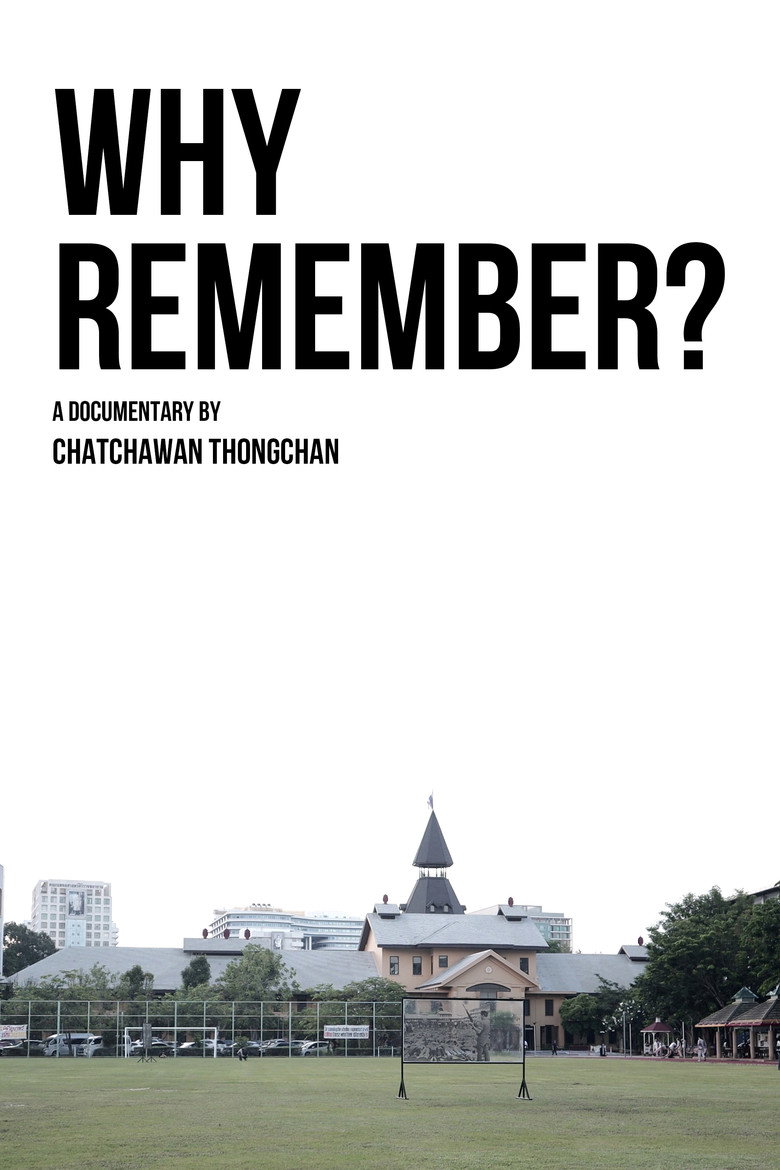
Movie poster sourced via TMDB. ProMixt is not affiliated with TMDB or the film's distributor.
Cinema has long served as a profound mirror for society, reflecting historical traumas, political shifts, and collective memories that nations struggle to process across generations. Among the most anticipated documentary releases of the contemporary slate is Why Remember? (2026), an uncompromising cinematic exploration directed with rigorous historical inquiry. By focusing on the pivotal and somber events of October 6, 1976, in Thailand, the film examines how societies choose to remember or bury their darkest chapters. International audiences, particularly film enthusiasts in Europe and the United States who follow international political documentaries and historical cinema, have increasingly sought comprehensive guidance regarding the film's premise, background, and legal viewing availability across digital platforms.
Understanding the full scope of a documentary like Why Remember? (2026) requires examining both its immediate narrative focus and the broader historical context of modern Thai political history. The October 6, 1976 massacre at Thammasat University remains a deeply sensitive and pivotal turning point in Thailand's political evolution. For decades, official state narratives often glossed over the violence, student crackdowns, and systemic suppression of democratic movements, leaving younger generations with fragmented understandings of their nation's democratic struggles. This upcoming documentary steps directly into that historical void, utilizing archival materials, survivor testimonies, and meticulous investigative journalism to piece together the untold facets of a day that fundamentally altered the political consciousness of Southeast Asia.
Premise, Genre, Tone, and What Viewers Can Expect
At its core, Why Remember? (2026) is classified as a socio-political historical documentary. The film moves at a deliberate, contemplative pace, prioritizing emotional resonance, historical accuracy, and intellectual rigor over sensationalism. Viewers approaching this work should expect a solemn, reflective tone that honors the victims and survivors of the 1976 events while interrogating the mechanics of historical amnesia.
The narrative structure weaves together rare archival footage, photographs from the era, and contemporary reflections from witnesses, historians, and activists who have dedicated their lives to preserving the memory of October 6. Rather than offering simplistic moral judgments, the documentary poses difficult questions about state accountability, collective trauma, and the psychological mechanisms that allow nations to move forward without fully reckoning with historical injustices. The visual palette relies heavily on stark contrasts, muted tones during archival sequences, and intimate interviews that capture the raw vulnerability of subjects recounting decades-old grief and resilience.
While the subject matter is undeniably heavy, the overarching message of the film centers on the enduring power of human dignity, solidarity, and the fundamental necessity of historical truth. It speaks not only to viewers interested in Thai history or Asian politics but to any global citizen concerned with the universal fragility of democratic institutions and the ethics of remembrance in the twenty-first century.
Director and Production Details
The production of Why Remember? (2026) represents a monumental collaborative effort between independent documentary filmmakers, historical researchers, and human rights archivists dedicated to preserving Southeast Asian heritage. The project brings together a specialized crew renowned for tackling complex socio-political subjects with sensitivity and unflinching honesty.
The creative vision behind the documentary was shaped by years of painstaking archival recovery, overcoming significant bureaucratic and social hurdles to secure testimonies that have rarely been broadcast publicly. Production companies involved in the project prioritized regional authenticity, collaborating closely with local Thai historians, legal experts, and cultural institutions to ensure every historical detail is represented with utmost precision. Filmed across various locations in Thailand, including key historical sites in Bangkok associated with the 1976 student movement, the production utilizes cutting-edge digital restoration techniques to revitalize grainy 1970s footage, integrating it seamlessly with high-definition modern cinematography.
The sound design is another critical pillar of the production, eschewing manipulative Hollywood-style orchestral scores in favor of ambient soundscapes, authentic period audio recordings, and minimalist acoustic motifs that allow the spoken words of survivors and witnesses to carry maximum emotional weight. The linguistic foundation of the film is primarily Thai, featuring comprehensive multi-language subtitle options tailored for international festival distribution and global streaming platforms.
Cast, Interviewees, and Historical Figures
Unlike traditional narrative fiction films, documentaries centered on historical tragedies rely on real individuals whose lives were directly touched by the events in question. Why Remember? (2026) features a diverse ensemble of prominent historians, former student activists, eyewitnesses, and family members of those who perished or went missing during the October 6 crackdown.
While formal casting announcements in the traditional Hollywood sense do not apply to a historical documentary, the principal figures appearing on screen anchor the narrative arc:
- Surviving Student Leaders of 1976: Portraying themselves, these key political figures provide firsthand accounts of the escalating tensions at Thammasat University, the siege, and the harrowing aftermath that forced many underground or into exile.
- Historians and Political Scientists: A panel of academic experts specializing in modern Thai political history who contextualize the macro-political forces, Cold War dynamics, and domestic propaganda campaigns that culminated in the 1976 violence.
- Archivists and Cultural Preservationists: Individuals who spent decades smuggling, hiding, and digitalizing prohibited photographs, pamphlets, and audio recordings, saving critical historical evidence from destruction.
- Descendants and Family Members: Relatives of victims sharing intimate reflections on generational trauma, unanswered questions, and what the ongoing fight for official acknowledgment means for their families.
Info! Because Why Remember? (2026) is classified as an upcoming and scheduled documentary release, exact participant billing details and final editing configurations may be subject to minor adjustments ahead of its official premiere festival circuit and digital rollout.
How to Check Legal Streaming, Rental, and Purchase Options
As an upcoming and scheduled release, Why Remember? (2026) may not currently be available for immediate streaming, digital rental, or physical purchase across mainstream consumer platforms. Viewers interested in watching the film upon its release should rely exclusively on authorized, legal channels to support the filmmakers, independent distributors, and historical preservationists involved in its creation.
When searching for viewing options, keep the following legal guidelines in mind:
- Check official international film festival schedules, as documentary works of this nature frequently debut on the circuit across Europe and North America before securing broader streaming distribution.
- Consult reputable independent streaming services that specialize in international documentaries, human rights cinema, and arthouse features, such as Criterion Channel, MUBI, or specialized regional platforms.
- Visit the official production or distributor website for verified announcements regarding theatrical screenings, digital rental windows, and video-on-demand (VOD) availability.
- Remember that offline downloads are strictly restricted to licensed platforms that officially support mobile or desktop downloads for offline viewing, typically requiring an active subscription or digital purchase.
Warning! ProMixt does not host, distribute, or provide direct download links for copyrighted movie files. Avoid unauthorized torrent sites, streaming mirrors, and piracy networks, as these violate copyright laws and expose users to severe cybersecurity risks.
The Global Significance of Preserving Historical Memory
The production and anticipated release of Why Remember? (2026) arrive at a critical juncture in global politics, where debates over historical education, censorship, and freedom of expression are intensifying across multiple continents. Documentaries that shed light on suppressed regional histories perform an invaluable service for global civil society by bridging geographical divides and fostering cross-cultural solidarity.
For international audiences in the West, exploring films like Why Remember? (2026) offers essential insights into how different nations confront their internal political conflicts. It challenges viewers to look beyond their immediate cultural borders and recognize the universal patterns of authoritarian overreach, civic courage, and the relentless human drive for justice. As digital archives expand and international co-productions become more prevalent, independent cinema continues to act as a vital bulwark against historical erasure.
What is the release status of Why Remember? (2026)?
Why Remember? (2026) is currently listed as an upcoming and scheduled documentary release. It is not yet available for general streaming or theatrical purchase, but official release updates will be provided through authorized distributor channels.
What historical event does the documentary cover?
The documentary focuses on the pivotal and tragic events of October 6, 1976, at Thammasat University in Thailand, exploring its lasting impact on modern political history and collective memory.
Where can I legally stream or download the movie?
Legal streaming, rental, and purchase options will become available on authorized independent film platforms and festival streaming services once the film completes its official release rollout. Offline viewing is only permitted through official platform download features.
Are there fictional actors cast in Why Remember? (2026)?
No, as a historical documentary, the film features real-world historians, surviving student activists, eyewitnesses, archivists, and family members rather than fictional actors playing dramatic roles.
Conclusion
Why Remember? (2026) stands as a testament to the enduring power of documentary filmmaking in confronting difficult historical truths. By examining the 1976 Thammasat University tragedy through rigorous research, survivor testimonies, and meticulous archival restoration, the film bridges past conflicts with contemporary global conversations about democracy and accountability. While viewers must wait for its official release through authorized legal channels, the documentary promises to be an essential viewing experience for anyone invested in international history, human rights, and the preservation of collective memory.
