

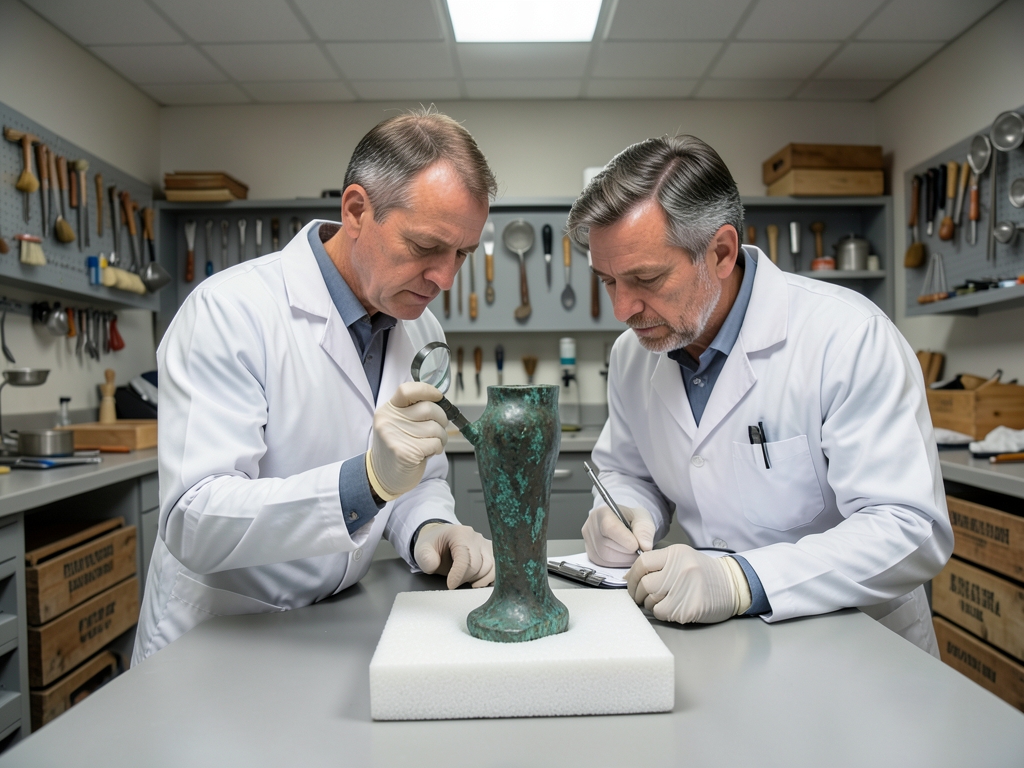
Archaeological discoveries often possess the power to upend decades of established historical consensus, forcing scholars to re-evaluate the complex relationships between expanding empires and the indigenous populations they sought to control. Recent findings from the northern frontiers of the Roman Empire have brought this dynamic back into sharp focus. Specifically, the recovery and re-examination of an 1,800-year-old bronze leg artifact in Scotland has opened a new chapter in the ongoing scholarly debate concerning the timing, nature, and political motivations behind Rome’s strategic withdrawal from the northern reaches of Britain. For centuries, historians relied primarily on written texts penned by classical authors to map out the Roman Empire's expansion and contraction. However, material culture—the physical objects left behind in bogs, forts, and settlements—frequently tells a far more nuanced story than surviving imperial chronicles. This article examines the significance of this remarkable artifact, exploring how material evidence illuminates the complex geopolitical realities of Roman Britain during the late second and third centuries.
The Geopolitical Landscape of Roman Britain in the Second Century
To understand why a single bronze artifact can prompt a fundamental reassessment of Roman military strategy, one must first examine the volatile nature of the northern frontier. At its greatest territorial extent, the Roman Empire under Emperor Hadrian pushed deep into what is now Scotland, constructing the monumental barrier known as Hadrian's Wall, and later attempting an even more advanced push northward with the creation of the Antonine Wall under Antoninus Pius. These ambitious construction projects were not merely defensive engineering feats; they were aggressive assertions of imperial dominance designed to subjugate the powerful Caledonian tribes inhabiting the rugged terrain north of the Forth-Clyde isthmus. Yet, maintaining control over these distant territories proved immensely costly in terms of manpower, financial resources, and logistical supply lines. The local populations mounted fierce resistance against Roman legions, utilizing guerrilla tactics and leveraging their intimate knowledge of the treacherous bogs, dense forests, and unpredictable weather patterns. Consequently, the Roman presence north of Hadrian's Wall was frequently cyclical, characterized by brief periods of aggressive occupation followed by tactical retreats and consolidations. Historians have long debated whether Rome's eventual abandonment of the Antonine frontier was a sign of total military defeat, a calculated economic retrenchment, or part of a broader shift in imperial defense policy initiated under emperors like Marcus Aurelius and Septimius Severus. Traditional narratives often portrayed the withdrawal as a swift and orderly military decision driven by imperial priorities elsewhere in the Mediterranean or along the contested Danubian frontier. However, recent archaeological revelations suggest that the military and cultural interactions between Roman forces and local Caledonian communities were far more prolonged, complex, and integrated than simple military accounts imply.
Unearthing the Artifact: Context, Discovery, and Material Analysis
The artifact at the center of this historical re-evaluation is a remarkably preserved 1,800-year-old bronze leg, an object that bridges the gap between official Roman state iconography and the lived reality of frontier occupation. Crafted with sophisticated metallurgical techniques common to Roman workshops, the bronze piece represents a fragment of a larger imperial statue, likely depicting a Roman emperor or a high-ranking military deity. Such statues were frequently erected in strategic frontier forts, administrative centers, and military headquarters across the empire to project supreme authority and remind local populations of Rome's ubiquitous reach. The discovery of this artifact in a Scottish context raises fascinating questions about how it arrived at its final resting place. Was it captured as wartime booty by Caledonian warriors during a successful raid on a Roman garrison? Was it systematically dismantled, ritually broken, and deposited into a wetland environment as part of an indigenous ritual offering? Or did it survive as a valued trade item, slowly making its way far beyond the formal borders of the empire through networks of gift exchange and commercial interaction? Modern archaeological science employs advanced analytical techniques—including X-ray fluorescence spectrometry, lead isotope analysis, and high-resolution micro-CT scanning—to determine the exact geographic origin of the metal and to detect microscopic tool marks left by ancient artisans. These scientific investigations help researchers distinguish between objects brought over by official legions and those integrated into indigenous economies over generations. Furthermore, studying the depositional context—whether the object was found within the defensive ditch of a fort, inside a domestic settlement, or buried deep within a remote peat bog—provides vital clues regarding the social meaning attached to Roman material culture by the native inhabitants of Iron Age Scotland. Rather than viewing local tribes as passive victims or isolated outsiders, contemporary archaeology views them as active participants in a dynamic frontier economy who selectively adopted, adapted, or destroyed Roman symbols to assert their own cultural identity and political autonomy.
Broader Implications for the Study of Imperial Retrenchment
The emergence of artifacts like the 1,800-year-old bronze leg challenges researchers to move beyond rigid chronological frameworks and simplistic military narratives. For generations, historical timelines treated the Roman retreat from Scotland as a clean, definitive break marked by the stroke of an imperial pen or the hasty evacuation of a fort. Yet, archaeological excavations increasingly demonstrate that the cultural and economic footprint of Rome persisted long after formal military units pulled back to Hadrian's Wall. Coins, imported pottery, personal ornaments, and fragments of monumental architecture continue to be unearthed far north of the official frontier, indicating that commercial networks, diplomatic alliances, and cross-border interactions continued unabated for decades. This persistent connectivity suggests that Rome's withdrawal was not a sign of total collapse in the northern sector, but rather a flexible adaptation to shifting geopolitical pressures across the entire empire. During the late second and third centuries, the Roman state faced severe economic inflation, political instability in Rome, and mounting military pressures along both the Rhine and Danubian frontiers. Consolidating forces behind a well-defended fortification line like Hadrian's Wall was a rational strategic choice that optimized available military manpower without entirely severing economic and diplomatic ties with northern Britain. By analyzing the physical journey of high-status objects such as the bronze leg, modern historians gain a much clearer picture of how imperial decline was experienced at the absolute fringes of the classical world. The artifact serves as a tangible reminder that history is shaped not only by grand imperial decrees issued in Rome, but also by the daily negotiations, conflicts, and exchanges occurring on distant, contested frontiers.
Info! Archaeological interpretations of frontier zones continue to evolve as new analytical technologies allow researchers to extract detailed provenance data from previously neglected museum collections and newly excavated sites alike.
What makes the discovery of the 1,800-year-old bronze leg in Scotland historically significant?
This artifact provides tangible physical evidence that challenges traditional, text-based narratives regarding the nature and timing of Rome's military withdrawal from northern Britain, highlighting complex local interactions beyond simple imperial retreat.
How did Roman bronze statues typically function on distant imperial frontiers?
Statues of emperors or military deities were erected in forts and administrative centers to project imperial authority, reinforce political dominance, and serve as focal points for official military religion.
What analytical methods do modern archaeologists use to study such artifacts?
Researchers utilize advanced techniques such as X-ray fluorescence spectrometry, lead isotope analysis, and high-resolution micro-CT scanning to determine metal provenance, manufacturing methods, and historical deposition context.
Did Roman influence end completely when legions retreated from Scotland?
No. Archaeological evidence shows that trade networks, diplomatic ties, and the circulation of Roman manufactured goods persisted long after formal military evacuation, demonstrating continued interaction with local indigenous communities.
Conclusion
The ongoing study of archaeological finds from Scotland's northern frontiers underscores the vital importance of material culture in rewriting the history of the ancient world. As historians and scientists combine textual analysis with advanced metallurgical and contextual research, the rigid boundaries once drawn around imperial expansion and retreat begin to dissolve. The 1,800-year-old bronze leg stands as a fascinating symbol of this historical complexity—bridging the gap between the monumental ambitions of the Roman Empire and the enduring resilience of the indigenous peoples who outlived it. Through such discoveries, we gain a richer, more comprehensive understanding of how empires rise, how they adapt to crisis, and how their physical legacy continues to resonate across the centuries.
