

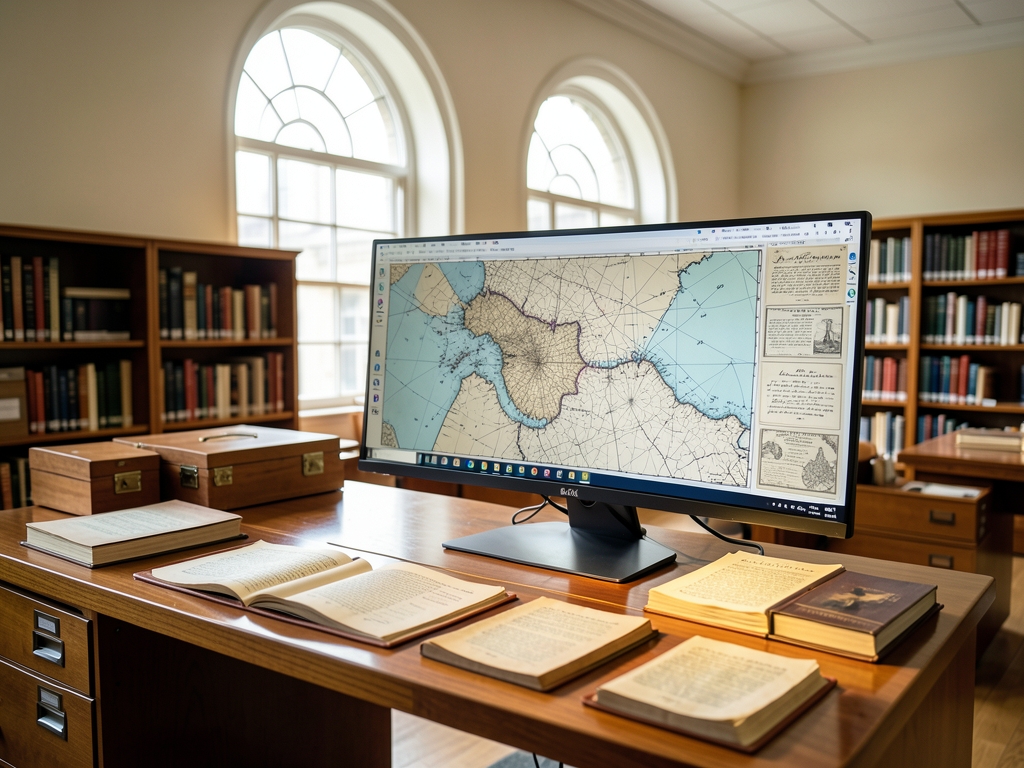
The preservation and accessibility of historical documents have undergone a profound transformation in recent years, shifting from dusty, restricted basement vaults to dynamic, globally accessible digital portals. For historians, researchers, and curious members of the public alike, the ability to examine centuries-old manuscripts, photographs, and logs from a home computer represents a watershed moment in historical research. A prime example of this digital shift is the launch of the new archive portal by Åbo Akademi, which officially opens a sweeping window onto rich cultural heritage, maritime history, and everyday life in Northern Europe. This milestone development not only democratizes access to rare historical artifacts but also establishes a new benchmark for how academic institutions can safeguard and share their invaluable collections with an international audience.
Understanding the significance of such archival initiatives requires looking closely at what modern digitization achieves. For generations, accessing specialized regional archives meant traveling physically to university libraries, navigating complex physical catalog systems, and handling fragile paper documents under strict supervision. While these traditional preservation methods remain vital for physical artifact care, they inherently limit widespread educational engagement. The introduction of comprehensive web-based archive portals breaks down these geographic and institutional barriers, allowing anyone from a high school student in the United States to a professional historian in Central Europe to explore primary source materials instantly. By leveraging advanced web technologies, high-resolution document imaging, and structured metadata search capabilities, institutions like Åbo Akademi are bridging the gap between deep academic research and public curiosity.
The Scope and Depth of Maritime and Cultural Archives
Maritime history forms a cornerstone of coastal European heritage, capturing centuries of seafaring, trade, shipbuilding, and naval conflict. Portals that specialize in these records often house an extraordinary variety of materials, ranging from hand-drawn navigational charts and captain's logs to detailed harbor customs registries and photographs of historic vessels. These documents do more than record the movement of ships; they paint a vivid picture of economic exchange, international diplomacy, and the daily dangers faced by mariners navigating treacherous northern waters. Researchers examining these digitized logs can trace shifting trade routes over decades, observe the evolution of maritime technology, and uncover personal stories of ordinary sailors whose lives were shaped by the sea.
Beyond maritime records, comprehensive cultural archives capture the fabric of everyday life across different historical epochs. Diaries, personal letters, local newspaper clippings, and community photographs offer intimate glimpses into how ordinary people lived, worked, and celebrated. Unlike official government chronicles that often focus exclusively on political elites and major military campaigns, grassroots archives illuminate social history from the bottom up. They reveal changing fashions, culinary traditions, domestic routines, and regional dialects that might otherwise be lost to time. When institutions digitize these diverse collections, they provide historians with the raw materials needed to construct more inclusive, nuanced narratives of past societies.
The Technical Evolution of Digital Archiving
Digitizing centuries-old paper documents, parchment manuscripts, and fragile photographic plates is a meticulous technical undertaking that requires specialized equipment and rigorous preservation protocols. Archivists must first stabilize and clean physical items to prevent further degradation before they can be scanned at ultra-high resolutions. These high-resolution master files are then processed to enhance legibility, correct color fading, and ensure that every handwritten stroke or faint stamp is clearly visible to the digital viewer. Furthermore, optical character recognition (OCR) software is increasingly employed to convert historical typography and handwriting into searchable text, allowing users to locate specific names, locations, and dates within thousands of pages in a matter of seconds.
Info! Advanced digital archiving standards ensure that high-resolution master files are preserved in lossless formats, safeguarding historical integrity for future technological generations.
Metadata creation is another critical pillar of modern archival portals. Without accurate, standardized descriptions, even the highest-resolution digital scan remains hidden within a chaotic database. Professional archivists assign detailed subject tags, geographical markers, and temporal classifications to every uploaded item, ensuring that search algorithms can deliver precise results. This meticulous indexing transforms a random assortment of scanned images into a cohesive, navigable digital library. As artificial intelligence and automated tagging tools continue to evolve, archival institutions are finding new ways to accelerate this cataloging process while maintaining strict academic accuracy and contextual integrity.
How International Researchers and Educators Utilize Digital Portals
The availability of open-access historical portals has fundamentally transformed pedagogical methods in secondary and higher education. Teachers no longer need to rely solely on secondary textbook summaries when introducing complex historical periods to their students. Instead, educators can direct classrooms to examine primary source documents directly, encouraging critical thinking, source evaluation, and independent historical inquiry. Students can analyze the handwriting of a 19th-century merchant, compare historical maps with modern satellite imagery, or investigate local community responses to historical crises using authentic archival evidence.
For academic researchers, these digital repositories accelerate the preliminary phases of investigation. Scholars can review manuscript samples, verify citations, and identify relevant physical collections before planning research trips, optimizing both time and funding. This enhanced discoverability fosters international collaboration, as researchers across different continents can simultaneously access and discuss the same primary sources. By removing the friction traditionally associated with archival access, digital portals accelerate the pace of historical discovery and encourage cross-disciplinary studies that combine history with data science, sociology, and environmental research.
Best Practices for Navigating Large Historical Archives Online
Approaching a vast digital archive for the first time can sometimes feel overwhelming due to the sheer volume of available material. To make the most of online historical repositories, researchers and enthusiasts can follow several structured strategies to streamline their search process and uncover the most relevant documents.
- Begin with specific keywords, surnames, or geographical locations rather than broad umbrella terms to narrow down initial search results effectively.
- Utilize advanced filter options—such as date ranges, document types, and language settings—to isolate specific formats like maps, photographs, or personal letters.
- Take advantage of built-in zoom and high-resolution viewing tools to examine handwritten annotations, watermarks, and marginalia that may contain crucial contextual clues.
- Cross-reference digital findings with established historical timelines and secondary literature to verify dates, names, and broader historical events.
Preserving the Past for Future Generations
While digital portals provide unprecedented access and visibility, they do not replace the necessity of physical conservation. In fact, by diverting routine handling away from fragile originals, digital access plays a crucial role in physical preservation. Rare manuscripts, delicate watercolors, and brittle paper documents suffer microscopic damage every time they are touched, exposed to light, or subjected to mechanical stress. Providing high-fidelity digital surrogates online ensures that the general public and casual researchers can satisfy their curiosity without endangering the physical artifacts themselves. Archivists and conservators work hand-in-hand to ensure that physical preservation laboratories and digital scanning studios operate in tandem, securing the long-term survival of our shared cultural heritage.
What types of materials are typically found in historical archive portals?
Historical archive portals typically feature a diverse range of primary sources, including digitized manuscripts, captain's logs, historical maps, personal diaries, photographs, local newspapers, and official administrative records.
Why is digitization important for the preservation of fragile historical documents?
Digitization creates high-resolution virtual copies that allow researchers and the public to examine documents online, significantly reducing the physical handling and environmental wear on fragile original artifacts.
How do researchers search through large online archival databases effectively?
Researchers can use targeted keywords, specific date ranges, geographical filters, and advanced metadata search tools to quickly locate relevant documents within massive digital collections.
Can international users access university and cultural archive portals freely?
Many modern academic and cultural archive portals are designed for open public access, allowing international researchers, educators, and history enthusiasts to explore collections without institutional restrictions.
The continuous expansion of online archives marks a transformative era for historical scholarship and cultural preservation. By combining rigorous conservation science with modern web technology, institutions ensure that the stories, struggles, and triumphs of past generations remain vibrant and accessible. As more regional and international archives come online, our collective understanding of history deepens, offering fresh perspectives on the complex tapestry of human experience.
