

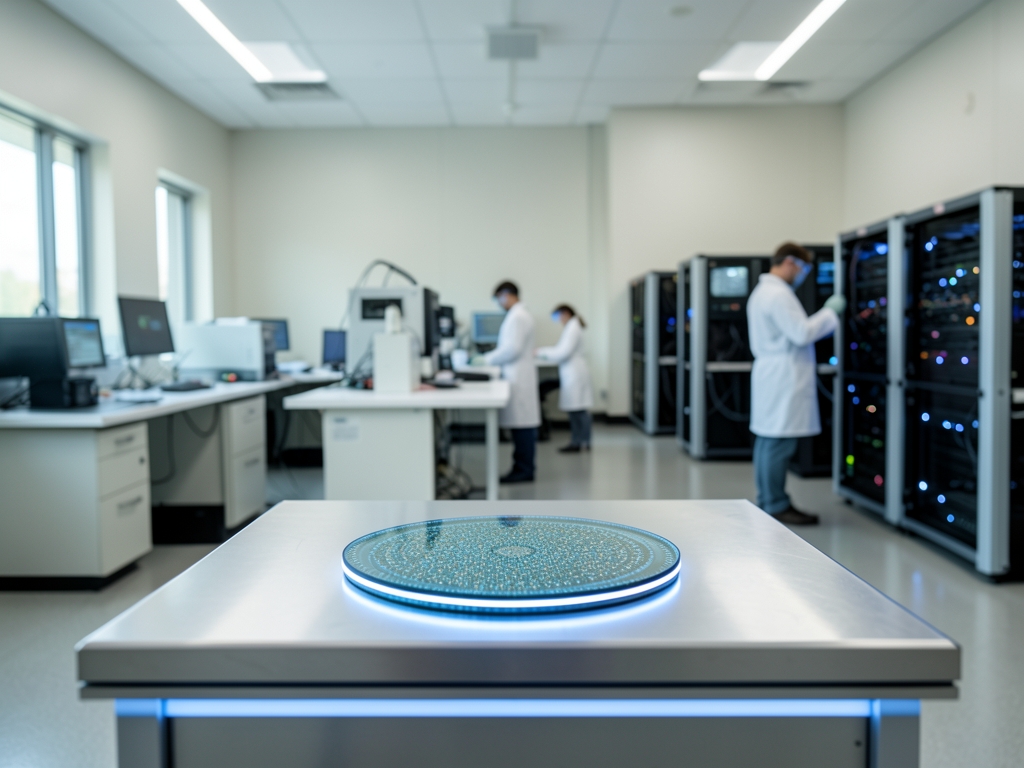
The global semiconductor and artificial intelligence hardware landscape continues to experience rapid consolidation as major technology firms move to secure specialized silicon capabilities. Advanced Micro Devices has officially completed its acquisition of Taalas, an emerging artificial intelligence chip startup known for its innovative approach to hardware acceleration. This strategic transaction marks a significant milestone in AMD’s ongoing expansion within the high-performance computing sector, reinforcing its competitive stance against industry incumbents.
As the demand for specialized computing infrastructure accelerates across enterprise data centers and edge environments, semiconductor manufacturers are racing to integrate advanced architectures that can handle massive workloads with greater energy efficiency. The incorporation of Taalas into the broader AMD ecosystem provides the company with unique intellectual property and specialized engineering talent tailored to modern computational demands.
Strategic Rationale Behind the Acquisition
The decision by Advanced Micro Devices to finalize the purchase of Taalas reflects a broader industry trend where traditional processor manufacturers seek to internalize specialized artificial intelligence hardware innovations. Designing accelerators that can process complex neural networks while minimizing power consumption has become the primary battleground for semiconductor firms worldwide.
Taalas has drawn considerable attention within the engineering community for developing unconventional chip designs that optimize data throughput and reduce latency. By integrating these proprietary concepts into its upcoming product roadmaps, AMD aims to strengthen its portfolio of enterprise-grade accelerators, data center processors, and server solutions.
Industry analysts note that modern artificial intelligence workloads require more than raw processing power; they demand highly efficient memory architectures and specialized execution pipelines. The technological assets acquired through this transaction are expected to help AMD address these bottlenecks more effectively, offering enterprise customers alternative pathways for scaling their machine learning infrastructure.
Impact on the Competitive Semiconductor Ecosystem
The market for artificial intelligence hardware is heavily concentrated among a few dominant players, but agile startups continue to drive foundational innovations in silicon design. When a major enterprise absorbs an early-stage pioneer, it typically signals that the underlying technology has matured enough to be scaled for mass production and commercial deployment.
For enterprise clients across Europe and the United States, this transaction could lead to greater choice and performance improvements in next-generation server clusters. As organizations expand their reliance on heavy computational models, hardware vendors must deliver systems that balance high throughput with sustainable energy consumption. AMD’s integration of the startup's engineering frameworks aims to directly address these enterprise priorities.
Info! The integration of specialized startup technologies into major semiconductor portfolios often spans several product cycles, with initial commercial silicon releases expected to follow rigorous testing and validation phases.
Engineering Challenges in Modern AI Silicon Design
Building processors capable of sustaining advanced artificial intelligence workloads involves overcoming severe thermodynamic and architectural hurdles. As transistor scaling approaches physical limits, engineers must look beyond traditional manufacturing improvements and focus on architectural efficiency.
- Memory Bandwidth: Moving massive datasets between storage subsystems and processing units remains one of the greatest efficiency bottlenecks in modern computing.
- Thermal Management: High-density accelerators generate intense heat, requiring sophisticated cooling solutions and optimized power delivery networks.
- Software Ecosystem Compatibility: New hardware architectures must be accompanied by robust compilation tools and software libraries to ensure seamless adoption by developers.
The technology developed by Taalas emphasizes streamlining these physical constraints by rethinking how silicon executes algorithmic tasks. By eliminating redundant processing steps at the hardware level, such architectures can achieve notable efficiency gains over conventional designs.
Future Outlook for AMD and Enterprise Hardware
The successful conclusion of this transaction positions AMD to compete more aggressively in both cloud data centers and localized enterprise environments. As businesses increasingly deploy sophisticated computational models on-premises, hardware flexibility and cost-effectiveness become critical purchasing criteria.
Furthermore, the transaction highlights the ongoing financial and strategic commitment required to maintain a leadership position in the semiconductor industry. Venture-backed hardware startups face immense capital requirements to reach commercial manufacturing scales, making strategic acquisitions an essential exit and growth mechanism.
| Strategic Area | Previous Approach | Post-Acquisition Focus |
|---|---|---|
| Accelerator Architecture | Standard GPU and CPU scaling | Specialized application-specific silicon integration |
| Enterprise Workloads | General-purpose machine learning support | Optimized low-latency processing pipelines |
| Energy Efficiency | Standard power management profiles | Advanced hardware-level efficiency frameworks |
Looking ahead, industry observers will monitor how quickly AMD can translate these newly acquired capabilities into commercially available silicon. The pace of innovation in artificial intelligence remains relentless, and companies that successfully integrate specialized hardware designs will likely capture significant market share in the years to come.
What was the main purpose of the AMD acquisition of Taalas?
The acquisition aims to strengthen AMD's artificial intelligence hardware portfolio by integrating Taalas's specialized chip design technology and engineering expertise to improve data center efficiency and computational performance.
Who is Taalas in the semiconductor industry?
Taalas is an early-stage artificial intelligence chip startup recognized for developing unconventional hardware acceleration concepts designed to optimize data throughput and reduce latency.
How will this acquisition affect enterprise technology buyers?
Enterprise buyers can expect future AMD server processors and hardware accelerators to feature enhanced energy efficiency and improved processing pipelines for managing heavy machine learning workloads.
What are the primary technical challenges in modern AI chip design?
Key technical challenges include managing memory bandwidth bottlenecks, controlling thermal output in high-density processors, and ensuring broad software ecosystem compatibility for new architectures.
Ultimately, the completion of this transaction underscores the dynamic nature of the modern technology sector, where hardware engineering and artificial intelligence advancement remain tightly intertwined in shaping the future of global computing infrastructure.
