

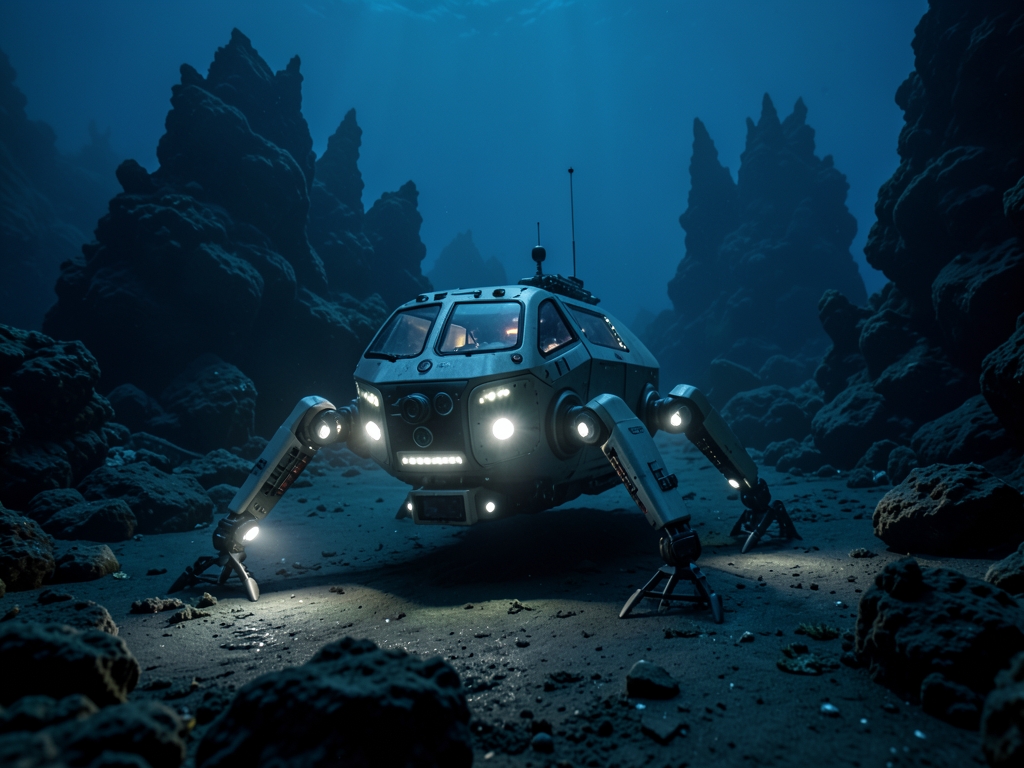
The deepest realms of Earth's oceans continue to challenge human understanding, offering glimpses into extreme geological processes that operate far beyond the reach of ordinary scientific observation. Operating under immense hydrostatic pressure twenty thousand feet beneath the surface, advanced deep-sea robotic systems have uncovered extraordinary geological phenomena that shed new light on the violent and dynamic nature of our planet's crust. Among the most striking findings from recent oceanic expeditions is the discovery of explosive volcanic rock resting deep within the abyssal depths of the Mariana Trench. This remarkable find provides researchers with crucial physical evidence to better understand how tectonic forces, underwater magmatic activity, and chemical interactions shape the deepest trenches on Earth.
For decades, scientists understood that subduction zones—where one tectonic plate slides beneath another—are regions of intense seismic and volcanic activity. However, observing these processes firsthand has always been severely constrained by extreme environmental factors. The immense water pressure, total darkness, and near-freezing temperatures found thousands of meters below sea level make direct human exploration impossible. The deployment of sophisticated, uncrewed robotic submersibles capable of withstanding extreme pressure has fundamentally transformed marine geology. These autonomous and remotely operated vehicles are equipped with high-resolution imaging systems, precision robotic manipulators, and advanced geological sampling tools designed to recover intact mineral and rock specimens from the ocean floor.
Unlocking the Subterranean Geology of the Mariana Trench
The Mariana Trench, plunging deeper than Mount Everest is tall, represents the ultimate frontier for marine earth sciences. As robotic explorers navigate the rugged topography of the trench walls and abyssal plains, they encounter complex geological formations shaped by millions of years of tectonic collision. The recent recovery of explosive volcanic rock from a depth of twenty thousand feet indicates that active or geologically recent magmatic events occur much deeper and behave differently than previously hypothesized within these severe subduction environments.
Explosive volcanic activity requires specific conditions, typically involving gas-rich magma and rapid decompression or volatile ex-solution. Finding rocks formed through such explosive mechanisms at extreme ocean depths raises profound scientific questions regarding how volatiles like water and carbon dioxide cycle through subduction zones. When tectonic plates descend into the mantle, they carry immense amounts of water-bearing minerals. Under extreme heat and pressure, these minerals dehydrate, releasing fluids that flux the overlying mantle and trigger melting. The resulting magma can drive violent eruptions or form unique volcanic deposits along trench axes.
The discovery of explosive volcanic rocks at extreme ocean depths redefines our understanding of magmatic processes operating along subduction boundaries and highlights the dynamic nature of Earth's deep interior.
Geologists and petrologists analyzing the recovered samples utilize advanced laboratory techniques, including mass spectrometry, electron microscopy, and radiogenic isotope dating, to determine the exact mineralogical composition and age of the rocks. Initial analyses reveal unique vesicular structures—tiny cavities left by trapped gas bubbles—which confirm that these rocks formed during explosive degassing events. Understanding the exact chemical makeup of these samples allows researchers to reconstruct the thermal and mechanical history of the Mariana subduction system.
The Technological Marvel of Deep-Sea Robotics
The success of expeditions targeting depths exceeding 20,000 feet relies entirely on cutting-edge marine robotics. Traditional oceanographic equipment is often crushed or rendered non-functional by the staggering pressures found in the abyssal zone, which can exceed 1,000 times atmospheric pressure at the bottom of the Mariana Trench. Modern engineering has overcome these barriers through the use of syntactic foam buoyancy blocks, titanium pressure hulls, and hydraulic systems specifically calibrated for extreme cold and pressure.
Info! Deep-sea robotic vehicles utilize fiber-optic communication tethers and autonomous navigation algorithms to operate safely near jagged underwater cliffs and unstable slopes.
These robotic platforms are not merely passive cameras; they function as mobile, high-precision geological laboratories. Equipped with specialized drills, suction samplers, and temperature probes, the robots can delicately extract samples from fragile rock faces without contaminating them with surface sediments. This level of precision ensures that geochemists receive pristine material for laboratory analysis, free from external weathering or biological interference.
Broader Implications for Earth Sciences and Planetary Evolution
Discoveries made within the Mariana Trench extend far beyond marine geology, offering valuable insights into planetary evolution and the fundamental mechanics of plate tectonics. Earth is unique among rocky planets in our solar system for having active plate tectonics, a process essential for regulating long-term climate by cycling carbon between the atmosphere, oceans, and interior mantle.
By studying how magma behaves under the extreme confining pressure of the deep ocean, scientists gain a clearer picture of how volatile elements are recycled through subduction zones. These insights help refine geophysical models of mantle convection and crustal formation. Furthermore, understanding the extreme environments of the Mariana Trench provides astrobiologists with analogs for investigating potential subsurface habitats on icy moons within our solar system, such as Europa or Enceladus, where tectonic and hydrothermal processes might support primitive life.
| Parameter | Deep-Sea Exploration Metric | Significance |
|---|---|---|
| Operating Depth | 20,000 feet (approx. 6,000 meters) | Enters the abyssal zone under extreme hydrostatic pressure. |
| Primary Finding | Explosive volcanic rock formations | Indicates high volatile content and dynamic magmatic activity. |
| Key Technology | Remotely Operated Vehicles (ROVs) | Enables precise sampling without human risk. |
| Research Focus | Subduction zone volatile recycling | Improves models of Earth's tectonic and thermal evolution. |
As oceanographic research institutions continue to upgrade their technological arsenals, future expeditions promise even deeper and more detailed explorations of the world's oceans. Each successful deployment into the Mariana Trench chips away at the mysteries shrouding the deep Earth, proving that our planet's most extreme environments still hold transformative scientific discoveries.
What is the significance of finding explosive volcanic rock in the Mariana Trench?
Finding explosive volcanic rock at 20,000 feet deep proves that gas-rich magmatic eruptions occur in extreme subduction environments, helping scientists understand how volatile elements cycle through Earth's crust and mantle.
How do robots survive the extreme pressure at 20,000 feet?
Deep-sea robots use specialized thick-walled titanium pressure housings, syntactic foam for buoyancy, and pressure-compensated hydraulic systems designed to withstand pressures exceeding 1,000 atmospheres.
Can humans visit the bottom of the Mariana Trench directly?
While a small number of specialized crewed submersibles have successfully reached the bottom of the trench, routine scientific exploration and delicate rock sampling are predominantly conducted using unmanned robotic vehicles for safety and efficiency.
What analytical methods do geologists use on the recovered rock samples?
Geologists analyze the retrieved specimens using advanced laboratory techniques such as mass spectrometry, electron microscopy, and radiogenic isotope dating to determine their mineral composition, age, and formation mechanisms.
The continuous exploration of the Mariana Trench underscores the vital importance of marine geological research. By combining advanced robotics with rigorous laboratory analysis, modern science is steadily uncovering the complex forces that shape our dynamic planet from its deepest abyssal depths to its surface.
