

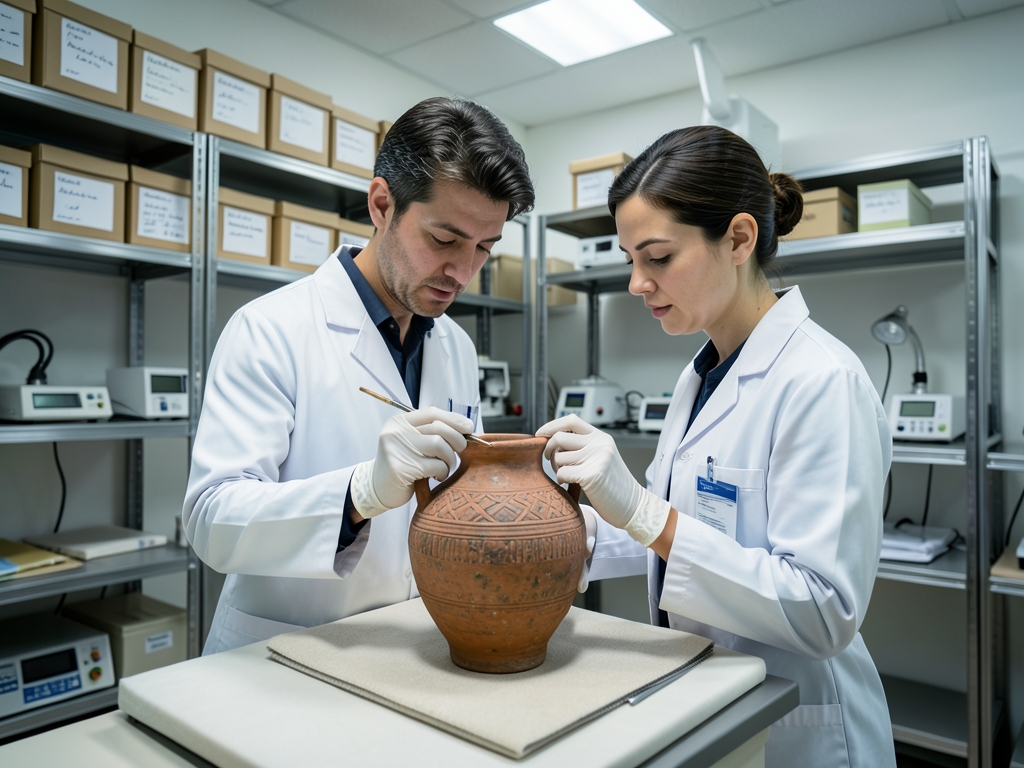
The preservation, ownership, and ethical stewardship of ancient artifacts have become some of the most pressing and complex topics in modern cultural heritage discourse. As museums, academic institutions, and national governments increasingly reevaluate the origins of their collections, the conversation surrounding material culture has shifted from passive appreciation to active legal and moral accountability. Across international academic communities and diplomatic channels, the debate over provenance—the chronology of the ownership, custody, or location of a historical object—highlights deep tensions between national sovereignty, universal public education, and historical justice.
Understanding why these disputes persist requires examining the history of archaeological excavation, colonial expansion, and the evolution of international legal frameworks. For centuries, antiquities were excavated, transported, and acquired under vastly different legal and political conditions than those governing modern cultural heritage. Today, as source nations demand the return of items removed during periods of conflict, colonial rule, or unregulated excavation, institutions worldwide are forced to confront uncomfortable institutional histories and adapt to a rapidly changing global landscape.
The Evolution of Provenance Research and Cultural Governance
Provenance research is much more than a bureaucratic exercise in tracing ownership records; it is a critical investigative discipline that combines art history, archival research, legal analysis, and scientific testing. In the past, many museum acquisitions lacked rigorous documentation, leaving gaps in the historical record that obscured how objects traveled from their places of creation to foreign display cases. Modern historians and curators now spend years cross-referencing shipping manifests, colonial administration records, diplomatic correspondence, and excavation permits to reconstruct the exact journey of an artifact.
The establishment of international conventions, most notably the 1970 UNESCO Convention on the Means of Prohibiting and Preventing the Illicit Import, Export and Transfer of Ownership of Cultural Property, marked a significant turning point in global cultural policy. However, because the convention is not retroactive, it created a complex legal distinction between acquisitions made before and after 1970. Consequently, many prominent disputes involve objects acquired during the nineteenth and early twentieth centuries, operating in a grey area where legal ownership under historical laws often clashes with contemporary ethical standards.
Info! Provenance research relies heavily on primary archival documentation, including old museum accession books, customs declarations, and private collector diaries preserved in national and university archives.
Case Studies in Repatriation: Balancing Universal Access and National Identity
The debate over where ancient treasures belong often centers on two competing philosophies: the universal museum model and the principle of national cultural patrimony. Proponents of the universal museum argue that major cultural institutions in global capitals provide broad international access to human history, bringing together diverse civilizations under one roof to foster cross-cultural understanding. Furthermore, major institutions frequently point to their advanced conservation facilities, climate-controlled environments, and security infrastructure as ideal conditions for preserving fragile antiquities.
Conversely, advocates for repatriation emphasize that cultural artifacts derive their deepest meaning from their geographical, historical, and spiritual contexts. When an object is removed from its place of origin, local communities lose a tangible connection to their ancestral heritage. In recent decades, numerous high-profile agreements between European and North American institutions and nations in Africa, Asia, and the Mediterranean have demonstrated that collaborative arrangements, long-term loans, and permanent returns are increasingly viable alternatives to perpetual retention.
| Approach | Core Philosophy | Primary Advantage | Main Challenge |
|---|---|---|---|
| Universal Museum | Shared global heritage | High visitor access and advanced preservation | Disconnects artifacts from local historical context |
| National Patrimony | Cultural sovereignty and restitution | Restores community heritage and historical justice | Varying local infrastructure and funding resources |
| Collaborative Loans | Shared stewardship and diplomacy | Builds international partnerships and access | Temporary nature of agreements |
The Role of Modern Science and Digital Archives in Heritage Preservation
As debates over physical repatriation continue, modern technology is transforming how researchers study, document, and share ancient artifacts without relying solely on the physical transfer of objects. Advanced imaging techniques, high-resolution three-dimensional photogrammetry, and non-destructive material analysis allow scholars to examine the chemical composition of ancient ceramics, metals, and pigments with unprecedented precision. These scientific methods can often determine the exact quarry or clay source used to create an object, settling long-standing debates about ancient trade routes and manufacturing techniques.
Simultaneously, the global digitization of museum collections and historical archives has democratized access to cultural heritage. Online repositories enable researchers and the general public in source countries to study detailed digital twins of artifacts that reside thousands of miles away. While digital repatriation does not replace the emotional and cultural significance of returning physical objects, it ensures that knowledge remains accessible globally, bridging geographical divides and fostering international academic collaboration.
The stewardship of ancient material culture is ultimately a shared responsibility that requires balancing rigorous scientific preservation with profound respect for the cultural memory of descendant communities.
Practical Steps for Ethical Museum Governance and Public Engagement
For modern cultural institutions seeking to navigate provenance controversies transparently, adopting proactive ethical guidelines is essential. Museums and research bodies are increasingly implementing standardized frameworks for evaluating restitution claims and opening their archival records to independent scrutiny.
- Conduct comprehensive internal audits of historical accession records to identify gaps in provenance, particularly for collections acquired during periods of conflict or colonial administration.
- Establish transparent, accessible channels for foreign governments and descendant communities to submit formal inquiries and restitution claims.
- Engage in bilateral dialogue and collaborative research partnerships with source countries rather than adopting defensive legal postures.
- Invest in digital documentation and high-fidelity 3D modeling to ensure shared access to cultural heritage regardless of physical location.
These practical measures help rebuild trust between institutions and the public, transforming historical repositories from colonial-era trophy rooms into modern centers of cultural exchange and educational stewardship.
What is provenance research in archaeology and history?
Provenance research is the investigative process of tracking the history of ownership, custody, and geographic movement of an artifact or artwork from its creation to the present day.
Why are international repatriation debates so complex?
They involve conflicting legal frameworks, historical acquisitions made under different political systems, and philosophical disagreements between universal museums and the principle of national cultural sovereignty.
What was the significance of the 1970 UNESCO Convention?
The 1970 UNESCO Convention established international standards to prohibit and prevent the illicit import, export, and transfer of ownership of cultural property, though it is not retroactive.
How does digital technology assist in resolving heritage disputes?
High-resolution 3D scanning, digital archiving, and online museum databases allow source countries and global scholars to study detailed replicas and records without requiring physical relocation.
As international discussions surrounding ancient treasures continue to evolve, the future of cultural heritage management will likely depend on diplomacy, transparency, and mutual respect. By acknowledging historical complexities and embracing collaborative stewardship, museums and nations can ensure that the physical remnants of our shared human past are protected, understood, and appreciated for generations to come.
