

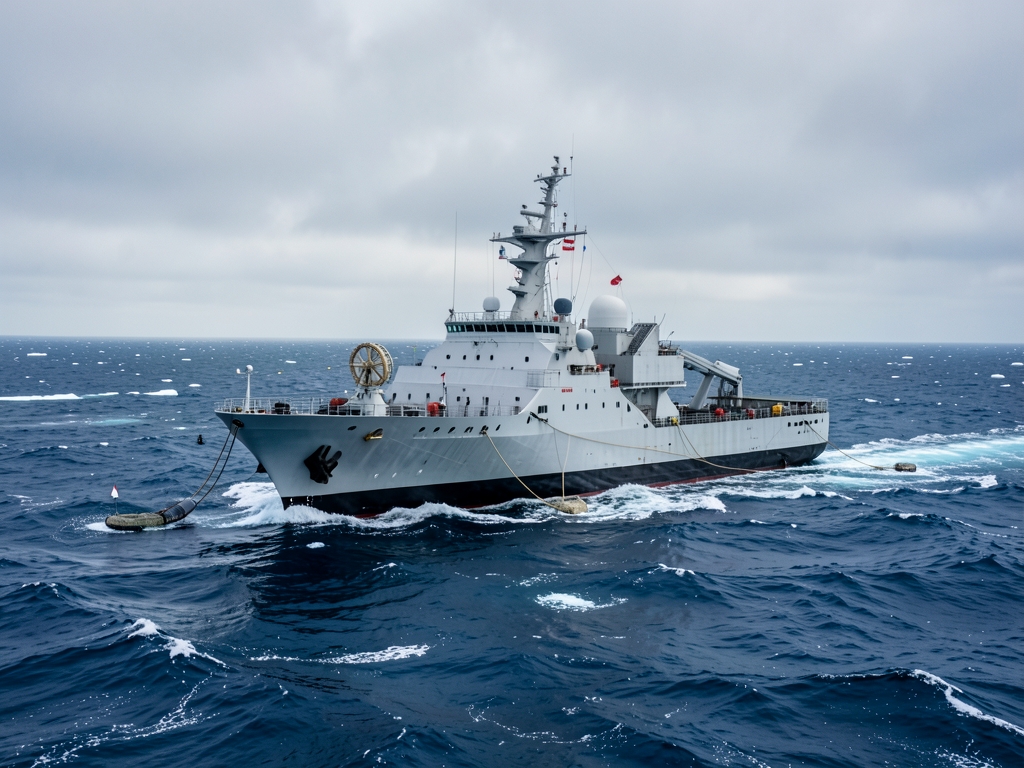
Marine science relies heavily on continuous observation, long-term data collection, and meticulous modeling of global physical and biological systems. For decades, international scientific consensus has pointed toward a troubling planetary trend: the steady deoxygenation of the world's oceans. As global temperatures rise and circulation patterns shift, warming waters hold less dissolved oxygen, creating expanding hypoxic zones that threaten marine life, disrupt delicate food webs, and alter global biogeochemical cycles. However, complex environmental systems frequently reveal regional anomalies that challenge broad generalizations and prompt researchers to re-examine underlying mechanisms. A recent study focusing on the Indian sector of the Southern Ocean has uncovered a striking counter-trend, demonstrating rising dissolved oxygen levels in a region where declines were widely anticipated.
Understanding the dynamics of ocean oxygenation requires looking far beyond simple surface temperatures. Oceans act as the primary buffer against anthropogenic climate change, absorbing more than ninety percent of excess heat and roughly a quarter of carbon dioxide emissions. The physical mixing of water masses, driven by winds, tides, density gradients, and large-scale thermohaline circulation, dictates how oxygen is transported from the surface into the dark, deep layers of the abyss. When researchers analyze data from specific sectors, they often find that local hydrodynamic forces can override global trajectories. The newly published findings from the Indian sector of the Southern Ocean provide an invaluable case study in how regional circulation shifts can temporarily decouple a specific marine ecosystem from broader worldwide patterns.
The Global Deoxygenation Crisis and Regional Anomalies
To contextualize why rising oxygen levels in any major ocean basin represent a significant scientific talking point, one must examine the established trajectory of global marine health. Over the past half-century, warming trends have intensified water column stratification. Warm water is inherently less capable of dissolving gases than cold water, meaning that as atmospheric temperatures increase, the upper layers of the ocean become buoyant and resistant to mixing with deep waters. This barrier prevents atmospheric oxygen from reaching deeper marine environments, while biological respiration and the decomposition of organic matter continue to consume dissolved oxygen at lower depths.
Against this global backdrop of declining oxygen minimum zones and widespread ocean suffocation, the Southern Ocean plays a uniquely pivotal role. Surrounding Antarctica, the Southern Ocean connects the Atlantic, Pacific, and Indian Oceans via the Antarctic Circumpolar Current. It is a critical engine for global overturning circulation, drawing deep waters up to the surface, resetting their chemical properties, and plunging newly oxygenated surface water back down into the abyss. Because this region ventilates a vast fraction of the global deep ocean, any localized variation in oxygen dynamics carries profound implications for global climate models and marine ecology.
Researchers examining the Indian sector of the Southern Ocean utilized extensive observational datasets, historical records, and autonomous biogeochemical profiling floats to track changes in water column chemistry over extended periods. Their analysis revealed that dissolved oxygen concentrations in specific subsurface layers of this sector have actually increased. This unexpected outcome runs counter not only to global averages but also to predictive models that assumed uniform deoxygenation across all high-latitude Southern Ocean sectors. The discovery underscores the necessity of high-resolution regional monitoring, as global models often smooth out localized physical processes that play decisive roles in marine resilience.
Mechanisms Driving Oxygen Variability in High Latitudes
What physical and biological drivers could cause an ocean sector to defy the global deoxygenation trend? Oceanographers point primarily to shifts in wind stress, eddy dynamics, and localized current velocities. The Southern Hemisphere westerly winds have intensified and shifted poleward in recent decades due to climate variability and ozone depletion dynamics. These winds powerfully influence the Antarctic Circumpolar Current, altering the rate at which water masses are pushed, tilted, and mixed across frontal boundaries.
In the Indian sector specifically, localized wind anomalies can enhance or suppress the upwelling of old, oxygen-depleted deep water while simultaneously accelerating the subduction of cold, newly ventilated surface water. When surface waters rich in oxygen are driven downward with greater efficiency, subsurface oxygen concentrations rise. Furthermore, shifts in sea ice formation and melting cycles inject dense, oxygen-rich shelf waters into the broader circulation system. Sea ice brine rejection creates dense plumes that cascade down the continental slope, carrying atmospheric gases directly into the deep interior of the basin.
Info! Dissolved oxygen is measured in micromoles per kilogram (umol/kg) and serves as a primary health indicator for marine ecosystems, influencing everything from metabolic rates in pelagic fish to deep-sea benthic biodiversity.
Biological factors also contribute to these chemical signatures, though physical transport mechanisms typically dominate high-latitude budgets. Phytoplankton blooms, supported by iron and other micronutrients delivered via upwelling or glacial runoff, absorb carbon dioxide and release oxygen during photosynthesis. When these microscopic organisms die and sink, they sequester carbon, but the immediate surface and intermediate waters experience localized fluctuations in oxygen saturation. Teasing apart the relative contributions of physical circulation versus biological productivity remains one of the most challenging tasks for modern oceanographic research teams.
Implications for Climate Models and Future Marine Research
The documentation of rising oxygen levels in the Indian sector of the Southern Ocean does not imply that the broader climate crisis in our oceans is abating. Instead, it highlights the intricate complexity of Earth systems and demonstrates that regional resilience can temporarily mask underlying vulnerabilities. Climate scientists emphasize that localized increases in oxygen do not reverse ocean acidification, nor do they halt the relentless rise in sea surface temperatures. Rather, these findings expose gaps in current predictive frameworks.
Global climate and oceanographic models rely heavily on parameterizations to simulate small-scale or regional mixing processes that cannot be explicitly resolved by coarse grid cells. When observational studies reveal unexpected trends like those in the Indian sector, modelers gain critical empirical benchmarks to refine their algorithms. Improving the accuracy of these models is essential for projecting how marine ecosystems will respond over the coming centuries as greenhouse gas emissions continue to alter atmospheric and oceanic physics.
Moreover, these insights influence how marine protected areas and fisheries management strategies are designed. Regional stability in oxygen levels might provide a temporary refuge for sensitive benthic organisms, pelagic fish species, and endemic invertebrates that would otherwise be threatened by hypoxia. Conservationists can use this empirical data to advocate for targeted protection of specific ocean sectors that exhibit natural buffering capacities against global environmental degradation.
Broader Context of Oceanographic Observation Technologies
The ability to detect subtle, long-term shifts in deep-water chemistry is largely a triumph of modern technological infrastructure. Historically, oceanographers depended on sporadic research vessel expeditions that dropped Niskin bottles to collect discrete water samples at specific geographic coordinates. While invaluable, these historical cruises provided only sparse snapshots in time and space, leaving vast expanses of the Southern Ocean entirely unmonitored for years at a time.
Today, international initiatives such as the Argo profiling float array have revolutionized Earth sciences. Thousands of autonomous robotic floats drift with ocean currents, diving down to depths of two thousand meters and profiling temperature, salinity, and biogeochemical parameters—including dissolved oxygen—as they ascend to the surface. These instruments transmit data via satellite in near-real time, giving scientists an unprecedented, continuous, three-dimensional view of marine physics and chemistry. The discovery of the oxygen anomaly in the Indian sector of the Southern Ocean would have been nearly impossible without the dense spatial and temporal coverage provided by modern autonomous sensor networks.
| Oceanographic Parameter | Global Trend | Indian Sector Observation | Primary Driving Force |
|---|---|---|---|
| Surface Temperature | Increasing | Warming with regional variability | Anthropogenic greenhouse gases |
| Dissolved Oxygen (Global) | Declining | Decreasing overall | Water column stratification |
| Dissolved Oxygen (Indian Sector) | N/A (Localized) | Rising in subsurface layers | Wind-driven subduction & circulation |
| Nutrient Dynamics | Variable | Enhanced vertical mixing | Circum-Antarctic current dynamics |
As oceanographers continue to analyze incoming data from robotic floats and upcoming research expeditions, the focus will shift toward determining how long these regional anomalies can persist. Climate change is a non-linear phenomenon, meaning that shifting wind patterns or melting ice sheets could suddenly alter current velocities and reverse the observed oxygen increases in the Indian sector. Continued vigilance, international scientific collaboration, and sustained funding for ocean observation programs remain absolutely vital for tracking the health of our planet's interconnected marine waters.
What did the new study discover about the Indian sector of the Southern Ocean?
The study found that dissolved oxygen levels in subsurface layers of the Indian sector of the Southern Ocean are rising, which runs counter to the general global trend of ocean deoxygenation.
Why are global ocean oxygen levels generally declining?
Rising global temperatures warm the upper ocean layers, increasing stratification and reducing the physical mixing that delivers oxygen from the atmosphere into deeper marine environments.
What mechanisms drive the rising oxygen levels in this specific region?
Researchers attribute the anomaly primarily to localized wind dynamics, shifts in the Antarctic Circumpolar Current, and enhanced subduction processes that push oxygen-rich surface waters downward.
How do scientists monitor these deep-ocean chemical changes?
Scientists rely heavily on modern oceanographic tools, particularly autonomous biogeochemical profiling floats in the global Argo array, which measure water properties continuously across depth profiles.
The surprising findings from the Southern Ocean remind the scientific community that Earth's climate and marine systems possess layers of complexity that require constant, empirical investigation. While global challenges like deoxygenation and warming remain severe, localized studies provide essential nuance that helps refine predictive models and guide future conservation efforts across international waters.
