

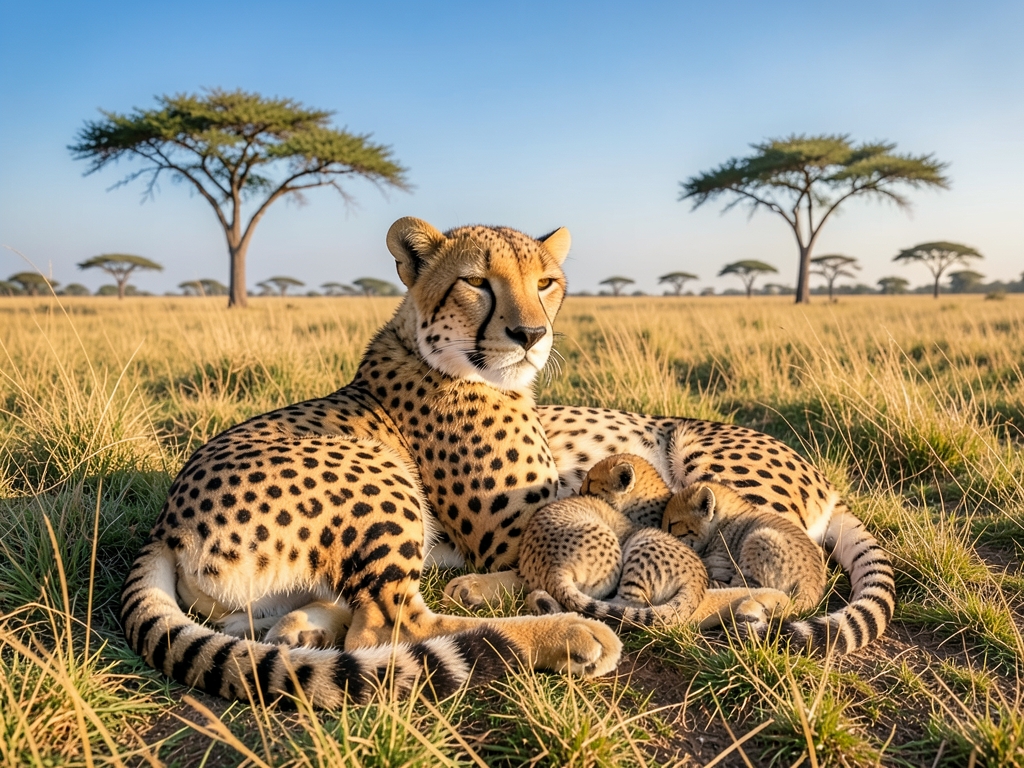
Wildlife conservationists and environmental researchers worldwide are celebrating a remarkable milestone in international species restoration efforts. A female cheetah originating from Botswana, successfully transferred to India as part of an ambitious multi-nation translocation initiative, has given birth to a litter of four healthy cubs. This landmark event marks a significant step forward for global biodiversity restoration programs, proving that translocated apex predators can successfully adapt, breed, and establish new generational strongholds far beyond their native ranges.
The arrival of these four cubs brings renewed optimism to biologists who have spent years planning, monitoring, and refining reintroduction protocols. Reintroducing large carnivores into ecosystems from which they vanished decades ago is notoriously complex. Success relies heavily on habitat health, prey availability, low levels of human-wildlife conflict, and the remarkable adaptability of the animals themselves. This latest development provides vital empirical data showing that carefully managed intercontinental wildlife exchanges can yield positive ecological outcomes.
The Background of International Cheetah Translocations
To understand the significance of this birth, one must examine the broader context of global efforts to restore historic predator ranges. Cheetahs once roamed across extensive landscapes spanning Africa and parts of Asia, but habitat fragmentation, human encroachment, and retaliatory killings severely decimated their populations. In India, the species was officially declared extinct in the wild in 1952. For decades, the loss remained a permanent scar on the nation's rich ecological heritage.
In recent years, conservation strategists initiated structured reintroduction plans, partnering with African nations possessing stable wild populations. Botswana, known for its rigorous wildlife management and thriving ecosystems, became a key partner in supplying healthy foundation stock. Experts carefully selected individuals possessing robust genetic diversity and strong survival instincts. Transporting these magnificent animals thousands of miles across continents required meticulous logistical planning, veterinary oversight, and specialized quarantine protocols designed to minimize stress and safeguard animal welfare.
The successful birth of four cubs represents a testament to years of rigorous scientific planning, international cooperation, and dedicated on-the-ground wildlife monitoring.
Once the cheetahs arrived at their designated sanctuary in India, they underwent an acclimatization phase within expansive fenced enclosures. Wildlife managers closely observed their hunting behaviors, social interactions, and responses to local climatic conditions. Supplementary feeding and medical checks ensured the animals transitioned smoothly before being gradually integrated into the broader open landscape. The birth of these cubs confirms that the mothers have not only adjusted to their new environment but have also found sufficient natural sustenance and security to rear offspring successfully.
Ecological Impacts and Ecosystem Restoration
The return of the world's fastest land mammal to Indian ecosystems is about much more than a single charismatic species. In ecological science, apex predators and large secondary carnivores play a vital role in maintaining the structural balance of natural habitats. By regulating herbivore populations, predators prevent overgrazing, which in turn protects vegetation diversity, stabilizes soils, and improves water retention across arid and semi-arid landscapes.
As these new generations grow, researchers will monitor their impact on local food webs and prey dynamics. Modern conservation science utilizes advanced tracking technologies, camera traps, and genetic sampling to study animal movements and territorial establishment. Data gathered from these tracking initiatives help conservationists understand how reintroduced species navigate human-dominated landscapes, roads, and agricultural fringes.
Info! Modern wildlife tracking utilizes lightweight satellite collars and camera trap arrays to monitor animal dispersal patterns without disturbing natural behaviors.
Furthermore, the presence of these animals serves as an economic and educational catalyst for local communities. Ecotourism driven by wildlife visibility generates vital revenue for regional economies, fostering local support for conservation initiatives. When rural communities recognize tangible economic benefits from protecting natural habitats, poaching pressures decline, and tolerance for shared landscapes increases significantly.
Challenges Facing Translocated Predators
Despite the joy surrounding the birth of the four cubs, conservationists emphasize that long-term survival is never guaranteed. Translocated populations face numerous complex hurdles:
- Genetic Bottlenecks: Maintaining long-term genetic health requires careful management and potential future introductions to prevent inbreeding depression.
- Human-Wildlife Conflict: As young predators disperse and establish new territories, they may occasionally venture near agricultural lands, requiring proactive mitigation strategies.
- Prey Base Fluctuations: Sustaining a growing carnivore population demands robust populations of wild ungulates and strict protection against illegal bushmeat hunting.
- Disease Vulnerability: Introduced populations can be susceptible to novel pathogens and parasites present in new geographic regions, requiring continuous veterinary surveillance.
Addressing these challenges requires multidisciplinary collaboration involving field biologists, government agencies, veterinary specialists, and local community leaders. Public awareness campaigns play a crucial role in educating residents about predator ecology and promoting peaceful coexistence.
Future Outlook for Global Species Recovery
The successful birth of these four cheetah cubs in India offers a powerful blueprint for future conservation projects across the globe. As habitat loss and climate change continue to threaten biodiversity worldwide, traditional protected areas alone are often insufficient to prevent extinctions. Translocations, assisted migrations, and cross-border ecological partnerships are becoming increasingly essential tools in the modern conservation toolkit.
Scientists and policymakers are watching these developments closely, analyzing every metric from cub survival rates to adult dispersal distances. The lessons learned from this initiative will undoubtedly influence upcoming wildlife restoration projects, whether involving large mammals in Africa, endangered birds in Europe, or endemic plants in Asia.
Warning! Wildlife conservation is a long-term commitment that requires sustained funding, political stability, and uninterrupted scientific monitoring to overcome unforeseen environmental setbacks.
As the mother cheetah and her cubs continue to thrive within their protected sanctuary, they symbolize resilience and hope. They stand as a living reminder that ecological mistakes of the past can sometimes be mended through dedicated human effort, scientific rigor, and international solidarity.
Why were cheetahs brought to India from Botswana?
Cheetahs were brought to India to restore a native apex predator that was declared extinct in the country in 1952, helping to revive historical biodiversity and ecological balance.
How many cubs were born in this litter?
The female cheetah from Botswana recently gave birth to a litter of four healthy cubs, marking a major milestone for the international reintroduction program.
What challenges do translocated wildlife populations face?
Translocated animals face several challenges, including genetic bottlenecks, potential human-wildlife conflict, fluctuations in local prey bases, and vulnerability to new regional diseases.
How do scientists monitor the newly born cheetah cubs?
Researchers and wildlife veterinarians monitor the cheetahs using non-invasive tracking techniques, camera traps, direct observation, and continuous health assessments to ensure their safety and well-being.
Ultimately, the successful integration and reproduction of these animals underscore the profound potential of modern conservation science. By uniting expertise across continents, the global conservation community continues to demonstrate that proactive restoration can turn the tide against species extinction.
