

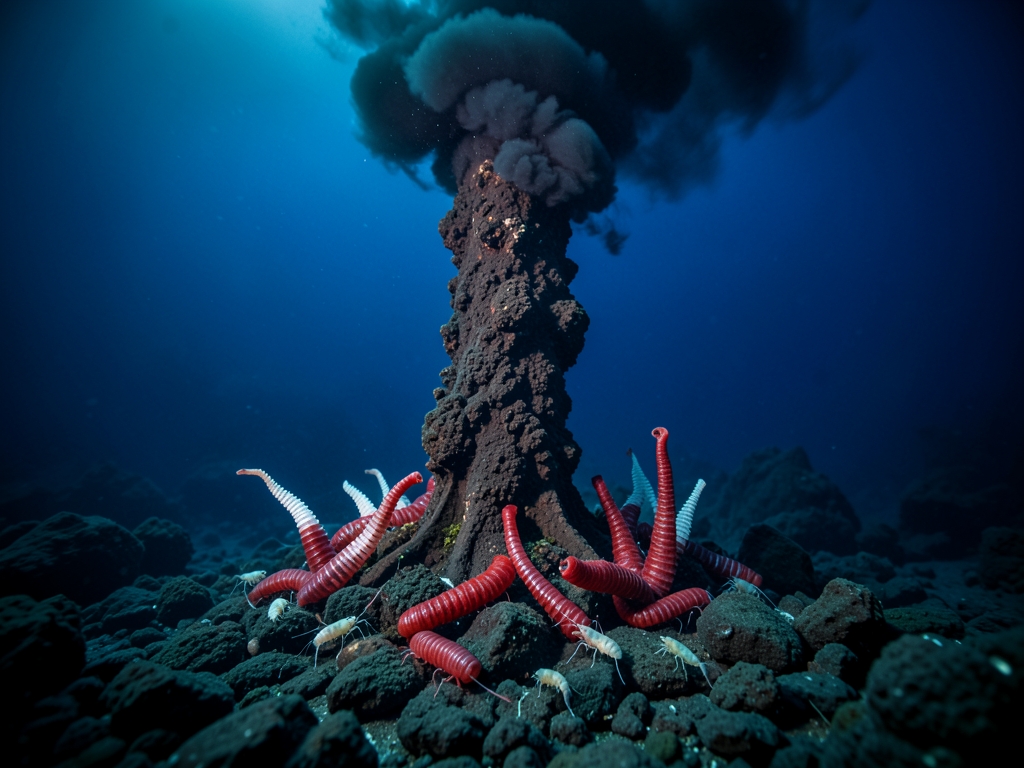
The discovery of deep ocean hydrothermal vents in 1977 during an expedition by the research submersible Alvin along the Galápagos Rift fundamentally transformed ecological science. Prior to this finding, biological oceanography operated under the established paradigm that all marine life ultimately depended on solar radiation driving photosynthesis in surface waters. Hydrothermal vent fields demonstrated that complex, high-density biological communities could flourish in complete darkness at depths exceeding 2,500 meters, sustained entirely by geothermal energy and chemical synthesis.
Hydrothermal vent systems represent dynamic localized oases on the bathyal and abyssal ocean floor. Located primarily along mid-ocean ridge spreading centers, subduction zones, and volcanic back-arc basins, these geological formations act as primary conduits for heat and chemical exchange between the Earth's interior and the global ocean. Understanding their structural mechanics, chemical pathways, and biological adaptations provides crucial insights into extreme-environment biology, ocean geochemistry, and the potential for life on other planetary bodies.
Geological Mechanics and Chimney Formation
The creation of a hydrothermal vent begins with tectonic activity along divergent plate boundaries, where continental drift and seafloor spreading create extensive fracture networks in the oceanic crust. Cold, dense seawater at temperatures near 2°C penetrates deep into these sub-seafloor fissures, descending several kilometers toward sub-crustal magma chambers.
As the seawater approaches these geothermal heat engines, it undergoes intense superheating, reaching temperatures ranging between 350°C and 400°C. Despite exceeding the boiling point of surface water, the fluid remains in a liquid state due to the immense hydrostatic pressure exerted by the overlying water column—often exceeding 250 atmospheres (25 megapascals). This extreme temperature and pressure environment initiates chemical reactions between the fluid and the surrounding basaltic rock.
Info! Hydrostatic pressure at abyssal depths prevents superheated vent fluids from boiling into steam, allowing liquid chemical reactions to occur at temperatures upwards of 400°C.
During this hydrothermal alteration process, the fluid undergoes significant chemical transformations:
- Magnesium Depletion: Seawater loses virtually all its dissolved magnesium ions, which precipitate into the surrounding rock to form smectite clays and talc.
- Sulfate Reduction: Dissolved sulfates are reduced to hydrogen sulfide gas (H₂S) or precipitated as anhydrite minerals.
- Metal Dissolution: The resulting acidic fluid, with pH values dropping as low as 2 to 3, leaches heavy metals—including iron, copper, zinc, manganese, and lead—from the basaltic crust.
- Gas Enrichment: The fluid becomes enriched with dissolved gases such as hydrogen sulfide, methane, molecular hydrogen, and carbon dioxide.
Because the superheated, mineral-saturated fluid is significantly less dense than the surrounding cold seawater, it surges upward through crustal conduits and erupts forcefully into the benthic boundary layer. Upon contact with freezing, oxygen-rich seawater, the fluid undergoes rapid thermal quenching and chemical precipitation. Minerals instantly crystallize out of solution, constructing vertical chimney structures over time.
Black Smokers versus White Smokers
Hydrothermal vents are broadly classified based on their temperature, chemical composition, and visual appearance. Black smokers discharge high-temperature fluids (typically 350°C to 400°C) containing dense concentrations of iron sulfide minerals such as pyrite, marcasite, and chalcopyrite. These dark metal precipitates form tall, rigid chimneys capable of growing several meters in height over short periods.
White smokers release lower-temperature fluids (typically 200°C to 300°C) rich in barium, calcium, and silicon minerals. The resulting precipitates consist primarily of anhydrite and silica, producing pale, cloud-like plumes. The structural geometry and longevity of both chimney types depend on local fluid flow rates, tectonic stability, and mineral accretion dynamics.
Biochemistry of Chemosynthesis: Primary Production Without Sunlight
In traditional phototrophic ecosystems, plants and phytoplankton use sunlight to fix inorganic carbon dioxide into organic carbohydrates through photosynthesis. In contrast, hydrothermal vent ecosystems rely on primary autotrophic production driven by chemosynthesis. Chemosynthetic microorganisms, belonging to the domains Bacteria and Archaea, extract energy from the chemical bonds of reduced inorganic compounds present in vent fluids.
Chemosynthesis replaces photon energy with chemical oxidation energy, allowing microorganisms to convert inorganic carbon into bioavailable biomass in total darkness.
The primary electron donor in most hydrothermal vent systems is hydrogen sulfide. Sulfur-oxidizing microorganisms utilize dissolved oxygen from seawater to oxidize hydrogen sulfide into sulfate, capturing the released metabolic energy to convert carbon dioxide into cellular biomass. The generalized chemical reaction for sulfide-driven chemosynthesis is expressed as follows:
6CO₂ + 6H₂O + 3H₂S → C₆H₁₂O₆ + 3H₂SO₄
In addition to hydrogen sulfide, other chemosynthetic pathways operate within vent fluid plumes and microbial mats. Methanotrophic bacteria utilize dissolved methane as both an energy and carbon source, while hydrogen-oxidizing microorganisms utilize molecular hydrogen via specialized hydrogenase enzymes. These biochemical pathways sustain diverse microbial mats that coat vent surfaces and form the baseline nutritional source for higher trophic levels.
Extremophile Adaptations and Physiological Symbiosis
The immediate physical environment surrounding hydrothermal vents presents severe physiological challenges to biological organisms. Fauna inhabiting vent fields must cope with steep thermal gradients—where temperatures can drop from 300°C to 2°C within a distance of millimeters—alongside extreme hydrostatic pressure, hypoxia, high concentrations of toxic heavy metals, and elevated hydrogen sulfide levels that inhibit cellular respiration in standard aerobic animals.
To survive under these conditions, vent fauna have evolved extraordinary biochemical, anatomical, and symbiotic adaptations.
The Symbiotic Architecture of Giant Tube Worms
Among the most iconic vent organisms is the giant tube worm, Riftia pachyptila, which can reach lengths of over two meters inside protective chitinous tubes attached to basaltic substrates. Remarkably, adult Riftia pachyptila possess no mouth, gut, or digestive tract. Instead, they depend entirely on an internal endosymbiotic relationship with sulfur-oxidizing bacteria housed within a specialized, highly vascularized organ called the trophosome.
To nourish its bacterial endosymbionts, Riftia pachyptila utilizes a bright red branchial plume packed with unique, high-molecular-weight hemoglobin molecules. Unlike human hemoglobin, Riftia hemoglobin possesses specialized binding sites that bind both oxygen and toxic hydrogen sulfide simultaneously and reversibly, transporting these compounds through the bloodstream to the trophosome without allowing sulfide to poison the worm's cellular respiratory chain. The bacteria inside the trophosome process the chemical compounds, generating organic molecules that feed the host worm.
Warning! Hydrogen sulfide is normally a potent inhibitor of cytochrome c oxidase in aerobic animals, but specialized vent hemoglobins prevent cellular toxicity by tightly binding sulfide during transport.
Crustaceans, Mollusks, and Microbial Grazing
Other vent organisms rely on distinct survival strategies. Vent shrimp, such as Rimicaris exoculata, swarm around black smoker chimneys in massive aggregations. These shrimp lack functional eyes but possess specialized dorsal sensory organs capable of detecting faint thermal infrared emissions radiating from superheated vent fluids. They host dense colonies of epibiotic bacteria on their gill chambers, grazing on the bacteria as a primary food supply.
Deep-sea bathymodiolin mussels (genus Bathymodiolus) harbor dual endosymbionts within their gill tissues—combining sulfur-oxidizing and methane-oxidizing bacteria. This dual-symbiosis allows the mussels to adapt dynamically to shifting chemical compositions in vent emissions.
Comparative Analysis of Vent Systems and Geochemical Parameters
Hydrothermal vent fields vary significantly based on host rock geology, fluid pH, and chemical concentration. The following table summarizes key operational parameters across major hydrothermally active tectonic settings:
| Vent Category | Dominant Geology | Fluid Temperature Range | Typical Fluid pH | Primary Mineral Precipitates | Key Electron Donors |
|---|---|---|---|---|---|
| High-Temperature Black Smokers | Basaltic Mid-Ocean Ridges | 350°C to 400°C | 2.0 – 3.5 (Acidic) | Iron & Copper Sulfides (Pyrite, Chalcopyrite) | Hydrogen Sulfide (H₂S), Iron (Fe²⁺) |
| White Smoker Fields | Divergent Ridge Flanks | 200°C to 300°C | 3.5 – 5.0 (Moderately Acidic) | Anhydrite, Silica, Zinc Sulfide (Sphalerite) | Hydrogen Sulfide, Methane |
| Alkaline Vents (e.g., Lost City) | Ultramafic Mantle Peridotite | 40°C to 90°C | 9.0 – 11.0 (Alkaline) | Calcium Carbonate (Aragonite, Calcite) | Molecular Hydrogen (H₂), Methane |
Alkaline Hydrothermal Vents and Astrobiological Implications
While acidic black smokers attract significant attention due to their dramatic plumes, alkaline hydrothermal vent systems present unique scientific significance for origin-of-life research. The Lost City Hydrothermal Field, situated on the Mid-Atlantic Ridge's Atlantis Massif, is driven by a chemical process known as serpentinization rather than direct volcanic heating.
Serpentinization occurs when seawater reacts with ultramafic mantle rocks containing olivine. This exothermic chemical reaction produces warm, highly alkaline fluids (pH 9 to 11) rich in molecular hydrogen, methane, and small organic molecules, while forming towering carbonate chimneys up to 60 meters high.
Geochemists and astrobiologists hypothesize that ancient alkaline hydrothermal vents on early Earth provided ideal electrochemical conditions for the emergence of primordial life. The natural proton gradients formed across porous, inorganic micro-chambers in alkaline chimneys closely parallel the chemiosmotic gradients used by modern biological cells to synthesize ATP.
Furthermore, evidence of hydrothermal activity on Earth has directly influenced outer solar system exploration. Data collected by space probes confirm subsurface oceans beneath the icy crusts of Jupiter's moon Europa and Saturn's moon Enceladus. The detection of molecular hydrogen and silica nanoparticles in plumes ejected from Enceladus strongly indicates active seafloor hydrothermal vents, making these icy ocean worlds premier targets in the search for extraterrestrial microbial life.
How do hydrothermal vents form on the ocean floor?
Hydrothermal vents form along oceanic spreading ridges and subduction zones where tectonic plates diverge or fracture. Seawater seeps through cracks in the seafloor crust, descending several kilometers toward sub-crustal magma chambers. Heated to temperatures exceeding 400°C, the fluid strips minerals and metals from surrounding basalt, becomes hyper-buoyant, and forcefully erupts back into the cold abyssal ocean. As the hot, mineral-laden fluid meets freezing 2°C seawater, dissolved metals rapidly precipitate out, building chimney-like mineral towers over time.
What is the primary energy source for life around hydrothermal vents?
Unlike surface ecosystems that depend on solar energy captured through photosynthesis, hydrothermal vent ecosystems rely on chemical energy through chemosynthesis. Chemosynthetic bacteria and archaea oxidize reduced chemical compounds contained within vent fluids—primarily hydrogen sulfide, methane, and molecular hydrogen—to convert dissolved inorganic carbon into organic matter, serving as the foundational energy source for the entire food web.
How do animals survive the toxic gases and extreme temperatures near vents?
Organisms living near hydrothermal vents have evolved specialized physiological and biochemical adaptations. For example, giant tube worms host trillions of endosymbiotic bacteria inside a specialized tissue called a trophosome and possess unique hemoglobin molecules capable of binding hydrogen sulfide and oxygen simultaneously without suffering toxicity. Other species utilize heat-stable enzymes, protective heat-shock proteins, and modified cell membranes to tolerate extreme heat and pressure.
Why are alkaline hydrothermal vents significant for origin-of-life research?
Alkaline hydrothermal vents, such as the Lost City field, generate warm, highly alkaline fluids rich in molecular hydrogen inside porous inorganic calcium carbonate structures. Scientists hypothesize that the steep proton and electrochemical gradients existing across the thin mineral walls of these micropores mimicked primitive cellular membranes. This environment could have catalyzed the synthesis of early organic molecules and driven the origin of prebiotic metabolic pathways on early Earth.
Conclusion
Deep ocean hydrothermal vents illustrate the extraordinary resilience and chemical adaptability of life. By decoupling biological primary production from solar radiation, these deep-sea systems demonstrate that geothermal energy and mineral transport can drive complex biological ecosystems in Earth's most hostile environments. As oceanographic research advances through autonomous deep-submergence vehicles and sub-seafloor observatories, studying hydrothermal mechanics continues to expand our understanding of marine geochemistry, evolutionary biology, and the potential distribution of life across the universe.
