

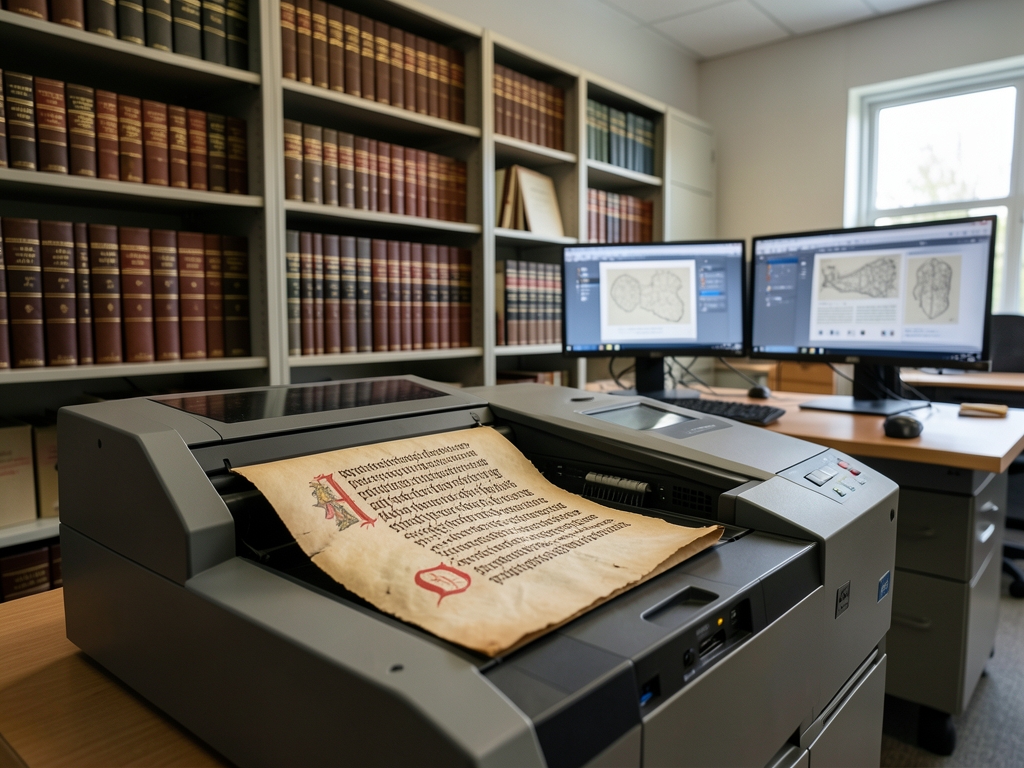
The preservation and study of medieval history have entered a transformative era, driven by advanced digital imaging, multispectral photography, and collaborative international archive projects. Across Europe and North America, specialized conservation laboratories are systematically opening centuries-old codices, fragile scrolls, and neglected municipal records that have remained unread for generations. By transforming physical paper and parchment into searchable, high-resolution digital assets, historians can now trace complex economic networks, shifting trade routes, and demographic evolutions that once lay hidden beneath centuries of dust and decay.
This comprehensive exploration examines how modern archival initiatives are reshaping our understanding of the medieval period, the cutting-edge technologies employed by conservationists, and the remarkable insights gained from recently digitized collections across the continent.
The Evolution of Historical Archival Conservation
For centuries, the primary challenge of medieval historiography was physical access. Historical documents were often scattered across remote monastic libraries, municipal cellars, and private collections, vulnerable to fire, dampness, political upheaval, and biological degradation. Early attempts to preserve these texts relied on manual transcription and fragile microfilm copies, which frequently degraded or failed to capture subtle inks, watermarks, and marginalia.
Today, the landscape of historical research is radically different. Modern digitization protocols utilize specialized book cradles, non-destructive lighting, and ultra-high-resolution sensors to capture every microscopic detail of a manuscript without stressing its fragile bindings. Furthermore, multispectral imaging allows researchers to read faded text, erased parchment palimpsests, and marginal notes that were previously invisible to the naked eye. These technological leaps ensure that fragile historical treasures are preserved indefinitely while becoming instantly accessible to scholars and the public worldwide.
Uncovering Medieval Trade Networks Through Merchant Ledgers
Recent projects focusing on digitized 14th- and 15th-century merchant archives have provided unprecedented clarity on how goods, currency, and information moved across medieval Europe. Unlike royal chronicles that focused primarily on wars and elite politics, merchant ledgers document the daily realities of commerce, taxation, shipping costs, and commodity pricing.
Info! Digitized municipal and merchant records from late medieval European ports reveal that supply chains were remarkably resilient, adapting swiftly to regional conflicts, climate shifts, and epidemic outbreaks.
When researchers analyze thousands of digitized shipping manifests and debt contracts simultaneously, patterns emerge that traditional reading methods missed. For example, computational text analysis of newly accessible port records demonstrates how merchant guilds coordinated international credit systems long before the establishment of modern central banking. These documents record the fluctuating values of local coinages, providing economic historians with precise data on inflation, purchasing power, and wealth distribution in medieval towns.
Language, Law, and Local Administration
Beyond economics, digitized archives offer profound insights into legal structures, vernacular languages, and local administration. Many medieval documents were written in complex regional variations of Latin, Middle English, Old French, or Middle High German, peppered with legal abbreviations that presented formidable barriers to researchers.
Modern projects increasingly integrate optical character recognition (OCR) trained specifically on historical scripts, alongside artificial intelligence models capable of transposing archaic abbreviations into readable text. This technological synergy accelerates the translation process, enabling historians to cross-reference legal petitions, land grants, and criminal court records across different administrative districts. Consequently, scholars can track how common law evolved, how land ownership disputes were mediated, and how rural communities interacted with centralized feudal authorities.
The Role of International Collaboration and Open Access
The success of contemporary historical research depends heavily on cross-border cooperation. National libraries, university archives, and municipal record offices increasingly pool their resources into unified digital portals. This democratization of historical data means a researcher in a remote academic institution has the same access to pristine manuscript scans as a specialist sitting in a major European capital.
Open-access mandates adopted by many cultural heritage institutions ensure that digitized manuscripts are accompanied by detailed metadata, provenance histories, and translation tools. This open framework encourages public participation, welcoming amateur historians, genealogists, and students to contribute to crowdsourced transcription and indexing projects.
Practical Guidelines for Exploring Digital Historical Archives
For students, educators, and history enthusiasts wishing to explore primary medieval sources independently, navigating these digital repositories requires a structured approach. The following steps outline how to effectively utilize online historical collections for research or personal enrichment:
- Identify reputable institutional portals, such as national library databases, university manuscript repositories, and specialized digital history consortia.
- Utilize advanced search filters to narrow down documents by geographic region, century, language, and document type (e.g., charters, court rolls, cartularies).
- Familiarize yourself with basic paleography resources and standard medieval abbreviation glossaries to accurately interpret handwritten texts.
- Cross-reference digital manuscript transcriptions with established secondary historical literature to understand the broader sociopolitical context of the source material.
Challenges in Modern Manuscript Digitization
Despite significant technological advancements, large-scale digitization projects face persistent logistical and financial hurdles. Pushing fragile parchment through high-speed scanners is impossible; every single page must be handled by trained conservators. Additionally, digital storage, long-term file format obsolescence, and metadata standardization require continuous funding and technical oversight.
Furthermore, ethical considerations regarding cultural heritage repatriation and digital sovereignty have come to the forefront. As former colonial territories and regional communities demand digital copies of archival materials removed centuries ago, international institutions must navigate complex frameworks of digital ownership and equitable access.
What technologies are used to read faded or damaged medieval manuscripts?
Conservationists primarily use multispectral imaging, which captures images across various light spectrums including ultraviolet and infrared. This technique reveals faded inks, erased text on recycled parchment palimpsests, and underlying corrections made by medieval scribes.
Are digitized medieval archives freely accessible to the general public?
Yes, many national libraries, university repositories, and international heritage projects offer open-access portals where anyone can view, download, and study high-resolution scans of historical manuscripts without a subscription.
How do historians read complex medieval handwriting and abbreviations?
Historians rely on paleography—the study of historical writing systems—alongside specialized glossaries of medieval scribal abbreviations. Increasingly, modern artificial intelligence and optical character recognition models trained on historical scripts also assist in automated transcription.
Why are merchant ledgers considered valuable sources for medieval history?
Unlike official royal chronicles that focus on political elites, merchant ledgers provide empirical data on everyday economic life, including commodity prices, shipping costs, credit networks, currency fluctuations, and trade route resilience.
Conclusion
The systematic digitization of medieval archives represents a monumental triumph for historical scholarship. By bridging the physical gap between fragile ancient artifacts and global digital audiences, modern conservation science ensures that the voices, economies, and daily struggles of medieval societies are not lost to time. As imaging technologies and artificial intelligence continue to evolve, our window into the medieval past will only grow clearer, offering endless avenues for discovery and deeper human understanding.
