

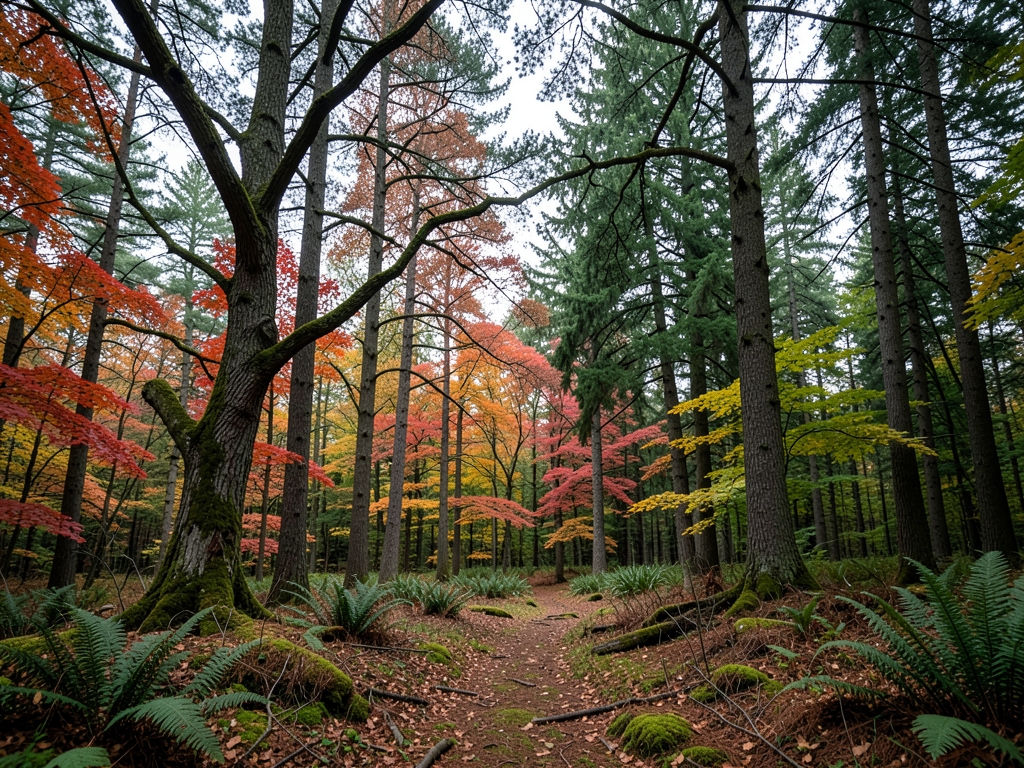
Global environmental pressures are mounting at an unprecedented pace, challenging the structural integrity of natural ecosystems across Europe, North America, and beyond. Recent ecological research published by field scientists and conservation groups highlights a critical factor in how ecosystems endure severe meteorological turbulence: biological diversity. Specifically, scientific findings demonstrate that forests composed of a diverse mix of tree species exhibit a far greater capacity to withstand extreme weather events, prolonged droughts, and severe storms compared to homogenous, single-species plantations. Understanding these complex ecological dynamics offers vital insights for international conservation strategies and forest management practices.
As climate anomalies intensify, traditional forestry models that favor fast-growing monocultures are increasingly exposed to systemic vulnerabilities. Pests, pathogens, and sudden thermal spikes can decimate a uniform woodland in a matter of weeks. In contrast, diverse natural forests maintain complex ecological networks that buffer against environmental shocks. This article explores the scientific mechanisms underlying forest resilience, the empirical evidence gathered from recent field studies, and the practical implications for global environmental stewardship.
The Ecological Mechanisms Behind Forest Resistance
To understand why species-rich forests survive environmental extremes more effectively than monocultures, researchers examine underground fungal networks, canopy architecture, and resource competition. When multiple tree species occupy the same landscape, they often utilize different layers of the soil and atmosphere. Deep-rooting species extract moisture from lower geological strata, while shallow-rooting varieties capture surface water. This complementary resource partitioning reduces direct competition during drought conditions.
Furthermore, mixed forests foster rich subterranean microbial communities. Mycorrhizal networks—vast webs of underground fungal threads—connect different trees, facilitating the redistribution of nutrients and water from healthy specimens to stressed neighbors. When an extreme weather event strikes, such as a severe gale or a flash flood, structurally diverse canopies diffuse wind energy more effectively. The varying heights, flexible branch structures, and mixed root depths anchor the soil much more securely than uniform root systems found in commercial timber farms.
Biodiversity is not merely a passive measure of species count; it is an active functional buffer that stabilizes ecosystem productivity and resistance during environmental crises.
Recent studies emphasize that functional diversity matters just as much as taxonomic diversity. A forest containing trees with vastly different physiological traits—such as varying leaf toughness, wood density, and transpiration rates—can absorb unpredictable climatic shocks far better than a forest where every tree responds to heat stress in the exact same way.
Empirical Evidence from Recent Ecological Research
Field data collected across various climate zones strongly support the superiority of biodiverse woodlands. Recent investigations into forest mortality following severe heatwaves and drought periods reveal a distinct pattern. Monoculture pine and spruce stands suffer catastrophic dieback rates, whereas nearby mixed-hardwood forests retain significantly higher canopy greenness and lower tree mortality.
Info! Long-term ecological monitoring stations across temperate and tropical regions provide continuous data streams that validate the protective role of species richness against climate volatility.
Researchers attribute this resilience to functional redundancy. If one dominant species in a diverse forest succumbs to a specific pest outbreak driven by rising temperatures, other species step in to fill the ecological niche, maintaining overall canopy cover and soil stability. This prevents runaway erosion and catastrophic ecosystem collapse, preserving habitat for dependent wildlife species.
Implications for Global Conservation and Forestry Management
The scientific consensus surrounding forest diversity demands a fundamental shift in commercial forestry and ecological restoration policies. For decades, reforestation initiatives in Europe and North America often prioritized rapid carbon sequestration through fast-growing, single-species planting programs. While these initiatives successfully increased green cover on paper, they created fragile ecological landscapes highly susceptible to modern climate hazards.
International conservation frameworks are increasingly incorporating ecological resilience as a core metric for success. Governments and private landowners are transitioning toward close-to-nature forestry techniques. These practices involve:
- Encouraging natural regeneration of native mixed species rather than clearing land for artificial monoculture plantations.
- Selectively harvesting mature timber in a manner that preserves understory complexity and structural variation.
- Protecting existing old-growth forests that already possess complex, multi-layered ecological networks.
- Integrating wildlife corridors to facilitate natural seed dispersal and genetic exchange across fragmented landscapes.
Implementing these strategies requires substantial financial investment and long-term planning, but the economic and environmental payoffs are profound. Resilient forests require fewer chemical interventions, harbor richer wildlife populations, and continue to sequester carbon reliably even during erratic weather years.
Economic and Societal Benefits of Resilient Woodlands
Beyond ecological stability, diverse forests provide essential ecosystem services that protect human communities. Watersheds protected by mixed-species forests experience cleaner water filtration and reduced sediment runoff during torrential downpours. By mitigating flash floods and stabilizing hillsides, diverse forests safeguard rural infrastructure and human settlements located downstream.
Moreover, biodiverse ecosystems offer enhanced recreational and aesthetic value, supporting ecotourism economies. As climate change increases urban heat island effects and rural fire risks, maintaining robust, healthy green belts around populated regions becomes an urgent public safety priority.
| Forest Type | Drought Resistance | Pest Vulnerability | Carbon Stability |
|---|---|---|---|
| Single-Species Monoculture | Low | High | Unstable |
| Mixed-Species Natural Forest | High | Low | Resilient |
| Planted Agroforestry Buffer | Moderate | Moderate | Moderate |
Challenges in Restoring Forest Biodiversity
Despite the clear benefits, transitioning toward biodiverse forestry faces practical hurdles. Seedling availability for less common native tree species can be limited in commercial nurseries. Landowners accustomed to short-rotation monocultures may hesitate to adopt longer-rotation, mixed-species management plans due to immediate financial considerations.
Warning! Ignoring forest biodiversity in favor of quick timber yields dramatically increases the long-term risk of catastrophic ecosystem collapse and economic loss.
Overcoming these challenges requires targeted government incentives, robust scientific extension services, and international climate finance mechanisms that reward landowners for ecological stewardship rather than simple tree-counting metrics.
Why do diverse forests withstand extreme weather better than monocultures?
Diverse forests contain multiple tree species with varying root depths, canopy structures, and physiological traits. This functional variety allows them to share resources efficiently, stabilize soil against erosion, and diffuse wind energy more effectively during severe storms.
What role do underground fungal networks play in forest resilience?
Mycorrhizal networks connect different trees beneath the forest floor, allowing healthy specimens to share nutrients and water with stressed neighbors, thereby buffering the entire ecosystem against localized environmental shocks.
How are forestry practices changing in response to these scientific findings?
Landowners and conservationists are increasingly moving away from single-species timber plantations, adopting close-to-nature forestry methods that promote natural regeneration, mixed-species planting, and structural complexity.
Do diverse forests offer economic benefits alongside ecological stability?
Yes. Resilient forests provide reliable long-term carbon sequestration, cleaner watershed filtration, reduced flood risks, and sustainable timber yields while requiring fewer chemical treatments and management interventions.
Protecting and restoring forest biodiversity is no longer just an aesthetic or conservation ideal; it is an urgent biological necessity for planetary survival. As global temperatures fluctuate and extreme weather events become the new normal, shifting our approach to forest management will determine the future stability of Earth's most critical terrestrial ecosystems.
