

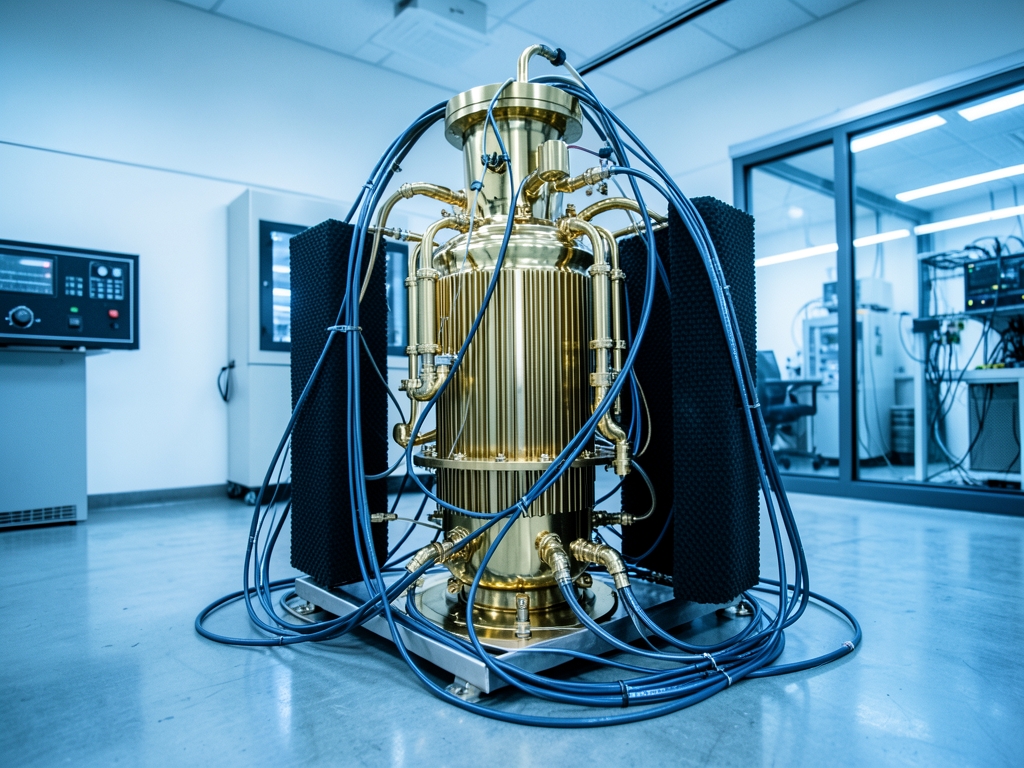
Quantum computing continues to transition from theoretical physics into an operational enterprise paradigm, marked by significant engineering breakthroughs in processor scale and error mitigation. Among the most notable recent developments is IBM's ongoing expansion of its quantum computing roadmap, highlighted by advanced processor architectures designed to dramatically scale execution capabilities and circuit depth. As organizations in enterprise technology, finance, and cryptography prepare for the post-quantum era, understanding these architectural milestones is essential for evaluating the trajectory of high-performance computing infrastructure.
Hardware evolution in the quantum sector has traditionally been bottlenecked by decoherence, gate fidelity, and error accumulation during complex algorithmic executions. Modern engineering approaches, however, are shifting focus toward high-qubit systems equipped with native error-resilient features. The introduction of processors capable of executing thousands of operations per circuit run signifies a major leap forward from early noisy intermediate-scale quantum systems.
The Evolution of IBM Quantum Architecture
The progression of quantum hardware relies on methodical scaling strategies that balance qubit count with gate fidelity. Earlier generations of quantum processors established fundamental gate operations and basic entanglement protocols across dozens of physical qubits. As research teams refined superconducting circuit designs, planar architectures gave way to more complex, modular multi-chip modules that enable denser interconnects without increasing crosstalk interference.
IBM's roadmap strategy centers on systemic improvements in modular scaling, cryogenic packaging, and microwave control electronics. By integrating advanced error-suppression techniques directly into the control layer, modern systems can maintain qubit coherence across extended execution windows. This architectural rigor is what underpins the transition toward processors engineered to handle utility-scale workloads involving tens of thousands of complex gates.
Info! Utility-scale quantum systems represent the threshold where quantum processors can reliably execute complex calculations that surpass the practical simulation limits of classical supercomputers.
Analyzing the 520-Qubit Nighthawk Processor and Execution Milestones
The unveiling of the 520-qubit Nighthawk processor architecture represents a defining moment in high-capacity quantum hardware development. Designed to address the scaling limitations of earlier quantum units, Nighthawk incorporates enhanced coupling topologies and optimized microwave pulse controls. These design choices directly reduce gate error rates while supporting significantly larger circuit depths.
Complementing the raw qubit count are processor iterations designed to execute thousands of operations within a single coherence window. This capability is critical for quantum chemistry simulations, optimization problems, and material science research, where algorithms require sustained multi-qubit entanglement without intermediate measurement collapse. The table below outlines the conceptual shift from early research processors to modern utility-scale architectures.
| Architecture Generation | Scale (Qubits) | Operation Capacity | Primary Use Case |
|---|---|---|---|
| Early NISQ Systems | 50 - 127 qubits | Hundreds of gates | Proof-of-concept algorithms |
| Mid-Range Scaled Units | 133 - 433 qubits | Low thousands of operations | Algorithmic benchmarking |
| Advanced Nighthawk Era | 520+ qubits | Expanded circuit execution | Utility-scale simulations |
Hardware and Software Co-Design in Quantum Ecosystems
Scaling quantum hardware is only half the engineering challenge; software integration and compiler optimization are equally vital. Modern quantum software development kits (SDKs) must translate high-level quantum circuits into highly optimized pulse-level instructions tailored to the physical characteristics of specific superconducting chips. This co-design approach minimizes idle times and dynamically routes entanglement paths around minor hardware imperfections.
Furthermore, cloud-based access layers allow enterprise researchers to submit complex workloads directly to quantum processing units (QPUs) housed in specialized cryogenic facilities. As hybrid classical-quantum workflows become standard, middleware platforms are evolving to orchestrate classical pre-processing and quantum co-processing seamlessly, reducing latency and maximizing computational throughput for enterprise clients.
Enterprise Integration and Future Outlook
The broader implications of these hardware advancements extend deep into commercial and scientific domains. Industries dealing with complex molecular modeling, financial risk analysis, and logistic supply chain optimization are actively establishing quantum readiness programs. By partnering with hardware pioneers, enterprise IT departments are learning to refactor traditional computational pipelines into hybrid quantum-classical algorithms.
Nevertheless, substantial challenges remain before fault-tolerant, error-corrected quantum computers become ubiquitous. Cryogenic infrastructure requirements, dilution refrigerator maintenance, and the physical constraints of scaling coaxial wiring in ultra-low temperature environments demand continuous innovation in materials science and electrical engineering. Despite these hurdles, the steady cadence of architectural improvements confirms that utility-scale quantum computing is transitioning from a distant vision into an applied engineering reality.
What is the primary significance of the Nighthawk processor architecture?
The Nighthawk processor architecture represents a major scaling milestone in quantum computing, featuring 520 qubits and advanced engineering designed to execute complex workloads with greater circuit depth and reduced gate error rates.
How do utility-scale quantum processors differ from early NISQ systems?
Utility-scale quantum processors can reliably execute thousands of operations and complex circuits that surpass the simulation capabilities of classical supercomputers, moving beyond simple proof-of-concept demonstrations.
Why is hardware and software co-design important in quantum computing?
Co-design allows quantum compilers to translate high-level algorithms into precise pulse-level instructions optimized for specific physical chip layouts, minimizing decoherence and maximizing execution efficiency.
What industries are expected to benefit most from these quantum advancements?
Industries focused on advanced molecular modeling, pharmaceuticals, materials science, cryptography, and complex financial risk optimization stand to benefit significantly from utility-scale quantum hardware.
As research institutions and hardware developers push the boundaries of quantum coherence and qubit density, the technological landscape is undergoing a fundamental transformation. The continued refinement of processors like Nighthawk underscores the viability of quantum acceleration in solving computational problems that have historically challenged classical computing architectures.
