

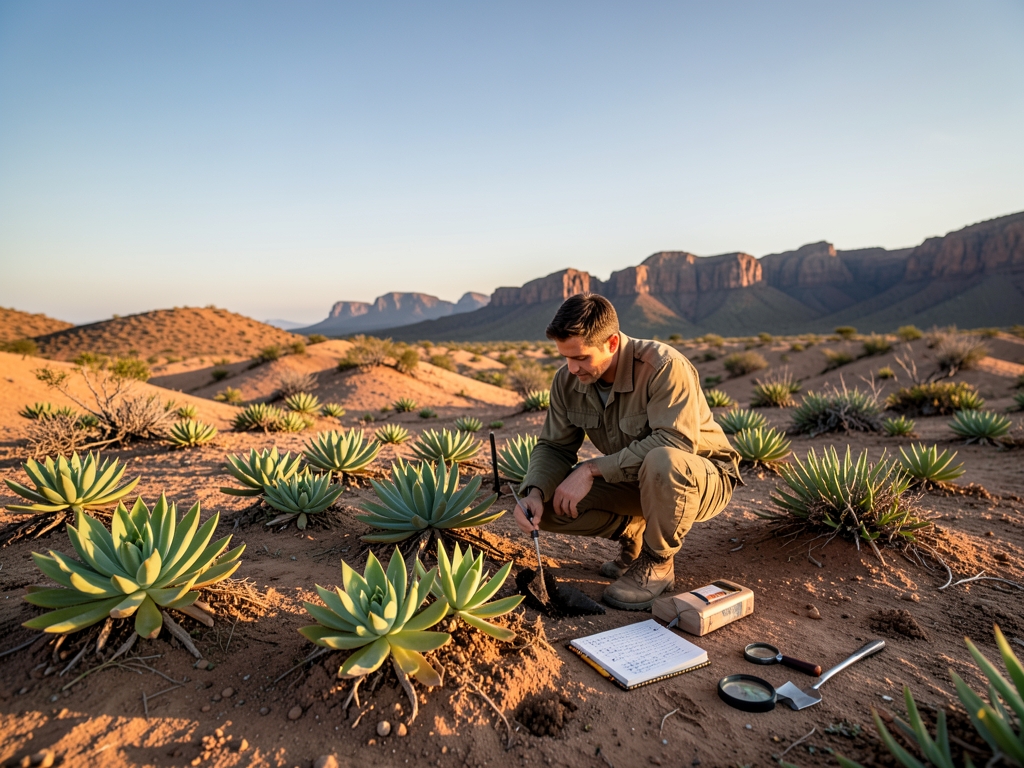
Desert and semi-arid ecosystems are frequently perceived as desolate landscapes where little survives, yet these harsh environments harbor some of the most specialized and biologically diverse plant communities on Earth. Across South Africa, fragile arid flora have evolved over millennia to endure extreme temperatures, minimal rainfall, and poor soils. However, accelerating anthropogenic climate change now poses an unprecedented threat to these highly adapted species. In response to these escalating environmental pressures, a major five-year research and conservation initiative led by Stellenbosch University researchers has officially commenced, aiming to protect South Africa's vulnerable desert plants and secure the ecological future of its arid zones.
Arid and semi-arid lands cover a significant portion of the African continent, supporting unique botanical lineages that exist nowhere else on the planet. Plants in these regions have developed remarkable physiological adaptations, ranging from extensive underground root networks to specialized water-storing tissues and dormant seed stages that can persist for decades. Despite these evolutionary marvels, rapid shifts in regional temperatures, prolonged droughts, and erratic precipitation patterns are pushing many native species beyond their physiological thresholds. Conservationists warn that without targeted intervention and rigorous scientific monitoring, iconic desert plant communities face severe population declines and potential local extinctions.
The Growing Vulnerability of Arid Zone Flora
Climate projections for Southern Africa indicate rising average temperatures and increasingly unpredictable rainfall events. While desert plants are inherently drought-tolerant, the velocity of modern climate change often outpaces natural evolutionary adaptation. Prolonged moisture deficits disrupt critical reproductive cycles, preventing seedlings from establishing and leaving mature plants highly vulnerable to physiological stress, disease, and invasive species encroachment.
Furthermore, human activities such as overgrazing, agricultural expansion, and localized infrastructure development compound these climatic stressors. When native vegetation is cleared or degraded, the fragile topsoil becomes susceptible to severe erosion during rare heavy rainstorms, further diminishing the capacity of the ecosystem to regenerate. Recognizing these compounding vulnerabilities, the new five-year research initiative based at Stellenbosch University seeks to bridge the gap between academic botanical research and practical conservation management.
Arid ecosystems are not empty wastelands; they are complex biological archives containing plants with extraordinary evolutionary adaptations to extreme stress. Protecting these habitats requires a coordinated scientific approach that addresses both immediate threats and long-term climate trajectories.
Core Objectives of the Stellenbosch University Initiative
The newly launched five-year project brings together multidisciplinary teams of botanists, ecologists, climatologists, and conservation practitioners. The initiative focuses on several key pillars designed to safeguard vulnerable plant populations across South Africa’s arid regions:
- Comprehensive Distribution Mapping: Conducting extensive field surveys to update baseline data on the geographic range and population density of high-risk endemic plant species.
- Physiological Tolerance Testing: Laboratory and field experiments to measure how different desert plant species respond to acute heat stress and prolonged water scarcity.
- Seed Bank Expansion: Collecting, cataloging, and securely storing viable seeds from endangered populations in regional conservation vaults to preserve genetic diversity.
- Habitat Restoration Trials: Implementing science-based restoration techniques in degraded areas to assist natural recovery and enhance ecosystem resilience.
Info! The five-year timeframe allows researchers to monitor multi-season ecological responses, capturing how arid plants react to both drought years and occasional heavy rainfall events.
Community Engagement and Local Stewardship
Effective conservation in vast, remote landscapes cannot succeed without the active participation of local communities, landowners, and indigenous stewards. A vital component of the Stellenbosch initiative involves collaborative outreach programs designed to share scientific findings with rural communities who live alongside these fragile ecosystems. By fostering local environmental literacy and supporting sustainable land-use practices, the project aims to create enduring frameworks for habitat protection that extend far beyond the academic lifecycle of the research grant.
Landowners and agricultural associations are also encouraged to participate in monitoring programs, helping to identify early warning signs of ecosystem degradation. This collaborative model ensures that conservation strategies are practical, culturally relevant, and supported by those who directly manage the land.
Broader Implications for Global Arid Conservation
As global temperatures continue to rise, semi-arid and desert regions around the world face similar ecological challenges. The insights and methodologies developed through this South African research project will offer valuable lessons for international conservation initiatives operating in comparable environments across Australia, the American Southwest, North Africa, and the Middle East. Understanding how specific plant lineages manage extreme thermal and moisture stress provides critical data for global biodiversity modeling and climate adaptation planning.
Ultimately, safeguarding desert flora is not merely about preserving individual plant species; it is about maintaining the functional integrity of entire arid biomes that regulate regional microclimates, prevent desertification, and support specialized fauna. Through sustained scientific inquiry, targeted habitat management, and community collaboration, initiatives like the one spearheaded by Stellenbosch University offer a vital pathway toward environmental resilience in a rapidly changing world.
What is the main goal of the Stellenbosch University desert plant initiative?
The primary goal is to protect South Africa's vulnerable arid and semi-arid plant species from the compounding pressures of climate change through rigorous research, habitat monitoring, seed banking, and community-based conservation strategies.
How long is the research project scheduled to run?
The initiative is structured as a comprehensive five-year project, allowing researchers to study multi-season ecological responses and evaluate how desert flora adapt to varying climatic conditions over time.
Why are desert plants considered particularly vulnerable to climate change?
Although desert plants are highly drought-tolerant, the rapid pace of modern climate change, including rising temperatures and unpredictable rainfall, frequently exceeds their natural evolutionary ability to adapt and successfully reproduce.
How do local communities contribute to this conservation effort?
Local communities and landowners participate through collaborative outreach programs, sustainable land-use management, and monitoring efforts that help safeguard fragile habitats against overgrazing and degradation.
The launch of this five-year initiative marks a significant milestone in South African environmental conservation. By combining cutting-edge botanical science with grassroots stewardship, researchers are laying the groundwork for a sustainable future where unique desert ecosystems can withstand the mounting pressures of global climate change.
