

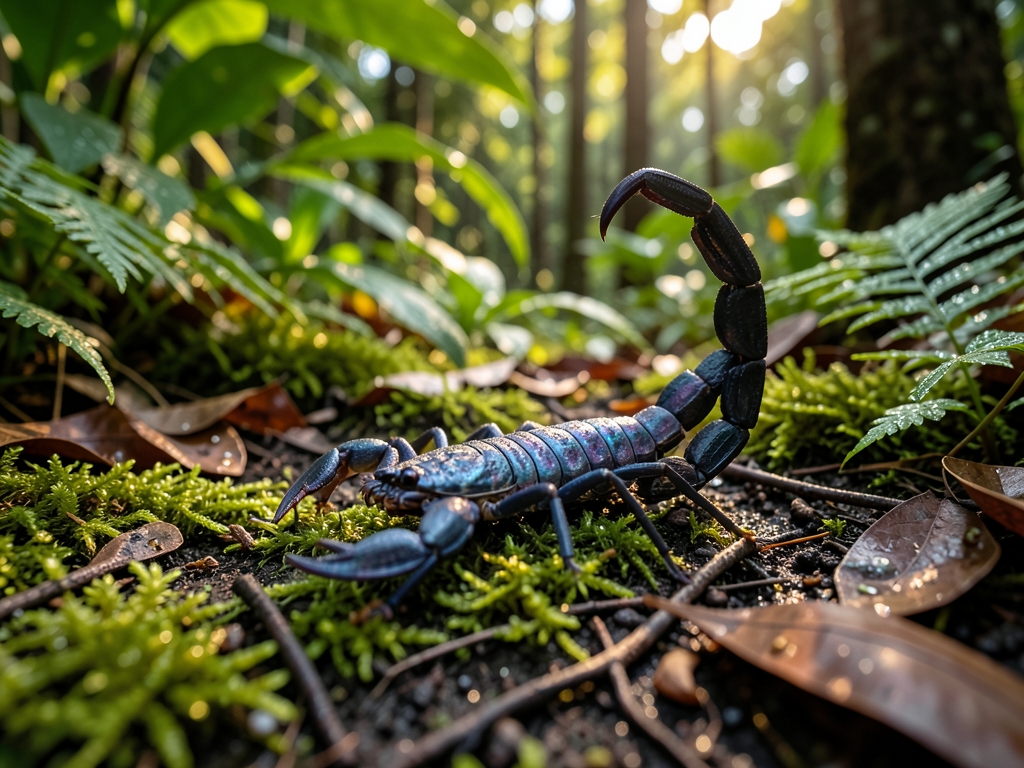
Researchers have made a remarkable discovery within the lush landscapes of India, formally documenting a distinct and previously unknown scorpion species inside the Similipal Tiger Reserve located in Odisha. This striking arachnid, measuring approximately five centimeters in length and exhibiting a rare bluish-black coloration, highlights the incredible and often under-documented biodiversity thriving within protected sanctuaries. Scientific expeditions into dense tropical reserves continue to yield astonishing discoveries, reminding conservationists and biologists alike of the vast array of life forms waiting to be cataloged beneath the forest canopy.
The discovery was brought to light through rigorous field surveys conducted by wildlife experts and taxonomists dedicated to monitoring regional ecosystems. Similipal, renowned for its diverse topography encompassing dense deciduous forests, rolling hills, vast grasslands, and cascading waterfalls, provides an ideal sanctuary for endemic species. The emergence of a new scorpion species from this unique environment emphasizes the critical importance of preserving complex habitats that have remained undisturbed for generations. Researchers meticulously analyzed the morphological characteristics of the specimen, noting distinct structural features that set it apart from other known scorpion lineages native to the Indian subcontinent.
The Significance of Biodiversity in Protected Indian Reserves
India represents one of the world's megadiverse regions, hosting a wide spectrum of climatic zones that support thousands of endemic plants, insects, reptiles, and mammals. Protected areas like the Similipal Tiger Reserve serve as crucial strongholds not only for charismatic megafauna like tigers and elephants, but also for small, cryptic organisms that play vital roles in local food webs. Scorpions are nocturnal predators that help regulate insect populations, making them indispensable components of forest and grassland ecosystems. Documenting their distribution and taxonomy provides scientists with baseline data necessary to evaluate ecosystem health and environmental resilience.
Taxonomic classification of arachnids requires meticulous examination of anatomical traits, including chelae proportions, pectine tooth counts, granulation patterns, and sexual dimorphism. The newly found bluish-black specimen underwent thorough morphological evaluation alongside genetic barcoding protocols to confirm its distinct evolutionary lineage. Such comprehensive studies ensure that conservation priorities can be tailored to safeguard micro-habitats within larger reserves where rare invertebrates might otherwise face overlooked threats from habitat fragmentation or climate shifts.
The discovery of a distinct five-centimetre bluish-black scorpion in Similipal underscores the richness of India's hidden invertebrate fauna and reinforces the vital need for continuous ecological monitoring in protected reserves.
Habitat Characteristics and Ecological Context of Similipal
Situated in the Mayurbhanj district of Odisha, the Similipal Tiger Reserve spans thousands of square kilometers of undulating terrain. The reserve forms part of the Similipal-Kuldiha-Haorani elephant reserve and is recognized globally as a designated biosphere reserve. Its unique microclimates, characterized by high humidity, abundant seasonal rainfall, and rich organic soil compositions, create specialized niches for a multitude of forest-dwelling creatures. Leaf litter, decaying logs, and rocky outcrops offer ideal shelter for fossorial and nocturnal arachnids, shielding them from intense sunlight and avian predators.
Info! Field researchers frequently rely on ultraviolet light surveying at night, as many scorpion species exhibit strong fluorescence, allowing biologists to spot them against dark forest backgrounds.
The discovery of this bluish-black scorpion adds to a growing list of endemic species identified within the reserve over recent years. As researchers deploy advanced monitoring tools, including automated camera traps, acoustic sensors, and molecular diagnostic labs, our understanding of tropical forest ecology expands exponentially. However, these fragile habitats also face mounting pressures from anthropogenic disturbances, climate unpredictability, and invasive species encroachment, making comprehensive baseline surveys more urgent than ever.
Conservation Implications and Future Research Directions
Uncovering a novel species within a well-established reserve like Similipal demonstrates that even heavily studied geographical regions harbor undiscovered biological secrets. Conservation strategies must increasingly integrate invertebrate and micro-fauna preservation into broader management frameworks. Historically, conservation funding and policy initiatives disproportionately target large vertebrate species. Biologists argue that shifting toward holistic ecosystem protection—safeguarding soil microbes, insects, and arachnids alike—ensures greater long-term stability for entire biological communities.
| Feature | Description |
|---|---|
| Species Type | Newly documented scorpion species |
| Size | Approximately 5 centimeters |
| Coloration | Distinct bluish-black |
| Location | Similipal Tiger Reserve, Odisha, India |
| Significance | Highlights regional biodiversity and endemic invertebrate richness |
Future expeditions in Odisha aim to map the exact geographic distribution of the new scorpion species, assessing population densities across different core and buffer zones of the sanctuary. Researchers also plan to investigate potential venom compositions and ecological interactions, which could yield valuable insights for pharmacological research and evolutionary biology. Protecting the integrity of Similipal's core wilderness areas remains paramount to ensuring these unique creatures continue to thrive undisturbed in their natural habitat.
Where was the new scorpion species discovered?
The new scorpion species was discovered within the Similipal Tiger Reserve located in the Mayurbhanj district of Odisha, India.
What are the physical characteristics of the newly found scorpion?
The newly documented scorpion measures approximately five centimeters in length and is distinguished by a striking bluish-black coloration and unique morphological structures.
Why are discoveries in protected reserves like Similipal important?
Such discoveries highlight the rich, often overlooked invertebrate biodiversity within protected ecosystems, providing essential baseline data for conservation planning and habitat management.
How do researchers typically locate and study forest scorpions?
Biologists frequently conduct nocturnal field surveys using ultraviolet light, as scorpion exoskeletons naturally fluoresce under UV illumination, making them easier to spot against dark forest floors.
Ultimately, the documentation of this bluish-black scorpion in Similipal serves as a testament to the enduring mystery and resilience of natural ecosystems. As scientists continue to explore remote corners of the globe, each new finding reinforces the imperative to protect our planet's remaining wilderness areas from degradation and loss.
