

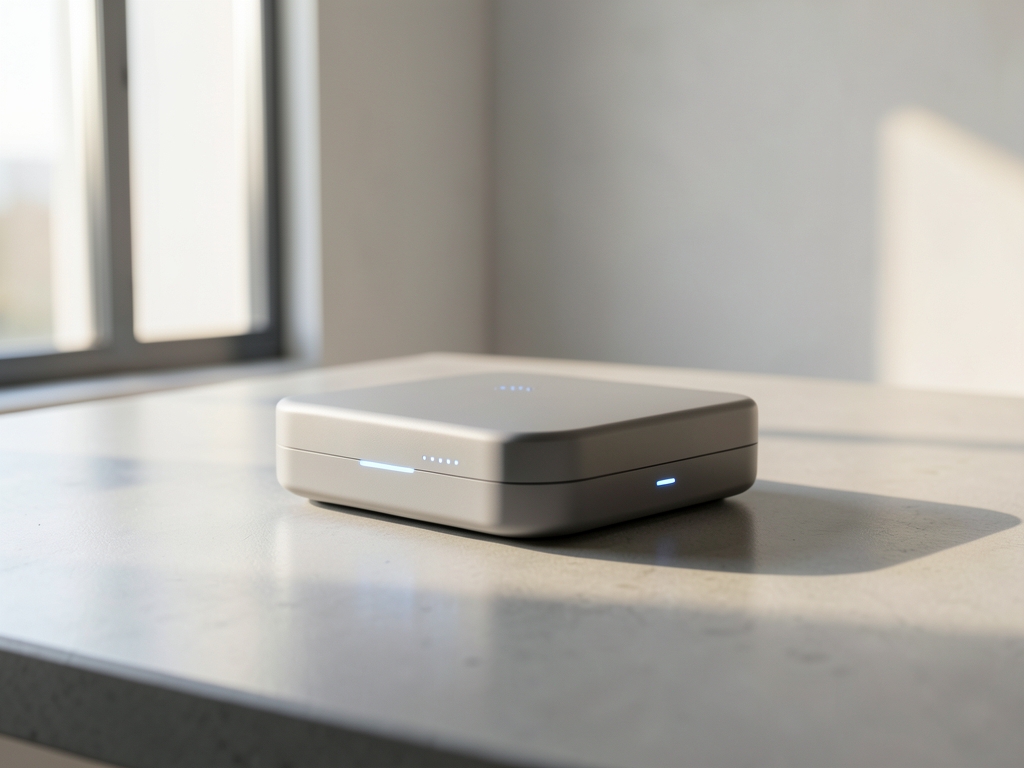
The consumer technology landscape has spent the past few years anchored firmly to glass screens, pixel grids, and rectangular slabs. While foldable devices and higher-resolution displays have dominated the hardware conversation, a counter-movement is quietly gathering momentum. Technology leaders and design-focused manufacturers are beginning to question whether our primary interface with artificial intelligence really needs to be a glowing smartphone display. This evolving design philosophy is about to enter the commercial market, led by one of the industry’s most disruptive hardware brands.
Recent industry announcements have confirmed that Nothing, spearheaded by co-founder Carl Pei, is preparing to introduce its very first artificial intelligence-native hardware product. Scheduled for an official debut in December, this upcoming release represents a major departure from traditional smartphone ecosystems. Industry observers and early teasers suggest that the product may break away entirely from conventional form factors, potentially abandoning the screen altogether in favor of ambient, voice-driven, and context-aware interactions.
The Shift Toward Ambient and Screenless Computing
For nearly two decades, smartphones have served as the undisputed center of our digital lives. Every application, notification, and digital interaction requires our visual attention, often locking us into endless cycles of scrolling and screen-tapping. However, as generative artificial intelligence models become more capable, efficient, and deeply integrated into daily workflows, hardware designers are rethinking how humans actually want to interact with intelligent systems.
A screenless AI-native device aims to reduce cognitive fatigue by shifting away from visual dependency. Instead of demanding that a user stare at an interface to retrieve information, control smart home ecosystems, or draft communications, ambient computing relies on natural language processing, spatial audio, and contextual sensors. By removing the display, engineers can focus entirely on ergonomics, battery longevity, and low-latency audio processing, creating a tool that operates quietly in the background of everyday life.
Nothing has built its brand identity on transparent design elements, mechanical authenticity, and user interfaces that challenge conventional industry standards. Transitioning from translucent smartphone backs and wireless earbuds to an entirely new category of artificial intelligence hardware demonstrates a willingness to take calculated risks that legacy tech giants often avoid. The December launch window places this ambitious project directly in the spotlight of the holiday tech season.
Engineering Challenges in AI-Native Hardware Development
Building a device from the ground up that relies entirely on artificial intelligence without a fallback display presents unique engineering hurdles. Traditional consumer electronics rely on visual feedback loops to confirm user actions, error states, and system status. Without a screen, designers must invent entirely new interaction grammars. Haptic feedback, spatial sound cues, and intuitive physical gestures must work seamlessly together to keep users informed without overwhelming them.
Furthermore, hardware compute requirements for on-device machine learning inference are exceptionally demanding. An AI-native device must either maintain a constant, low-latency cloud connection or house specialized neural processing units capable of running lightweight, highly optimized language models locally. Thermal management and battery efficiency are critical factors here. A device intended to be worn, carried, or placed casually in a living space cannot afford to suffer from rapid battery drain or excessive heat generation.
Info! AI-native hardware prioritizes contextual awareness and natural conversation over traditional app navigation, fundamentally changing how users interact with consumer technology.
Industry analysts point out that the success of such a device hinges less on raw processing power and more on software ecosystem integration. If the device cannot communicate fluidly with existing smartphones, laptops, and cloud services, users will quickly revert to traditional tools. Consequently, the software layer accompanying the December release will be just as important as the physical hardware itself.
Market Expectations and Consumer Readiness
Consumer fatigue with incremental smartphone upgrades has reached an all-time high. Year-over-year releases often feature minor camera bumps and slight processing gains, leaving many buyers uninspired. This sentiment creates a welcoming window for genuinely novel form factors. When brands introduce radical departures from the standard glass sandwich design, early adopters and technology enthusiasts pay close attention.
However, mass-market adoption for screenless AI hardware faces distinct psychological barriers. Consumers are accustomed to visual verification. Trusting an invisible assistant to execute complex tasks without a visual dashboard requires a high degree of reliability. If the speech recognition falters or the context-awareness misinterprets a command, user frustration can quickly erode confidence in the product category.
To mitigate these concerns, manufacturers are focusing heavily on transparency, data privacy controls, and predictable execution. Ensuring that users retain absolute control over when the device is listening and how their personal data is processed will dictate whether these new gadgets transition from niche collector items into mainstream daily essentials.
| Feature Category | Traditional Smartphone | Proposed AI-Native Hardware |
|---|---|---|
| Primary Interface | Touchscreen and visual apps | Voice, audio cues, and gestures |
| Form Factor | Rectangular glass and metal slab | Compact, pocketable, or wearable |
| Core Purpose | General-purpose computing hub | Context-aware AI task execution |
| User Engagement | High visual attention required | Ambient, low-friction interaction |
Looking Ahead: The Broader Tech Ecosystem in 2026 and Beyond
The upcoming December launch by Nothing is part of a broader industry-wide exploration into physical AI. Across the technology sector, companies are experimenting with robotics, smart glasses, ambient pins, and wearable neural interfaces. The goal is to make computing invisible, seamless, and completely integrated into the physical world rather than confined behind a piece of glass.
As these devices mature, the line between software services and physical hardware will continue to blur. Companies that master both local silicon efficiency and intuitive user experience design will lead the next decade of consumer technology. Whether the upcoming screenless device becomes a massive commercial breakthrough or serves as a fascinating stepping stone toward future form factors, it signals an undeniable appetite for change within the industry.
What is Nothing launching in December?
Nothing is preparing to launch its first artificial intelligence-native hardware product, which industry teasers suggest may feature a screenless, ambient design.
Who leads the Nothing brand?
The company was co-founded by Carl Pei, who has played a central role in teasing the upcoming December product release.
Why are companies building screenless AI devices?
Screenless devices aim to reduce screen fatigue and provide a more natural, voice-driven, and context-aware way to interact with artificial intelligence.
How will users interact with a screenless device?
Interactions will rely primarily on natural language processing, spatial audio cues, haptic feedback, and intuitive physical gestures rather than traditional app menus.
The coming weeks will undoubtedly bring further leaks, official teasers, and detailed specifications as the official launch date approaches. For now, the technology community watches closely to see how this bold experiment in post-smartphone design will perform in the real world.
Sources and Further Reading
- Carl Pei hints at Nothing's first AI-native product, could be a screenless device - Moneycontrol.com — Moneycontrol.com (published 2026-11-05 09:37)
- Nothing’s first AI-native device launching in December, Carl Pei reveals - MobiGyaan — MobiGyaan (published 2026-11-05 08:35)
- Nothing to launch its first AI-native product next month - The Hindu — The Hindu (published 2026-11-05 07:35)
