

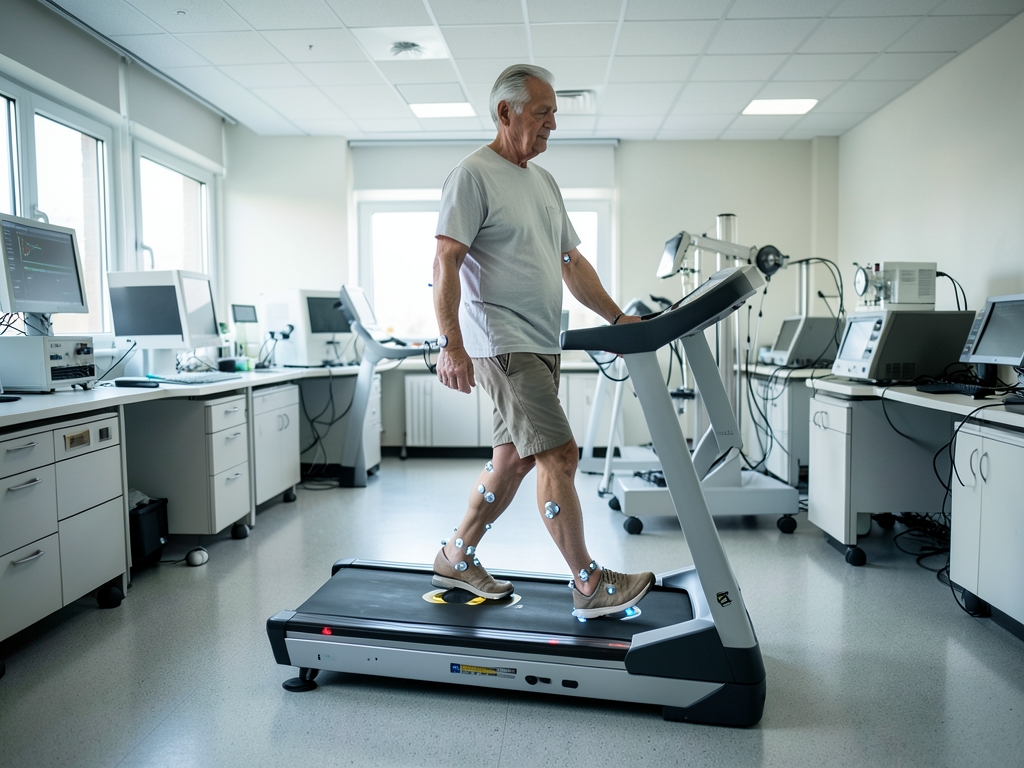
Mobility is one of the most fundamental indicators of health, independence, and overall longevity as human beings grow older. When physicians and physiotherapists evaluate an aging patient, observing how they walk provides immediate insights into neurological function, musculoskeletal strength, and cardiovascular capacity. Yet, a striking foundational challenge persists across modern clinical science: older adult gait studies rarely define what healthy actually means. Without a universally accepted, empirically grounded baseline for what constitutes a normal or healthy walking pattern in later life, researchers face significant hurdles in diagnosing early-stage degenerative conditions, evaluating rehabilitation outcomes, and designing effective preventative interventions for global populations in Europe, the United States, and beyond.
Addressing this baseline ambiguity has become a pressing priority for geriatric specialists and biomechanical researchers alike. As life expectancy rises globally, understanding the precise mechanical, neurological, and physiological variations that separate normal aging from pathological decline is essential. This comprehensive analysis explores why defining healthy gait in older adults has historically proved so difficult, examines current methodological shortcomings in clinical trials, and highlights what modern investigations are doing to establish reliable standards for mobility assessment.
The Complex Mechanics of Human Locomotion
Walking is far more than a simple repetitive movement involving alternating steps. It is a highly coordinated neuromuscular process that requires the seamless integration of visual feedback, vestibular balance, proprioceptive signaling, spinal cord coordination, and muscular output. In younger adults, gait parameters such as stride length, cadence, swing-to-stance ratio, and gait symmetry fall within well-documented, predictable ranges. These parameters provide a reliable benchmark for identifying athletic performance or clinical anomalies.
However, as the human body ages, physiological adaptations occur naturally across every contributing biological system. Muscle mass gradually declines through sarcopenia, joint cartilage experiences cumulative wear, peripheral nerve conduction velocities slow down slightly, and visual acuity diminishes. These age-related changes inevitably alter how an individual walks. Distinguishing between these benign, age-related adaptations and early pathological markers of neurological or orthopedic disease represents the core difficulty in gait research.
When clinical researchers fail to establish a rigorous, standardized definition of healthy aging mobility, study cohorts often mix individuals with silent pathologies—such as mild peripheral neuropathy, early cognitive impairment, or subclinical joint degeneration—into the healthy baseline group. Consequently, normative data becomes skewed, making it exceedingly difficult to create sensitive diagnostic tools capable of catching mobility decline before dangerous falls occur.
Why Previous Studies Struggled to Define Healthy Walking
Historical research into geriatric mobility has frequently suffered from methodological fragmentation. Different research groups across academic institutions and medical centers utilize varying equipment, testing environments, and inclusion criteria. A laboratory-based walkway equipped with high-resolution force plates yields vastly different data compared to wearable inertial measurement units used in real-world community settings. Furthermore, participant selection criteria vary widely:
- Inconsistent Age Groupings: Many studies group all individuals over the age of sixty-five into a single demographic category, masking the profound physiological differences between a robust sixty-six-year-old and an eighty-five-year-old.
- Exclusion vs. Inclusion Bias: Studies frequently screen out individuals with overt mobility disabilities but often fail to screen for subclinical chronic conditions that silently affect walking mechanics.
- Environmental Artificiality: Walking in a controlled laboratory environment often induces the Hawthorne effect, where participants unconsciously alter their natural gait pattern because they know they are being observed.
- Lack of Longitudinal Tracking: Cross-sectional studies provide a single snapshot in time rather than tracking how an individual's gait parameters evolve across years of healthy aging.
These variables explain why systematic reviews and meta-analyses frequently arrive at conflicting conclusions regarding normal gait speed, stride variability, and postural sway in older demographics.
Key Parameters Used in Modern Mobility Assessments
To overcome historical limitations, contemporary research teams are shifting toward multi-dimensional assessment frameworks. Rather than relying solely on comfortable walking speed—a metric that, while useful, is far too simplistic to capture the full picture of mobility health—scientists are examining a complex suite of spatial-temporal and kinetic variables.
| Gait Parameter | Physiological Significance | Clinical Relevance |
|---|---|---|
| Stride Length | Reflects lower limb power, joint flexibility, and neuromuscular coordination. | Shortened stride length is often an early indicator of balance vulnerability and fall risk. |
| Gait Variability | Measures the consistency and rhythmicity of successive steps. | High variability strongly correlates with cognitive decline and neurological instability. |
| Stance-to-Swing Ratio | Indicates the proportion of time spent with both feet on the ground versus moving forward. | Prolonged double-support phase points toward compensatory mechanisms for poor balance. |
| Cadence | Steps per minute taken during locomotion. | Helps differentiate cardiovascular fatigue from localized musculoskeletal restriction. |
Integrating these detailed metrics into standardized testing protocols allows researchers to build sophisticated profiles of functional capacity. When combined with wearable sensor technology, clinicians can monitor how older adults move within their natural daily environments rather than just inside sterile clinical facilities.
The Critical Role of Lifestyle and Physical Activity
Maintaining a healthy gait into advanced age is not purely a passive biological outcome; it is actively modulated by lifestyle factors, physical activity routines, and nutritional habits. Sedentary behavior accelerates muscle atrophy and stiffens connective tissues, leading to a rapid degradation of walking economy. Conversely, consistent engagement in moderate physical activity—such as brisk walking, resistance training, and balance-focused exercises like tai chi—preserves neuromuscular pathways and maintains joint range of motion.
Regular physical activity acts as a potent biological preservative for human locomotion, maintaining the complex neural pathways and muscle fiber integrity required for stable, efficient walking throughout later life.
Info! Current geriatric guidelines recommend incorporating both aerobic movement and targeted lower-body strength training into weekly routines to preserve functional mobility and prevent age-related gait disorders.
Moreover, nutritional status plays an underrated role. Adequate protein intake combined with sufficient vitamin D and calcium levels supports the musculoskeletal foundation necessary to sustain optimal biomechanical performance. Public health initiatives across Europe and the United States increasingly emphasize community-based exercise programs designed specifically to maintain mobility in older populations, recognizing that preventing gait deterioration is far more cost-effective than treating severe fall-related injuries after the fact.
Future Directions in Geriatric Mobility Research
As academic institutions and clinical networks address the gaps identified in recent scientific literature, the future of aging research is moving toward precision geriatrics. By establishing rigorous, universally accepted definitions of healthy walking across distinct age tiers, researchers can significantly improve the accuracy of diagnostic screening tools. Artificial intelligence and machine learning models are also beginning to play a transformative role, analyzing vast datasets from wearable sensors to detect subtle deviations in gait dynamics long before an older adult experiences a catastrophic fall or noticeable functional decline.
Ultimately, bridging the gap in how science defines healthy movement in later life will empower clinicians to intervene earlier, tailor rehabilitation programs more effectively, and help millions of older adults maintain their independence, dignity, and quality of life for years to come.
Why is it difficult to define a healthy gait in older adults?
Distinguishing between normal, age-related physiological changes and early pathological markers of disease is challenging. Many studies also lack standardized inclusion criteria, often mixing individuals with subclinical conditions into healthy baseline cohorts.
What is the most important metric used in clinical gait analysis?
While comfortable walking speed is widely used, modern researchers emphasize gait variability—the consistency and rhythmicity of successive steps—as a superior indicator of neurological stability and fall risk.
How do wearable sensors improve older adult gait studies?
Wearable inertial measurement units allow researchers to track natural movement patterns in real-world community settings, avoiding the artificial behaviors often triggered by controlled laboratory environments.
