

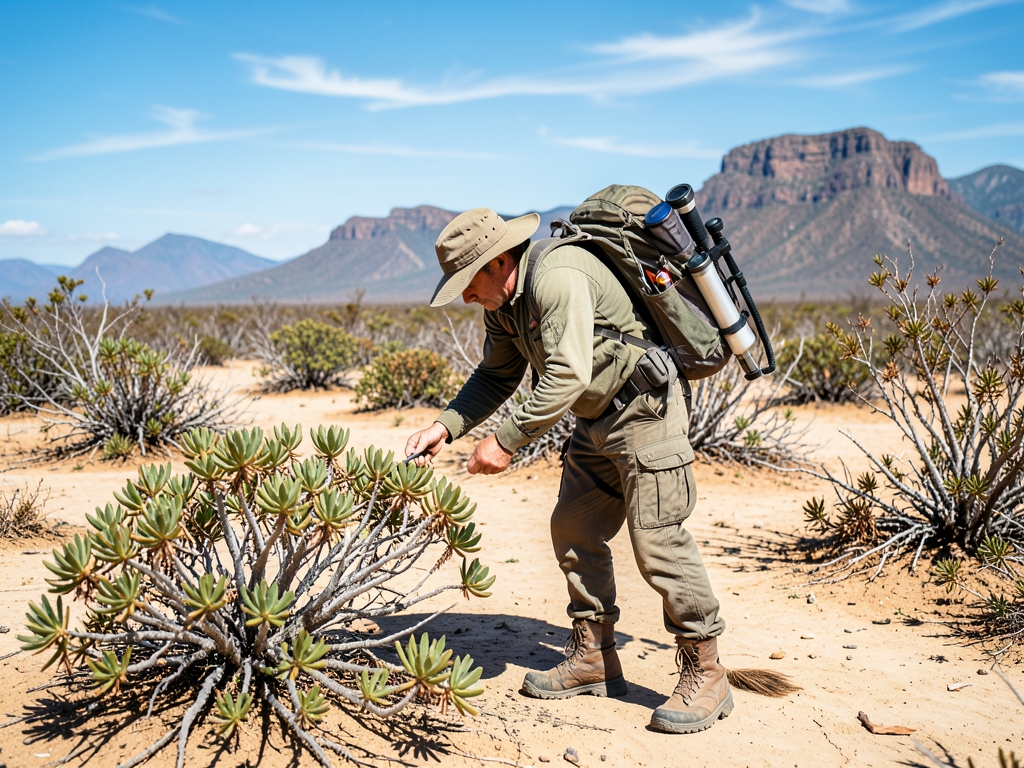
As global temperatures continue to rise and shifting weather patterns alter traditional precipitation cycles, arid ecosystems face unprecedented ecological pressures. In South Africa, vast semi-arid and desert regions harbor unique botanical biodiversity that has evolved over millennia to survive extreme conditions. However, the velocity of contemporary climate change threatens to outpace the natural adaptive capacity of these specialized flora. Addressing this urgent environmental challenge, a comprehensive new five-year research initiative led by a Stellenbosch University researcher has been established to safeguard vulnerable desert plants against accelerating climate degradation.
The Ecological Significance of South Africa's Arid Biomes
South Africa is globally renowned for its extraordinary plant diversity, encompassing multiple biodiversity hotspots such as the Succulent Karoo and the expansive arid tracts of the Northern Cape. These regions support thousands of endemic species found nowhere else on Earth. Unlike temperate forests or tropical jungles, desert ecosystems operate on extremely delicate balances of moisture, soil composition, and seasonal temperature fluctuations.
Plants in these environments, ranging from miniature succulent lithops to deeply rooted perennial shrubs, have developed ingenious physiological adaptations. Some store water in specialized fleshy tissues, while others enter periods of dormancy during prolonged dry spells or rely on coastal fogs to supply vital moisture. Despite these evolutionary masterclasses in survival, rapid climatic shifts are introducing stresses that exceed historical baselines. Rising ambient temperatures, extended droughts, and erratic rainfall events disrupt germination cycles and threaten the survival of foundational species that hold desert soils together.
Objectives of the Five-Year Research Project
The newly announced five-year initiative aims to bridge critical knowledge gaps regarding how indigenous desert flora respond to thermal stress and water scarcity. By combining field monitoring, controlled climate simulation experiments, and advanced ecological modeling, the research team intends to map vulnerability gradients across multiple species.
Info! Long-term ecological studies are vital for establishing baseline data that can guide proactive conservation strategies rather than reactive recovery measures.
Key objectives of the multi-year project include:
- Vulnerability Mapping: Identifying which specific plant populations face the highest risk of local extinction due to projected temperature increases over the coming decades.
- Physiological Assessment: Measuring how photosynthetic efficiency, cellular water retention, and root respiration change under simulated extreme heat events.
- Seed Bank Preservation: Expanding ex-situ seed collections in botanical repositories to ensure genetic lineages are preserved should wild populations suffer catastrophic declines.
- Habitat Restoration Frameworks: Developing science-backed restoration guidelines for degraded rangelands and desert margins impacted by overgrazing and climate extremes.
Fieldwork Methodologies and Modern Conservation Science
Modern ecological research relies on a blend of traditional botanical fieldcraft and cutting-edge technology. Researchers working in remote desert landscapes utilize automated microclimate sensors that record hourly temperature and humidity shifts directly at the soil surface where seedlings attempt to establish. These high-resolution data streams reveal micro-habitats that may offer natural refugia against extreme heat.
Furthermore, genetic analyses form a cornerstone of the project. By examining the genetic diversity within fragmented plant populations, scientists can determine whether certain groups possess inherent resilience traits that could be leveraged for assisted migration or selective breeding programs. Understanding genetic lineages helps conservationists prioritize limited resources toward populations that harbor the highest adaptive potential.
Broader Implications for Global Arid Ecosystems
While the project focuses on South Africa's unique native flora, the insights generated carry profound implications for arid and semi-arid regions worldwide. From the American Southwest to the drylands of Australia and the Mediterranean basin, similar climate pressures are reshaping native vegetation communities. Desertification and land degradation threaten not only biodiversity but also the livelihoods of rural communities that depend on pastoralism and sustainable land use.
Effective conservation in these regions requires collaborative frameworks that unite academic institutions, government bodies, local landowners, and indigenous communities. By translating complex scientific findings into practical land-management tools, projects like the Stellenbosch desert conservation initiative provide a vital blueprint for preserving biodiversity in a warming world.
What is the primary focus of the five-year research project led by Stellenbosch University?
The project focuses on protecting South Africa's vulnerable desert and semi-arid plants from the accelerating impacts of climate change through ecological monitoring, physiological studies, and conservation planning.
Why are South African desert plants particularly vulnerable to climate shifts?
Although these plants are highly adapted to arid conditions, the unprecedented speed of modern temperature increases and erratic rainfall patterns threaten to exceed their natural evolutionary capacity to adapt.
How do researchers study plant resilience in remote desert environments?
Researchers combine field monitoring, automated microclimate sensors, controlled climate experiments, and genetic analysis to evaluate how different plant species respond to extreme heat and water stress.
What broader benefits do these conservation initiatives offer?
They generate critical data for global arid land management, help preserve genetic diversity through seed banking, and provide practical restoration guidelines for degraded ecosystems worldwide.
Conclusion
The launch of this dedicated five-year research project underscores the critical importance of proactive environmental stewardship in the face of global climate disruption. By safeguarding the resilient yet vulnerable flora of South Africa's desert biomes, scientists are not only preserving botanical heritage but also reinforcing the ecological stability of entire landscapes. As climate pressures mount, continued investment in rigorous scientific research and collaborative conservation will remain our strongest defense against ecological loss.
