

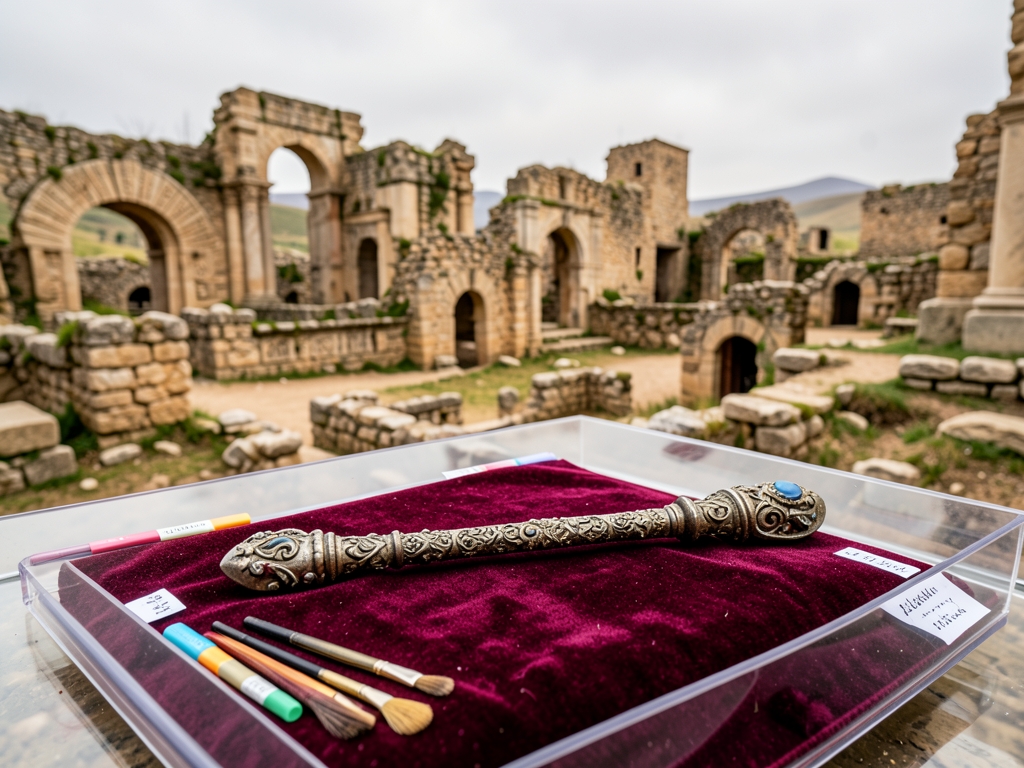
Archaeological discoveries often arrive in fragments: broken pottery sherds, rusted nails, or faded bits of parchment that require years of meticulous laboratory analysis to piece together. Yet every so often, an excavation yields an object of such striking completeness and regal symbolism that it instantly captures the imagination of the public and historians alike. The recent unearthing of a royal scepter among the ruins of a medieval capital in Armenia represents precisely such a moment. This remarkable find provides a tangible link to the sophisticated political structures, artistic achievements, and dynastic aspirations of a medieval realm that navigated complex geopolitical pressures at the crossroads of East and West.
The discovery was made during systematic excavations conducted by archaeological teams working at the site of a historic capital city within modern-day Armenia. Documenting the layers of urban habitation, scholars and fieldworkers have long sought to map the administrative and residential quarters of the medieval kingdom. The emergence of the royal scepter from the secure context of a palace or high-status administrative complex adds extraordinary physical evidence to the textual records preserved in medieval chronicles. This comprehensive exploration examines the context of the discovery, the physical characteristics of the scepter, its cultural and political significance, and the broader historical landscape of medieval Armenia.
The Archaeological Context of the Discovery
To fully appreciate the significance of the royal scepter, one must examine the archaeological environment from which it was recovered. Medieval Armenian capitals were renowned for their architectural sophistication, featuring massive defensive walls, intricate stone churches, bustling commercial markets, and sprawling palaces decorated with glazed tiles and stone carvings. Over the centuries, many of these urban centers suffered catastrophic destructions resulting from regional conflicts, foreign invasions, and devastating earthquakes, leaving their magnificent structures buried beneath layers of sediment and debris.
The recent excavations targeted specific zones within the citadel area, where elite residential structures and administrative offices were historically concentrated. Working with advanced stratigraphic recording methods, archaeologists carefully removed layers of destruction debris dating back to the medieval period. It was within a sealed stratigraphic layer—securely associated with the occupation horizon of the royal court—that the scepter was uncovered. The presence of concurrent artifacts, such as imported ceramics, bronze coinage, and architectural fragments, allowed researchers to date the deposit with high precision, confirming its association with the height of the kingdom’s sovereignty.
Info! Archaeological stratigraphy allows researchers to date artifacts accurately by analyzing the chronological sequence of soil and debris layers in which they are embedded.
Physical Characteristics and Craftsmanship
The newly discovered scepter is an exceptional piece of medieval metallurgical art. Crafted from durable alloy and precious metals, it exhibits intricate decorative motifs that reflect the high level of skill possessed by medieval Armenian metalworkers. The shaft of the scepter is balanced for ceremonial handling, while the finial showcases elaborate symbolic imagery characteristic of royal regalia from the region.
Detailed examination by conservators revealed delicate filigree work, inlaid stones, and micro-relief carvings depicting intertwined mythical beasts and floral patterns. These motifs were not merely decorative; they served as potent political and religious symbols designed to communicate the legitimacy, divine right, and authority of the monarch who wielded the object. The preservation of such delicate organic and metallic elements provides conservators with crucial insights into contemporary manufacturing techniques, workshop organization, and long-distance trade networks that supplied raw materials like precious gems and refined metals.
Symbolism of Regal Regalia in Medieval Armenia
In medieval societies, royal regalia served as the visible embodiment of state power. Crowns, thrones, mantles, and scepters were not merely functional accessories; they were sacred symbols that legitimized a ruler's authority in the eyes of domestic subjects and foreign potentates alike. In the Armenian tradition, the monarch held a sacred duty to protect the realm and patronize the church, bridging the temporal and spiritual domains.
A scepter, specifically, symbolizes command, justice, and the divine mandate to rule. When a king or queen appeared during formal court ceremonies, coronation rituals, or diplomatic receptions, holding the scepter reinforced their supreme status. The discovery of this artifact in the ruins of the capital shifts our understanding from abstract historical accounts to concrete material culture, illustrating how the monarchy projected its power within the royal halls.
Geopolitical Realities of the Medieval Armenian Kingdom
The medieval period in the South Caucasus was characterized by intense geopolitical turbulence. Armenian kingdoms and principalities occupied a vital strategic corridor between major empires, including the Byzantine Empire, various Islamic caliphates, and later invading nomadic confederations. Navigating this complex landscape required astute diplomacy, military preparedness, and robust economic vitality anchored by vibrant trade along routes connected to the broader Silk Road network.
The capital cities served as the pulsating heart of this network. They attracted merchants, scholars, artisans, and diplomats from distant lands, fostering a cosmopolitan culture that blended local traditions with external influences. The production of high-status luxury items like the royal scepter underscores the wealth generated by these trade networks and the ability of local rulers to patronize elite workshops capable of producing world-class art.
| Aspect | Historical Context | Archaeological Evidence |
|---|---|---|
| Artifact Type | Royal Regalia / Ceremonial Scepter | Metallurgical analysis, filigree, inlays |
| Discovery Site | Citadel of Medieval Capital | Sealed stratigraphic palace layer |
| Cultural Period | Medieval Armenian Kingdom | Associated ceramics and coinage |
| Significance | Statecraft and Royal Authority | Direct material proof of court rituals |
Preservation, Conservation, and Future Research
Following its extraction from the soil, the royal scepter entered a rigorous conservation pipeline. Objects buried for centuries often suffer from corrosion, structural destabilization, and mineral encrustation. Specialized conservators employed chemical stabilization techniques, microscopic cleaning tools, and non-destructive imaging technologies to document every detail without damaging the fragile material.
Museum curators and archaeological scientists are now preparing the artifact for public exhibition, ensuring that future generations can witness this unique piece of heritage. Concurrently, academic researchers are conducting comparative studies, placing the scepter alongside contemporary pieces from neighboring regions to map artistic exchanges and stylistic developments across the medieval world.
The unearthing of the royal scepter is a milestone for Armenian archaeology, bridging written chronicles with undeniable physical proof of a sophisticated medieval royal court.
Broader Impact on Regional Heritage Studies
Finds of this caliber reverberate far beyond academic circles, bolstering national and international appreciation for endangered or neglected cultural heritage sites. In recent years, scholars have increasingly emphasized the importance of preserving archaeological landscapes in the Caucasus region, where historical monuments face ongoing environmental and human pressures.
By bringing international attention to the capital's ruins, the discovery reinforces the necessity of continued funding, international collaboration, and rigorous protection protocols for heritage sites. It reminds the global community that beneath the modern landscape lie rich layers of shared human history waiting to be responsibly uncovered and interpreted.
Where was the royal scepter discovered?
The royal scepter was unearthed among the ruins of a historic medieval capital city in Armenia, specifically within a sealed stratigraphic layer in the citadel's palace zone.
What materials and techniques were used to craft the scepter?
The scepter was crafted from durable alloy and precious metals featuring intricate filigree work, stone inlays, and micro-relief carvings depicting mythical creatures and floral motifs.
Why is the discovery of the scepter historically significant?
It provides tangible material evidence of medieval Armenian royal authority, court ceremonial practices, and the advanced metallurgical craftsmanship of the period.
What steps are being taken to protect and study the artifact?
Conservators have subjected the scepter to careful stabilization and cleaning processes, while researchers conduct comparative stylistic studies ahead of public museum exhibitions.
The recovery of the royal scepter from the ruins of a medieval Armenian capital stands as a testament to the enduring power of archaeological discovery. By shedding light on the artistic achievements and political sophistication of a bygone era, this magnificent artifact enriches our understanding of medieval history and underscores the value of preserving our shared global heritage.
