

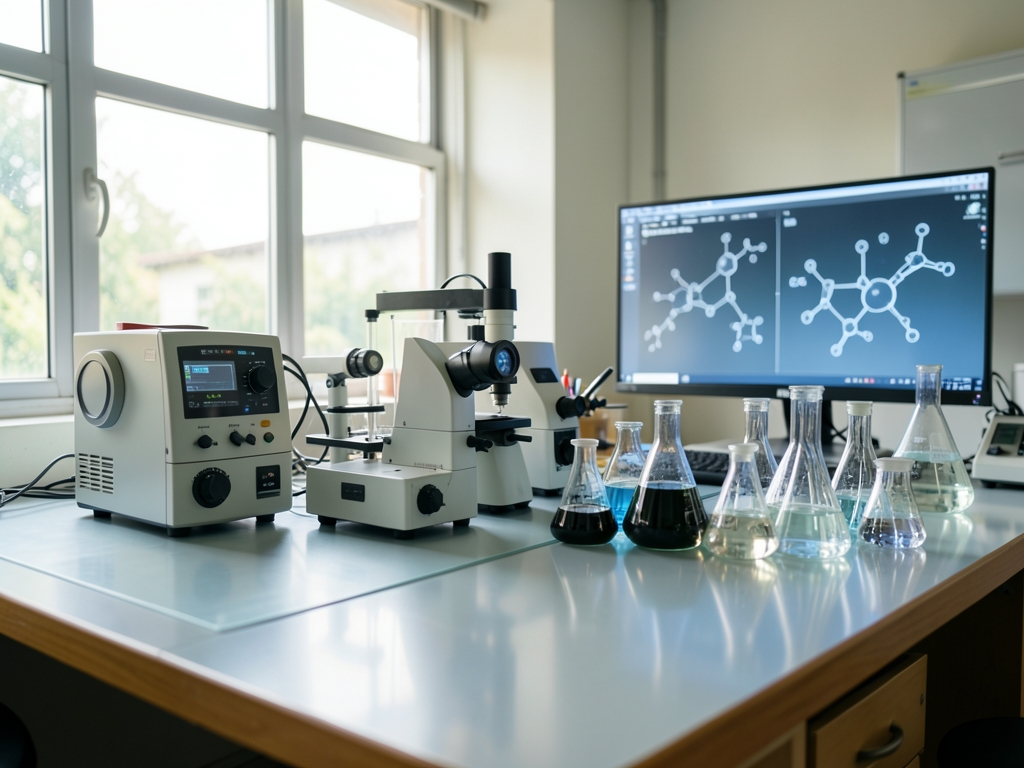
Scientific breakthroughs frequently emerge not from the sudden invention of entirely new experimental paradigms, but from the patient, persistent re-examination of decades-old enigmas. For over half a century, certain complex chemical reactions and molecular bonding behaviors have puzzled generations of chemists. While textbooks and established thermodynamic models could broadly predict macroscopic outcomes, the underlying microscopic mechanisms governing specific stubborn transformations remained frustratingly out of reach. Recently, however, researchers at Tezpur University in India, featuring work led by notable chemists including Ashwini K. Phukan, have successfully resolved a sixty-year-old chemistry mystery, offering profound new insights into fundamental molecular behavior and opening exciting pathways for future synthesis.
The Nature of Long-Standing Chemical Puzzles
In the vast domain of chemical science, anomalies often serve as the most fertile ground for discovery. When a well-designed experiment yields results that directly contradict prevailing theoretical models, it forces the scientific community to re-evaluate foundational assumptions. For decades, researchers encountered persistent discrepancies when studying particular classes of reaction intermediates and catalytic pathways. These anomalies were not merely experimental errors; they pointed to a fundamental gap in how scientists understood electron distribution and steric constraints during complex molecular rearrangements.
Understanding these intricacies requires looking closely at how chemical bonds form and break under varying energetic conditions. For sixty years, theoretical and experimental chemists debated the exact sequence of events that occurred during these specific transformations. Did the reaction proceed through a concerted single-step mechanism, or did it involve fleeting, highly unstable intermediates that defied conventional detection methods? Lacking the advanced computational tools and high-resolution spectroscopic techniques available today, earlier generations of scientists could only hypothesize. These hypotheses, though brilliant for their time, remained unproven conjectures, leaving a gaping void in chemical literature.
Resolving decades-old scientific mysteries requires a combination of modern computational power, rigorous experimental design, and the courage to question established theoretical frameworks that have guided generations of researchers.
How Tezpur University Researchers Cracked the Case
The recent breakthrough achieved by Tezpur University researchers represents a triumph of modern interdisciplinary chemical analysis. By combining advanced quantum chemical calculations with precise kinetic measurements, the research team was able to simulate and observe the exact electronic transitions and spatial rearrangements that take place at the molecular level. This comprehensive approach allowed them to peer past the limitations of older laboratory equipment and visualize the transient states of molecules in unprecedented detail.
Crucially, the team focused on re-evaluating the role of electronic communication and orbital overlap within the reacting systems. Previous models often simplified these interactions, treating molecular backbones as rigid structures rather than dynamic, flexible frameworks. By applying contemporary density functional theory alongside rigorous experimental validation, the researchers demonstrated that subtle electronic shifts—previously dismissed as negligible noise—actually dictate the entire pathway of the reaction. This pivotal realization bridged the long-standing disconnect between theoretical prediction and empirical observation.
Implications for Modern Chemical Synthesis and Catalysis
Solving a sixty-year-old fundamental mystery is much more than an academic victory; it carries profound practical implications for industrial chemistry, pharmaceuticals, and materials science. Many synthetic processes rely heavily on catalysts that facilitate difficult transformations by stabilizing reactive intermediates. With a clearer, mathematically validated understanding of how these intermediates behave under specific electronic conditions, chemists can now design more efficient, selective, and environmentally sustainable catalytic systems.
Furthermore, this discovery provides a reliable predictive framework that can be applied across broader chemical families. Instead of relying on trial-and-error experimentation to discover new reaction pathways, researchers can leverage these insights to engineer bespoke molecules with tailored properties. This shift from empirical guessing to precise, mechanism-driven design is expected to accelerate innovation in fields ranging from drug discovery to advanced polymer manufacturing.
Info! The successful resolution of historical scientific debates demonstrates how rapid advancements in computational chemistry continue to validate and expand upon classical chemical theories.
Broader Context in Contemporary Scientific Research
The achievement at Tezpur University arrives at a time of remarkable renaissance in chemical research globally. As computational power grows exponentially, scientists are increasingly revisiting historical anomalies across physics, biology, and chemistry. Mysteries that once required decades of tedious manual experimentation can now be interrogated through high-performance simulation and automated data analysis. Yet, as this recent breakthrough proves, human intuition, profound domain expertise, and rigorous experimental validation remain irreplaceable pillars of scientific progress.
This milestone also highlights the expanding footprint of global research institutions outside traditional Western academic hubs. Indian universities and research centers have increasingly contributed foundational discoveries to international scientific discourse, reinforcing the collaborative and borderless nature of modern science. By solving a problem that baffled international experts for six decades, the Tezpur University team underscores the high caliber of regional scientific infrastructure and its capacity to address complex global challenges.
Practical Applications and Future Directions
As the scientific community digests the implications of this newly solved chemical mystery, attention turns naturally toward practical applications. Laboratories around the world are already beginning to re-examine their own stalled projects in light of the newly clarified mechanisms. Below are the primary areas expected to benefit immediately from these findings:
- Catalyst Design: Developing highly specific catalysts that lower energy requirements for industrial chemical synthesis.
- Pharmaceutical Manufacturing: Improving the stereochemical control of complex drug molecules to maximize efficacy and minimize unwanted byproducts.
- Materials Science: Engineering novel polymers and smart materials with predictable thermal and mechanical stability.
- Educational Curricula: Updating university-level chemistry textbooks to reflect the accurate, verified reaction pathways rather than outdated historical approximations.
These practical avenues illustrate the cascading benefits of fundamental research. When scientists decode the microscopic rules governing matter, the ripple effects transform industrial capabilities, educational standards, and technological innovation.
What was the 60-year-old chemistry mystery solved by Tezpur University?
The mystery involved persistent discrepancies in understanding specific complex chemical reaction pathways and reactive intermediates that had baffled researchers for decades.
Who led or participated in the research team at Tezpur University?
The research involved prominent Indian chemists, notably including Ashwini K. Phukan, working alongside collaborative academic teams at Tezpur University.
How did the researchers finally solve the long-standing chemical puzzle?
The team combined advanced quantum chemical calculations, modern computational modeling, and rigorous kinetic measurements to map exact electronic transitions and molecular behavior.
What are the practical applications of this scientific discovery?
The findings help improve industrial catalyst design, enhance pharmaceutical synthesis precision, and advance the creation of novel functional materials.
Conclusion
The resolution of this sixty-year-old chemistry mystery by researchers at Tezpur University stands as a powerful testament to human curiosity and scientific perseverance. By pairing advanced computational tools with rigorous experimental chemistry, the team has turned a historical question into a definitive foundation for future innovation. As these insights propagate through industrial and academic laboratories, they will continue to inspire new generations of scientists, proving that even the most stubborn mysteries eventually yield to persistence and precision.
