

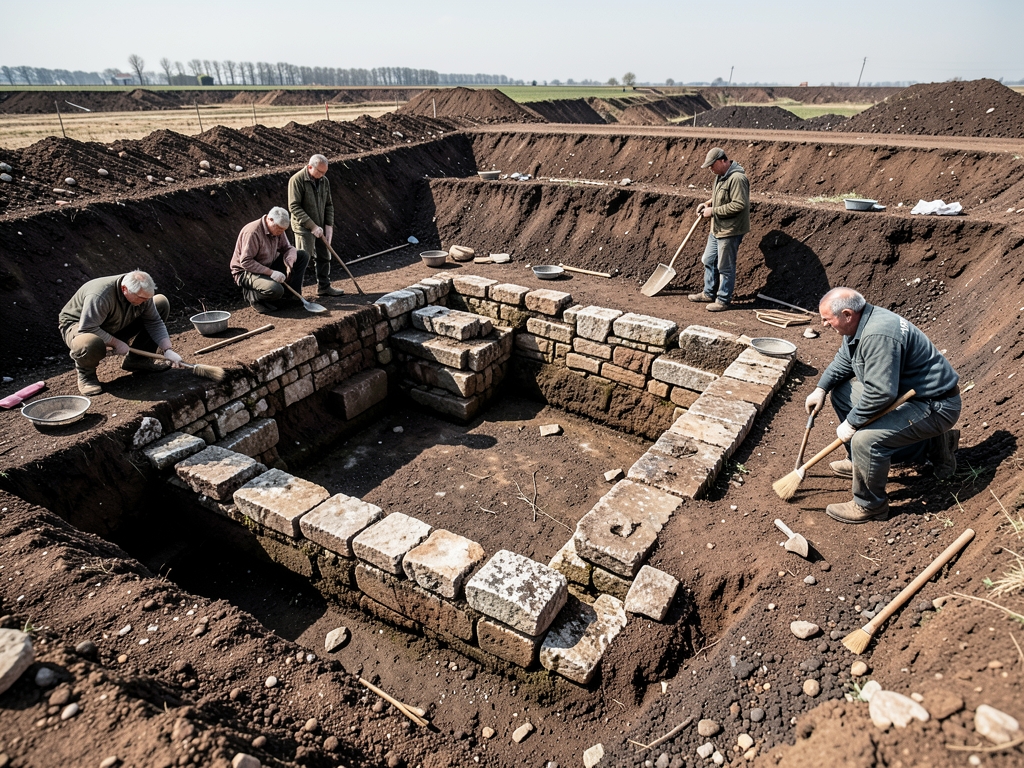
The study of medieval history frequently conjures images of towering stone castles, illuminated manuscripts, and knights in gleaming armor. However, recent archaeological and scientific investigations have turned their lens toward the everyday realities of medieval daily life, uncovering surprising truths about urban sanitation, municipal infrastructure, and the biological consequences of early civic planning. Recent historical research highlights a fascinating paradox: the introduction of early medieval public health measures and sanitation infrastructure across European settlements occasionally produced unintended biological consequences, specifically contributing to the spread of intestinal parasites such as roundworms among urban populations.
The Evolution of Medieval Urban Sanitation
For decades, popular culture perpetuated the myth that medieval Europeans lived in complete squalor with little regard for personal cleanliness or waste management. Modern historical and archaeological research has thoroughly dismantled this simplistic narrative. Recent excavations across European towns demonstrate that medieval municipal authorities invested heavily in infrastructure designed to manage waste, secure fresh water supplies, and maintain cleaner streets.
As urban centers expanded rapidly during the High Middle Ages, population densities surged. City councils recognized that unmanaged refuse posed significant fire hazards, foul odors, and perceived health risks. Consequently, towns constructed networked drainage systems, paved central market squares, and designated specific dumping sites outside residential walls. Latrines and cesspits became more common in both monastic complexes and private households, replacing haphazard disposal methods with structured containment systems.
Yet, these well-intentioned municipal advancements inadvertently created ideal ecological niches for parasites. While enclosing waste protected immediate living areas from visible filth, the primitive engineering of early cesspits and drainage networks allowed resilient pathogens to persist and thrive in close proximity to human populations.
Understanding Roundworm Transmission in Medieval Populations
Recent scientific analyses of coprolites, ancient soil samples from latrines, and human skeletal remains have provided clear bioarchaeological evidence regarding the prevalence of intestinal worms in medieval Europe. Among these, the human roundworm, scientifically known as Ascaris lumbricoides, left a remarkably durable biological signature.
Roundworm eggs possess exceptionally tough outer shells that enable them to survive in soil and organic waste for years, enduring environmental fluctuations that would destroy other pathogens. When medieval towns introduced centralized waste management systems, they frequently utilized collected human excrement as agricultural fertilizer. Nightsoil was routinely transported from urban cesspits to surrounding crop fields to boost agricultural yields.
While this recycling loop sustained growing urban populations by increasing food production, it also created a direct transmission vector. Crops grown in nightsoil-fertilized fields became contaminated with viable parasite eggs. Without modern chemical fertilizers, advanced washing techniques, or comprehensive food safety protocols, consuming root vegetables, leafy greens, and unwashed produce ensured that roundworm infections remained endemic across European communities.
| Sanitation Method | Intended Benefit | Unintended Biological Consequence |
|---|---|---|
| Enclosed Cesspits | Removed waste from immediate living quarters | Concentrated parasite reservoirs in damp environments |
| Nightsoil Fertilization | Maximized agricultural output for growing cities | Transferred resilient roundworm eggs directly to food crops |
| Networked Drains | Cleared surface water and refuse from streets | Mixed organic waste with local water tables and soil |
Archaeological Evidence and Scientific Methodology
Uncovering the microscopic history of medieval parasites requires sophisticated scientific techniques. Archaeologists and paleopathologists collaborate closely to examine samples recovered from historic latrines, medieval monastery drains, and burial sites. Microscopy allows researchers to identify preserved parasite eggs trapped within layers of calcified sediment dating back centuries.
Furthermore, biomolecular analyses, including ancient DNA extraction from coprolites, help scientists track the distribution and evolution of these ancient pathogens. These studies reveal that parasite burdens were not evenly distributed across society. Monastic orders, urban laborers, and rural peasants experienced different rates of infection based on their diets, hygiene habits, and proximity to municipal waste systems.
Info! Paleoparasitology bridges history and modern science by analyzing preserved biological remains, offering direct insights into the health challenges faced by past human populations.
Broader Implications for Historical Understanding
The discovery that early public health initiatives contributed to parasite transmission highlights the complex nature of human technological and social development. Progress in sanitation was genuine, driven by a desire to improve living conditions and civic order. However, the biological systems of the natural world often responded in unpredictable ways to human intervention.
Recognizing these historical realities deepens our appreciation for the challenges past societies navigated. It demonstrates that the history of medicine and public health is not a straight line of continuous triumph, but rather a continuous cycle of adaptation, trial, error, and biological discovery.
The paradox of medieval sanitation reminds us that every technological advancement in public health interacts with complex natural ecosystems in ways that only rigorous scientific inquiry can fully illuminate over time.
Practical Lessons from Historical Sanitation
Examining historical sanitation failures and successes offers valuable perspective on modern infrastructure development. Key takeaways from historical bioarchaeological studies include:
- Holistic Infrastructure Planning: Modern sanitation must account for waste treatment end-cycles to prevent environmental contamination and pathogen recycling.
- Agricultural Safety Standards: Utilizing untreated human or animal waste as fertilizer poses significant biological risks that require rigorous management.
- Continuous Scientific Monitoring: Public health initiatives must be accompanied by ongoing scientific surveillance to detect and mitigate unintended ecological consequences.
What was the main hygiene mistake made in medieval Europe regarding parasites?
Medieval communities collected human waste from cesspits, known as nightsoil, and used it as fertilizer on agricultural crops, which unintentionally transferred resilient roundworm eggs back into the human food supply.
How do scientists discover parasite infections in medieval populations?
Researchers use paleoparasitological techniques, examining microscopic parasite eggs preserved in ancient latrine soil samples, coprolites, and archaeological sediment using advanced microscopy and biomolecular analysis.
Did medieval people practice any form of public waste management?
Yes. Contrary to popular myths, expanding medieval towns constructed networked drainage systems, paved streets, and utilized enclosed cesspits to remove waste from residential areas and maintain civic order.
What specific parasite was most commonly spread by medieval sanitation practices?
The human roundworm, Ascaris lumbricoides, left the most prominent biological footprint in medieval archaeological sites due to the remarkable durability of its eggs in soil and waste environments.
Conclusion
The intersection of medieval history and modern science reveals a fascinating chapter in human survival. While early European public health initiatives sought to rid towns of filth and disease, their reliance on rudimentary waste containment and agricultural recycling unintentionally fostered the proliferation of resilient parasites like roundworms. By studying these historical adaptations, contemporary researchers gain invaluable insights into the enduring relationship between human civilization, public infrastructure, and the natural biological world.
