

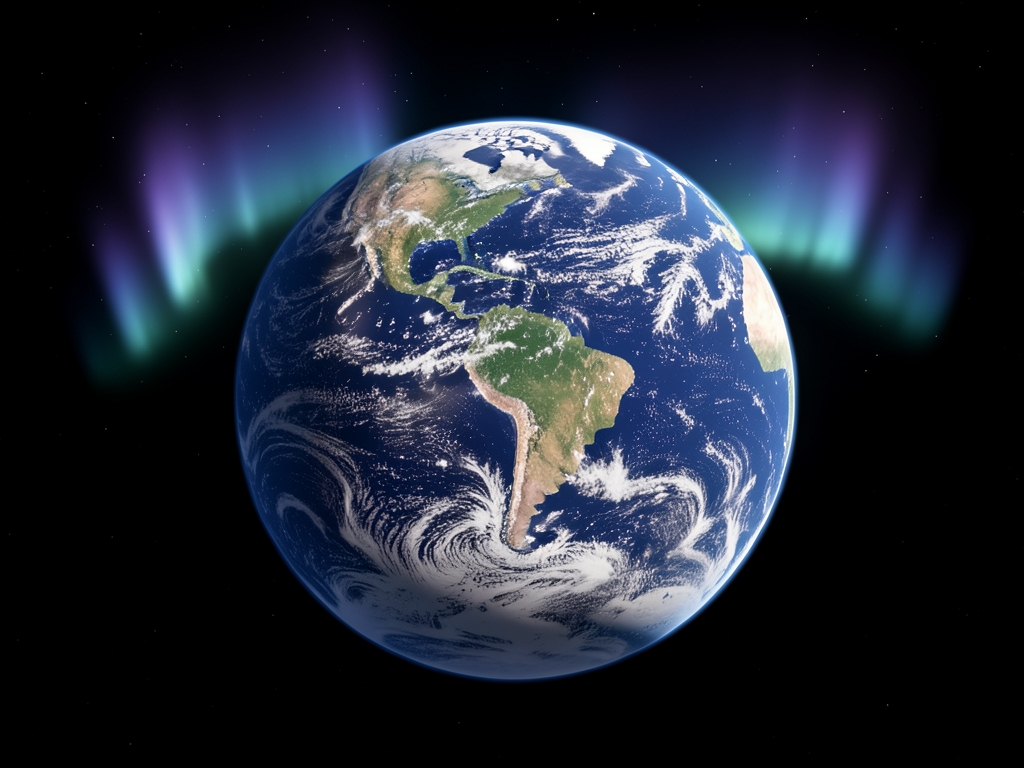
Planetary science has long relied on established models of Earth's protective shields to understand how our world interacts with the harsh environment of space. Among these crucial defenses, the Van Allen radiation belts have traditionally been viewed as a remarkably stable obstacle course for high-energy particles streaming from the sun and deep space. However, recent observations and ongoing investigations by researchers examining magnetospheric dynamics have revealed that Earth's supposedly impenetrable radiation barrier can experience significant anomalies and breaches under specific solar wind conditions. Understanding the mechanics behind these breaches offers vital insights into space weather, satellite safety, and the complex physics governing our planet's magnetosphere.
To appreciate the significance of recent findings regarding radiation barrier fluctuations, it is essential to review how Earth's magnetic field operates on a daily basis. The magnetosphere acts as an invisible magnetic bubble that envelops the globe, extending thousands of kilometers into space. Within this vast region, trapped energetic electrons and ions form distinct zones known as the Van Allen radiation belts. For decades, standard textbook diagrams depicted these regions as rigid, donut-shaped traps with inner and outer rings separated by a relatively safe slot region. Modern satellite data, however, paints a much more dynamic and fluid picture where boundaries shift, disappear, and reform in response to interplanetary shocks and geomagnetic storms.
The Mechanics of Magnetospheric Compression
When high-speed solar wind streams, coronal mass ejections, or interplanetary magnetic field shifts impact Earth's magnetosphere, the dayside of the magnetic bubble experiences intense compression. This sudden pressure forces the boundary inward, transferring immense energy into the inner magnetosphere. As electromagnetic waves ripple through the plasma environment, particles are accelerated to near-light speeds, forming what researchers call killer electrons. These energetic particles can breach traditional containment zones, penetrating deeper toward Earth than previously expected.
Recent scientific analyses highlight how ultra-low frequency plasma waves and whistler-mode chorus waves interact with these trapped populations. Rather than maintaining a permanent barrier, the magnetosphere functions as a chaotic accelerator and filter. During extreme geomagnetic events, the delicate balance between particle trapping and loss cone precipitation breaks down. Consequently, electrons that should be safely deflected or contained manage to bypass regional barriers, leading to localized breaches where particle density spikes dramatically in regions normally characterized by low radiation levels.
The Earth's magnetosphere is not a static fortress but a living, responsive interface that constantly adapts to the energetic output of our local star. Recent observations demonstrate that localized pressure drops can momentarily compromise regional particle containment, challenging long-held assumptions about radiation belt permanence.
Info! Space weather monitoring agencies utilize constellations of advanced research satellites to track magnetospheric dynamics in real-time, helping operators safeguard critical communication and navigation infrastructure.
Implications for Spacecraft Safety and Satellite Operations
The practical consequences of understanding these radiation barrier breaches extend far beyond academic curiosity. Modern society relies heavily on orbital infrastructure, including GPS navigation networks, weather monitoring satellites, and global telecommunication relays. When energetic particles breach protective boundaries and flood low-to-medium Earth orbits, orbiting hardware faces severe environmental hazards.
High-energy electrons can cause deep dielectric charging, surface electrostatic discharge, and permanent degradation of sensitive onboard electronics. Satellite operators routinely monitor space weather forecasts to place vulnerable spacecraft into safe modes during elevated geomagnetic activity. By refining our understanding of how and when radiation barriers fail or become permeable, engineers can design more resilient shielding materials and fault-tolerant computer systems capable of withstanding unexpected particle surges.
Observational Challenges and Future Research Directions
Studying the invisible boundaries of Earth's magnetic field presents unique technical challenges. Because plasma density, magnetic field strength, and particle velocities change across vast spatial scales and rapid temporal intervals, single-point measurements are insufficient. Researchers rely on multi-point satellite missions, such as NASA's Van Allen Probes and ESA's Cluster constellation, to map the three-dimensional structure of the magnetosphere.
Future research initiatives aim to integrate machine learning algorithms with real-time telemetry data to predict radiation belt dynamics with greater precision. By analyzing historical solar cycle data alongside live solar wind telemetry, scientists hope to transition from reactive monitoring to proactive space weather forecasting. This capability will become increasingly critical as commercial spaceflight expands and reliance on orbital assets continues to accelerate.
| Magnetospheric Layer | Typical Altitude Range | Primary Particle Types | Dynamic Behavior |
|---|---|---|---|
| Inner Radiation Belt | 1,000 to 13,000 km | High-energy protons, energetic electrons | Relatively stable, influenced by cosmic ray albedo neutron decay |
| Outer Radiation Belt | 13,000 to 60,000 km | High-energy relativistic electrons | Highly variable, fluctuates rapidly during geomagnetic storms |
| Slot Region | Between inner and outer belts | Low particle density | Can fill temporarily during extreme solar wind compression events |
| Plasmasphere | Up to 4 to 6 Earth radii | Cold, dense low-energy plasma | Erases and reforms depending on convection electric field strength |
Broader Environmental and Atmospheric Connections
Beyond orbital mechanics and satellite engineering, the interaction between solar radiation and Earth's upper atmosphere has fascinating implications for global atmospheric chemistry. When energetic particles breach magnetic boundaries and precipitate into the polar atmosphere, they collide with neutral gas molecules. These collisions produce ionization and excitation, which in turn drive chemical reactions involving ozone destruction and odd-nitrogen production.
Climatologists and aeronomers study these processes to distinguish between anthropogenic climate drivers and natural solar-terrestrial coupling mechanisms. While the direct thermal impact of energetic particle precipitation on surface weather remains a subject of ongoing debate, its influence on mesospheric and stratospheric dynamics is well documented. Comprehensive monitoring of radiation belt breaches ensures that researchers maintain an accurate accounting of all energy inputs entering Earth's upper envelope.
- Solar Event Initiation: Solar flares or coronal mass ejections erupt from the sun, hurtling charged particles across interplanetary space toward the Earth system.
- Magnetopause Interaction: The incoming solar wind compresses the dayside magnetosphere, transferring electrical energy and creating plasma turbulence.
- Wave-Particle Acceleration: Electromagnetic waves inside the magnetosphere accelerate electrons to relativistic speeds, overwhelming regional containment forces.
- Barrier Breach and Precipitation: Energetic particles bypass traditional trapping boundaries, entering lower altitude orbits and precipitating into the upper atmosphere.
What are the Van Allen radiation belts?
The Van Allen radiation belts are two torus-shaped zones of energetic charged particles held in place around Earth by the planet's magnetic field.
How do radiation barrier breaches occur?
Breaches occur when intense solar wind pressure and geomagnetic storms compress the magnetosphere, generating plasma waves that accelerate particles beyond normal containment limits.
Why are these breaches important for satellites?
High-energy particle surges can cause electrostatic discharge, degrade solar panels, and damage sensitive microelectronics on operational satellites.
How do scientists monitor magnetospheric dynamics?
Researchers use multi-satellite constellations equipped with particle detectors and magnetometers to measure plasma density and magnetic field fluctuations in real-time.
In conclusion, ongoing research into Earth's radiation environment demonstrates that our planet's protective magnetic barriers are far more dynamic than previously understood. By continuing to observe how solar activity interacts with the magnetosphere, scientists can better protect orbital infrastructure and deepen our fundamental understanding of space physics.
