

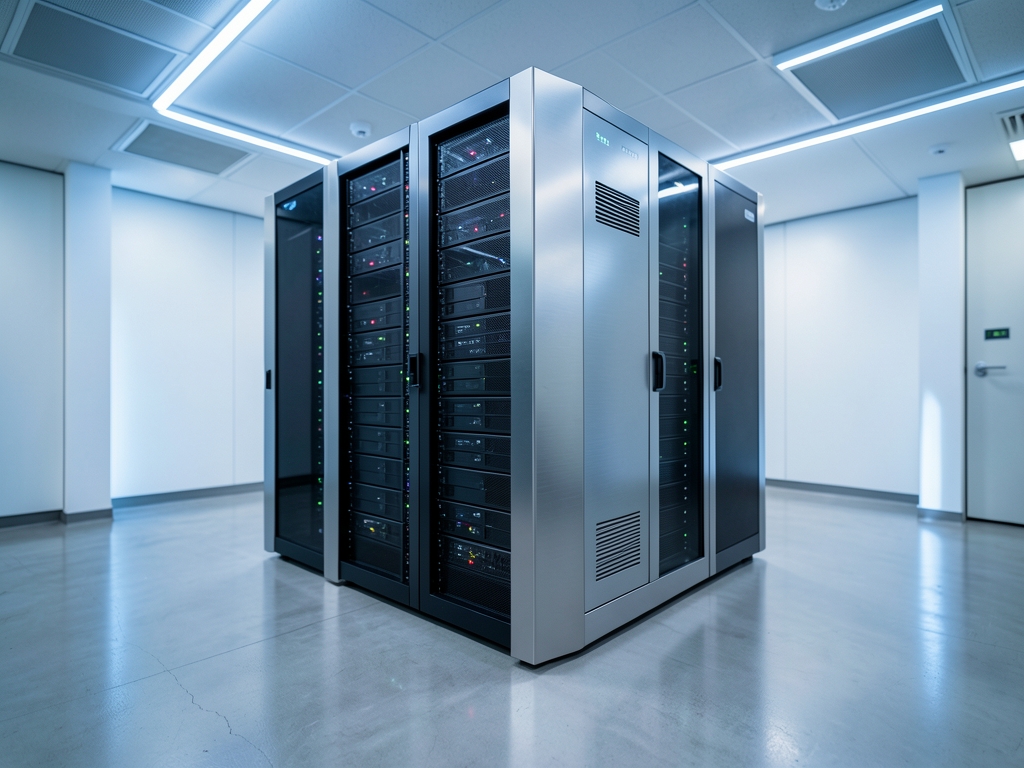
The rapid evolution of artificial intelligence has moved far beyond massive cloud data centers and sprawling server farms. Modern enterprise organizations increasingly demand high-performance computing solutions that can be deployed directly on-premises, offering lower latency, enhanced data privacy, and robust operational independence. The debut of specialized hardware appliances at major industry events highlights a significant architectural shift in how artificial intelligence workloads are delivered to businesses across Europe and the United States.
Industrial environments, research laboratories, and enterprise headquarters require specialized hardware capable of handling massive model training and real-time inference without relying entirely on remote cloud infrastructure. As computing demands escalate, hardware manufacturers and software developers continue to collaborate on turnkey appliances that bundle accelerated processors, optimized memory architectures, and pre-configured software stacks into unified physical units.
The Evolution of On-Premises Artificial Intelligence Appliances
For many years, deploying enterprise-grade artificial intelligence meant establishing complex cloud pipelines, renting remote server instances, and managing intricate networking topologies to transfer massive datasets back and forth. While cloud computing remains essential for hyperscale model training, security regulations, bandwidth constraints, and real-time processing requirements have created a booming market for local hardware solutions often referred to as AI-in-a-box systems.
These specialized appliances integrate high-bandwidth memory, advanced graphics or tensor processing units, and high-speed networking interfaces into a single rack-mountable chassis. By bringing high-performance compute hardware directly to the enterprise floor, organizations can process sensitive corporate data, medical records, or industrial telemetry locally. This approach minimizes exposure to external network vulnerabilities and ensures compliance with strict regional data protection regulations such as the European Union's General Data Protection Regulation.
Bringing advanced neural network processing directly to local enterprise servers transforms how organizations handle data security, latency-sensitive operations, and large-scale model inference.
Furthermore, local hardware integration eliminates the unpredictable latency associated with wide-area network routing. When automated manufacturing systems, healthcare diagnostic platforms, or autonomous logistics networks require instant decision-making, local computing appliances provide the deterministic performance necessary to prevent critical failures. Engineers and system architects can fine-tune models locally, adjusting weights and parameters to match specific operational workflows without incurring recurring cloud subscription fees for every inference query.
Hardware Architecture and Processing Capabilities
Modern artificial intelligence appliances rely on sophisticated semiconductor engineering to achieve high computational throughput while maintaining energy efficiency. Traditional central processing units are frequently insufficient for the parallel matrix multiplication tasks required by deep learning models. Consequently, modern enterprise boxes incorporate dedicated tensor cores, high-bandwidth memory architectures like HBM3e or subsequent generations, and specialized interconnects that facilitate rapid data exchange between multiple processing nodes within the same chassis.
Info! Local AI appliances combine dense parallel processing units with high-speed memory pools, enabling enterprises to execute large language models and computer vision pipelines entirely behind local firewalls.
System integration goes beyond raw silicon performance. Effective enterprise hardware must be accompanied by comprehensive software toolchains, hypervisors, container orchestration platforms, and secure firmware layers. When hardware and software are engineered in tandem, IT administrators can provision virtualized environments, allocate specific compute resources to individual departments, and monitor hardware health through centralized management consoles.
| Hardware Component | Traditional Server Setup | Modern AI Appliance |
|---|---|---|
| Primary Processor | General-purpose CPU | Accelerated GPU / Tensor Cores |
| Memory Architecture | Standard DDR5 RAM | High-Bandwidth Memory (HBM) |
| Deployment Time | Days to Weeks (Cloud & Local) | Hours (Turnkey Integration) |
| Data Privacy | Dependent on Cloud Provider | Total Local Control |
| Latency Profile | Variable (Network Dependent) | Deterministic (Sub-Millisecond) |
Deployment Strategies for Enterprise IT Teams
Integrating a powerful artificial intelligence appliance into an existing corporate infrastructure requires careful planning and adherence to best practices. Enterprise IT directors must evaluate physical constraints, electrical power availability, thermal dissipation requirements, and existing network security protocols before unboxing new hardware.
- Conduct a comprehensive assessment of local power distribution units and cooling capacity within the server room to support high-density compute nodes.
- Audit existing network switches and cabling infrastructure to ensure compatibility with high-speed optical or copper interconnects.
- Establish isolated virtual local area networks and configure strict firewall rules to separate administrative management traffic from high-throughput data pipelines.
- Deploy containerized model runtimes and verify hardware acceleration drivers across all available tensor cores.
- Implement continuous monitoring tools to track thermal performance, power consumption, and processing bottlenecks under peak enterprise load.
By following a structured deployment methodology, organizations can avoid common pitfalls such as thermal throttling, power bottlenecks, and unoptimized software configurations. Engaging with certified hardware vendors and specialized integration partners also ensures that firmware updates and security patches are applied systematically without disrupting active business operations.
Security, Governance, and Regulatory Compliance
Data governance represents one of the primary drivers behind the adoption of on-premises artificial intelligence appliances. In sectors such as healthcare, financial services, and legal consulting, transmitting sensitive client data to external cloud servers can violate professional confidentiality standards and legal frameworks. Local appliances ensure that raw data never leaves the physical premises of the organization.
Warning! Failing to secure local AI endpoints with robust cryptographic protocols and role-based access control can expose enterprise networks to unauthorized model extraction attacks and internal data breaches.
Security hardening must encompass both physical and digital domains. Physical rack security prevents unauthorized physical access to storage drives that may contain proprietary model weights or sensitive training data. Digitally, administrators must implement zero-trust network access policies, encrypted storage volumes, and rigorous identity verification protocols for all personnel interacting with the AI management plane. Regular vulnerability assessments and automated patch management cycles further fortify the infrastructure against emerging cyber threats.
What is an AI-in-a-box enterprise appliance?
An AI-in-a-box appliance is a pre-integrated hardware and software system containing specialized processors, high-bandwidth memory, and optimized AI frameworks designed for rapid on-premises deployment.
Why are companies choosing local AI hardware over cloud solutions?
Organizations choose local hardware to ensure strict data privacy, comply with regional regulatory standards, reduce network latency, and eliminate recurring cloud compute subscription fees for large-scale inference workloads.
What power and cooling requirements do these systems demand?
High-density AI appliances draw substantial electrical power and generate significant heat, requiring enterprise server rooms to feature robust power distribution units and advanced liquid or high-airflow cooling systems.
How do local AI appliances protect sensitive corporate data?
By processing data entirely behind local enterprise firewalls, these systems prevent raw information from traveling across external public networks, keeping sensitive intellectual property and private records secure on-site.
Future Outlook for Edge and On-Premises Intelligence
The market for specialized, high-performance local computing appliances will continue to expand as artificial intelligence models become more capable and ubiquitous across global industries. Hardware manufacturers are already developing next-generation silicon architectures that deliver even higher energy efficiency, allowing smaller physical enclosures to handle workloads that previously required room-sized supercomputers.
As enterprises gain deeper experience with local deployment models, the boundary between cloud infrastructure and edge computing will become increasingly fluid. Organizations will orchestrate hybrid workflows where lightweight inference occurs directly on local edge devices, heavy model fine-tuning runs on secure on-premises appliances, and massive foundational training remains in scalable cloud environments. This balanced approach maximizes operational flexibility while safeguarding enterprise data integrity.
Ultimately, the successful integration of localized artificial intelligence hardware empowers businesses to innovate faster, maintain absolute control over their digital assets, and deliver responsive, intelligent services to customers worldwide without compromising security or performance.
