

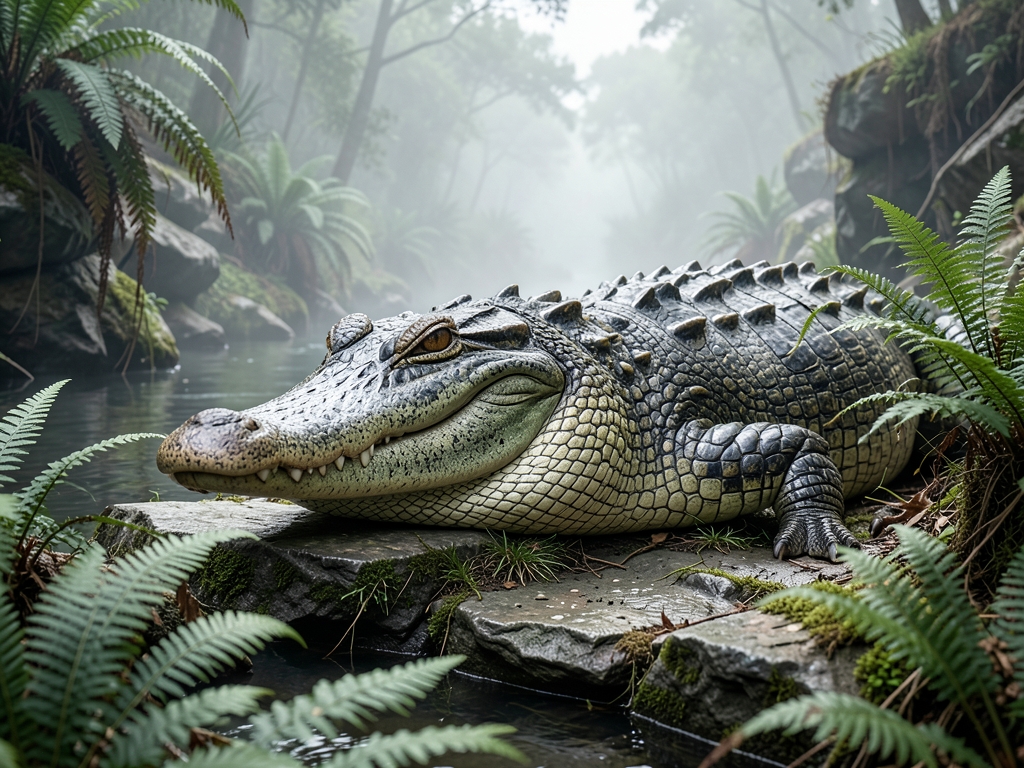
Paleontology continues to reshape our understanding of ancient ecosystems, offering fascinating glimpses into worlds that existed millions of years before modern human civilization. A recent announcement from researchers at the University of Portsmouth has highlighted yet another remarkable chapter in prehistoric evolution. Scientists at the institution have officially documented the discovery of a new ancient crocodile relative, shedding light on the diverse and complex lineages of prehistoric reptiles that once roamed the Earth. This discovery not only expands the known taxonomic diversity of ancient archosaurs but also provides critical clues about how these apex predators adapted to shifting environmental pressures over deep geological time.
The Significance of the Portsmouth Fossil Discovery
Fossil discoveries are rarely simple events; they are the culmination of meticulous fieldwork, careful preparation, and rigorous comparative anatomy. When research teams unearth fossilized remains that differ significantly from previously cataloged specimens, the scientific community pays close attention. The newly identified ancient crocodile relative discovered by Portsmouth scientists represents a unique branch on the evolutionary tree of pseudosuchians—the broader group that includes modern crocodilians and their extinct relatives.
During the Mesozoic Era and subsequent epochs, the ancestors of modern crocodiles occupied a dizzying array of ecological niches. While some resembled today's ambush predators found in tropical rivers, others were fully terrestrial runners, nimble herbivores, or even marine-adapted swimmers. Identifying where this new species fits into the prehistoric mosaic helps paleontologists piece together the evolutionary pathways that allowed these resilient creatures to survive multiple mass extinction events.
Anatomical Features and Evolutionary Adaptations
Studying fossilized bones requires examining subtle morphological markers that reveal how an animal moved, hunted, and interacted with its surroundings. The Portsmouth research team analyzed skull fragments, jaw structures, and post-cranial elements to determine the unique characteristics of the newly found relative. These physical traits distinguish the specimen from previously known species, marking it as a distinct addition to the prehistoric record.
One of the primary areas of focus in such studies is the structure of the jaw and teeth. Variations in dental morphology often indicate specialized diets, ranging from crushing hard-shelled prey to capturing fast-moving aquatic vertebrates. By examining these features, scientists can reconstruct ancient food webs and understand how prehistoric predators partitioned resources in shared habitats.
Every new fossil discovery acts as a crucial window into the past, challenging existing evolutionary models and revealing the astonishing adaptability of prehistoric lineages.
The Role of Modern Paleontological Techniques
Uncovering secrets locked within stone for millions of years demands advanced technology alongside traditional excavation tools. Modern paleontology relies heavily on non-invasive imaging methods, such as high-resolution computed tomography (CT) scans, which allow researchers to peer inside fossilized matrix without damaging delicate internal structures. This technological leap has revolutionized how scientists analyze cranial cavities, inner ear morphology, and vascular channels.
Furthermore, phylogenetic analysis software enables researchers to compare hundreds of anatomical traits across numerous species simultaneously. By feeding morphological data into computational algorithms, scientists can generate detailed evolutionary trees that map out ancestral relationships with unprecedented statistical rigor. The discovery from Portsmouth incorporates these modern analytical approaches to ensure its conclusions stand up to intense peer scrutiny.
Context Within the Broader Fossil Record
Placing a new species into its proper historical context involves looking at the geological strata in which it was found. Rock layers act as a natural archive, recording environmental conditions, climate fluctuations, and concurrent flora and fauna. Understanding the exact stratum helps researchers date the specimen accurately and correlate its appearance with global climatic events of that era.
Prehistoric ecosystems were dynamic, often characterized by rapid shifts in temperature, sea levels, and continental configurations. Documenting how ancient crocodile relatives responded to these environmental transformations offers valuable lessons on biological resilience. While modern crocodilians face contemporary conservation challenges due to habitat loss and climate change, their ancient ancestors weathered profound planetary upheavals over hundreds of millions of years.
Info! Paleontological research relies on meticulous peer review and publication in scientific journals to validate new species designations and anatomical interpretations.
Future Research Directions and Ongoing Excavations
The announcement of this new ancient crocodile relative is only the beginning of the research cycle. Portsmouth scientists and their collaborators are continuing to analyze related specimens, search additional fossiliferous sites, and refine their phylogenetic models. As more fossil material comes to light, researchers hope to fill remaining gaps in the evolutionary lineage of pseudosuchians.
Collaborative international efforts also play a vital role in modern paleontology. Sharing data, comparative casts, and digital scans allows research institutions worldwide to test hypotheses and build more comprehensive databases of prehistoric life. The ongoing study of these ancient reptiles ensures that our understanding of Earth's biological history will continue to evolve alongside technological and analytical advancements.
What did Portsmouth scientists discover recently?
Portsmouth researchers discovered a new ancient relative of modern crocodiles, adding a distinct species to the prehistoric evolutionary tree of pseudosuchians.
How do scientists study newly found fossils without damaging them?
Researchers utilize advanced technologies such as high-resolution computed tomography (CT) scans and digital imaging to analyze internal bone structures safely without harming fragile fossil specimens.
Why are ancient crocodile relatives important to paleontology?
Studying these ancient relatives helps scientists understand how prehistoric reptile lineages adapted to environmental changes, shifted their ecological roles, and survived major historical epochs.
What methods are used to determine the age of fossil discoveries?
Scientists determine fossil age by analyzing the specific geological strata in which the remains are embedded, alongside radiometric dating techniques applied to surrounding rock layers.
Conclusion
The discovery of a new ancient crocodile relative by Portsmouth scientists underscores the enduring mysteries hidden within Earth's geological record. By combining traditional excavation expertise with modern analytical tools, researchers continue to illuminate the complex evolutionary pathways of prehistoric life. As ongoing studies progress, these findings enrich our appreciation of biodiversity through deep time and highlight the dynamic nature of scientific exploration.
