

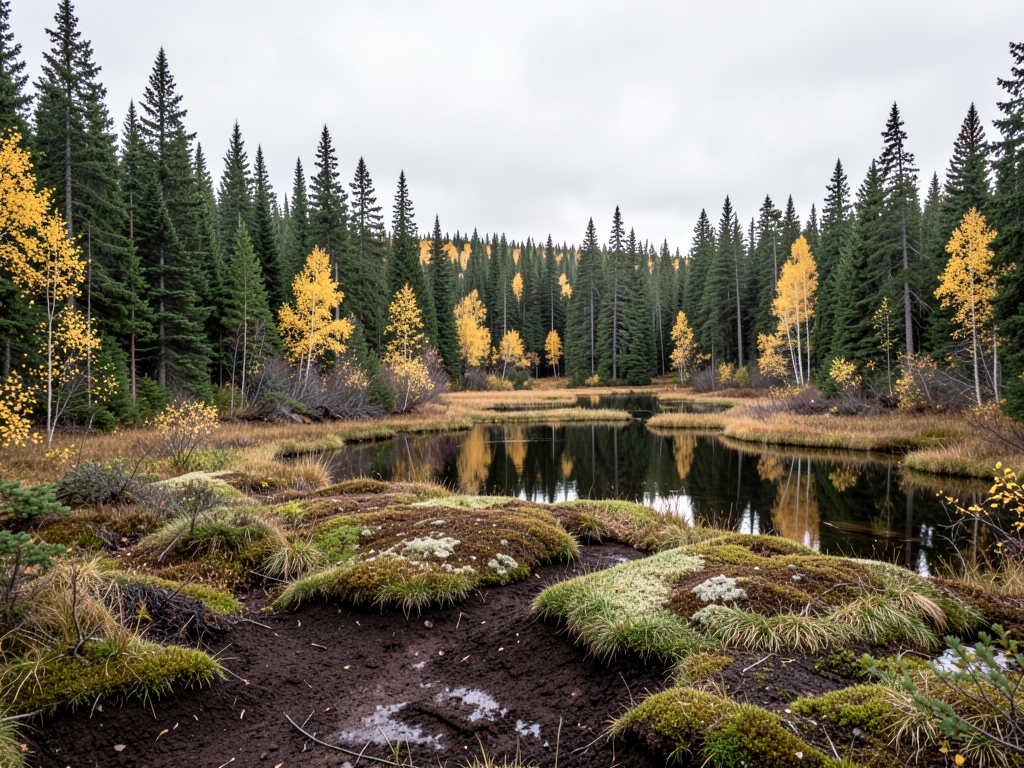
Recent scientific investigations into northern high-latitude ecosystems have yielded critical insights regarding the shifting carbon balance of boreal forests and surrounding permafrost landscapes. As global temperatures continue to rise at rates outstripping the planetary average, researchers across international consortia are closely monitoring how northern soils transition from long-term carbon sinks into net carbon sources. Understanding these complex biogeochemical mechanisms is essential for accurately projecting future climate trajectories and designing effective global mitigation strategies.
The boreal biome, often referred to as the taiga, represents the largest terrestrial biome on Earth, encircling the globe across North America, Europe, and Asia. Spanning millions of square kilometers, these cold-adapted forests store staggering quantities of organic carbon within their thick organic soil layers, peatlands, and underlying permafrost. For millennia, low temperatures, waterlogged soil conditions, and short growing seasons inhibited microbial decomposition, allowing carbon to accumulate faster than it decayed. However, contemporary climate anomalies are rapidly destabilizing these ancient storage systems, triggering rapid ecological and chemical transformations.
The Mechanics of Accelerated Soil Respiration
At the center of recent research breakthroughs is the accelerated rate of soil respiration across sub-arctic and boreal zones. Soil respiration encompasses the release of carbon dioxide and methane from the soil into the atmosphere, driven by root metabolism and the microbial decomposition of organic matter. As air and soil temperatures rise, dormant microbial communities awaken and accelerate their metabolic activity, breaking down organic compounds that have remained locked away for centuries.
Info! Field measurements indicate that winter soil respiration rates in certain high-latitude zones have increased by double-digit percentages over the past decade, challenging traditional climate models that assumed winter biological activity was negligible.
Field studies utilizing advanced automated chamber systems and eddy covariance towers have revealed that microbial decomposition does not pause during freezing winter months. Instead, an insulated blanket of seasonal snow traps geothermal heat within the upper soil profile, maintaining micro-environments where soil microbes continue to respire carbon throughout the long polar winter. When combined with longer, warmer summers, the annual carbon ledger of these ecosystems is shifting dramatically. Forests that historically absorbed more carbon than they released are now exhibiting net carbon emissions during unusually warm years, creating a self-reinforcing feedback loop that accelerates global warming.
Permafrost Thaw and Structural Hydrology Shifts
Beneath much of the boreal forest lies permafrost—ground that remains at or below zero degrees Celsius for two or more consecutive years. The degradation of this subterranean ice foundation introduces profound structural and hydrological changes to the landscape. As permafrost thaws, the ground subsides, creating irregular depressions known as thermokarst terrain. These depressions often fill with meltwater, transforming stable forest floors into expanding wetlands, shallow lakes, and waterlogged bogs.
This hydrological transition fundamentally alters the pathways of carbon emission. In dry, well-drained soils undergoing thaw, organic carbon predominantly decomposes into carbon dioxide via aerobic respiration. Conversely, in newly formed thermokarst water bodies and saturated wetlands, oxygen is rapidly depleted, creating anaerobic environments. Under these oxygen-starved conditions, methanogenic archaea take over, producing methane—a greenhouse gas with a warming potential significantly higher than carbon dioxide over a short-term horizon.
| Ecosystem State | Dominant Process | Primary Gas Released | Climatic Impact |
|---|---|---|---|
| Stable Permafrost | Cryoturbation & Low Activity | Minimal Emissions | Long-term Carbon Sink |
| Thawing Thermokarst | Anaerobic Decomposition | Methane (CH4) | High Immediate Warming Potential |
| Draining Boreal Peat | Aerobic Microbial Respiration | Carbon Dioxide (CO2) | Sustained Atmospheric Loading |
| Regrowing Taiga Stand | Photosynthetic Sequestration | Carbon Uptake | Temporary Carbon Mitigation |
Vegetation Shifts and Fire Regimes
Compounding the subterranean carbon release are structural shifts in above-ground vegetation and increasingly severe wildfire regimes. As boreal climates warm, southern deciduous species such as aspen and birch are migrating northward into traditional coniferous domains dominated by black spruce and larch. While deciduous trees can exhibit higher seasonal carbon uptake rates during peak summer, they also shed their leaves annually, altering litter quality and soil moisture dynamics.
Furthermore, warmer and drier summer conditions have intensified the frequency, scale, and severity of boreal wildfires. These fires consume not only standing trees and understory vegetation but also burn deep into the organic soil and peat layers, releasing centuries of accumulated carbon in a matter of days. Severe fires also strip away protective moss layers, exposing the underlying permafrost to accelerated solar radiation and deep thaw cycles, which initiates a cascading sequence of further ecosystem degradation.
The accelerated transformation of northern ecosystems requires an immediate recalibration of global carbon budgets. We are no longer dealing with theoretical future projections, but with measurable, ongoing changes in soil microbial dynamics that demand urgent international policy attention.
Methodological Advances in Boreal Monitoring
To capture these rapid environmental shifts, researchers are deploying sophisticated technological tools across remote northern outposts. High-resolution satellite remote sensing, combined with airborne laser scanning (LiDAR), now allows scientists to track surface subsidence and canopy deformation across vast, inaccessible wilderness areas in real time. Ground-based instrumentation, including deep soil temperature probes, isotopic gas analyzers, and automated gas flux chambers, provides high-frequency data streams that refine our understanding of microscale biochemical processes.
- Deploying autonomous flux towers equipped with advanced infrared gas analyzers to measure continuous carbon exchange.
- Utilizing drone-mounted multispectral sensors to map vegetation stress and thermokarst expansion at centimeter-scale resolution.
- Extracting deep soil core samples for laboratory radiocarbon dating and microbial community genetic sequencing.
- Integrating multi-variable field datasets into next-generation Earth system models to improve global climate predictions.
Warning! Traditional climate projections that rely solely on historical baseline data frequently underestimate the rate of high-latitude carbon release, potentially leading to miscalculated emission targets.
Why are boreal forest soils considered critical to the global carbon balance?
Boreal forest soils and underlying peatlands store vast amounts of organic carbon accumulated over thousands of years due to cold temperatures and slow decomposition rates. Their stability directly influences atmospheric greenhouse gas concentrations.
How does permafrost thaw increase atmospheric methane emissions?
When permafrost thaws and collapses into waterlogged depressions, oxygen is depleted from the soil. This creates anaerobic conditions where specialized microorganisms produce methane, a potent greenhouse gas, instead of carbon dioxide.
Do soil microbes remain active during freezing boreal winters?
Yes. Insulating snow layers trap geothermal heat in the upper soil profile, allowing microbial decomposition and soil respiration to continue throughout the winter months at rates previously underestimated by researchers.
What role do boreal wildfires play in this carbon cycle disruption?
Boreal wildfires release massive quantities of stored carbon by burning deep organic soil layers and peat. They also remove protective moss insulation, exposing underlying permafrost to rapid solar thaw and further degradation.
Conclusion
The ongoing transformations within boreal forest and permafrost ecosystems underscore the intricate connectivity between high-latitude environmental stability and global climate regulation. Recent empirical findings highlight that northern soils are transitioning from reliable carbon sinks into active contributors of atmospheric greenhouse gases. Addressing these complex ecological challenges requires continued multidisciplinary research, advanced monitoring infrastructure, and aggressive global emissions reductions to stabilize high-latitude temperatures and preserve the integrity of the world's northern biomes.
