

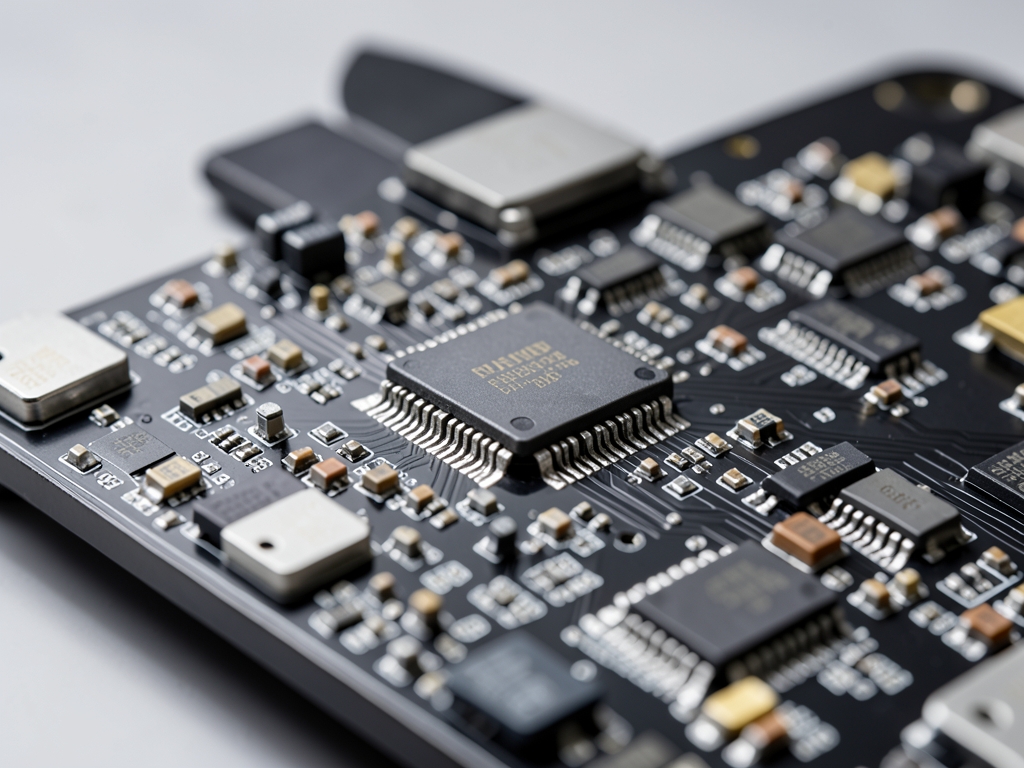
The landscape of mobile computing has undergone a radical transformation over the past year, shifting from cloud-dependent machine learning architectures to sophisticated on-device processing capabilities. Modern smartphones are no longer just communication tools or portable media consumption devices; they have evolved into powerful edge-computing systems capable of running complex generative artificial intelligence models locally. This paradigm shift is driven by rapid hardware advancements, specifically the integration of dedicated Neural Processing Units (NPUs) within modern mobile processors. Understanding how these hardware components function, why they matter for daily user experience, and how they impact battery efficiency reveals the true magnitude of the current smartphone revolution.
The Evolution of Mobile Processors: From CPU to Dedicated NPU
For many years, smartphone performance was judged primarily by Central Processing Unit (CPU) clock speeds and Graphics Processing Unit (GPU) rendering capabilities. While CPUs excel at sequential, general-purpose computing and GPUs handle massive parallel processing for graphics, neither architecture is optimized for the matrix multiplications that underpin deep learning algorithms. As artificial intelligence models grew more complex, manufacturers realized that running machine learning workloads on traditional cores caused severe thermal throttling and battery drain.
This realization led to the development of the dedicated NPU. Unlike general-purpose processors, an NPU is specifically architected to accelerate artificial intelligence and machine learning tasks. By handling operations such as tensor calculations, pattern recognition, and natural language processing at the hardware level, NPUs execute AI workloads with a fraction of the energy required by a standard CPU or GPU. Recent flagship mobile silicon releases feature neural engines capable of executing tens of trillions of operations per second (TOPS) while maintaining thermal envelopes suitable for pocket-sized devices.
Why On-Device AI Processing Matters for Users
The transition from cloud-based AI processing to on-device execution offers several distinct advantages for everyday smartphone users. The most immediate benefit is privacy. When artificial intelligence features—such as real-time voice transcription, predictive text generation, and local image editing—are processed directly on the device, personal data never needs to leave the handset. Users no longer have to worry about sensitive voice recordings or private photographs being uploaded to remote servers for analysis.
Info! On-device AI processing ensures that sensitive user data remains secure within the device's hardware-backed security enclave, minimizing exposure to potential cloud security vulnerabilities.
Another major advantage is latency and reliability. Cloud-based AI services rely entirely on cellular or Wi-Fi network connectivity. If a user is traveling through an area with poor coverage or network congestion, cloud-dependent features often fail or suffer from noticeable delays. In contrast, an on-device neural processor operates independently of network conditions, delivering instantaneous responses for voice commands, camera enhancements, and predictive software adjustments regardless of internet availability.
Hardware Specifications and Energy Efficiency Challenges
Designing silicon that balances extreme computational power with strict thermal and energy constraints is one of the greatest engineering challenges in the mobile industry today. Smartphone manufacturers must achieve high performance without draining the battery within a few hours of use. Modern manufacturing nodes, such as advanced 3-nanometer and 4-nanometer fabrication processes, allow engineers to pack billions of transistors into tighter spaces, drastically reducing power leakage and improving electrical efficiency.
Furthermore, memory bandwidth plays a critical role in NPU performance. Large language models and multimodal AI systems require rapid data transfer between the processor and high-speed RAM, such as LPDDR5X memory modules. If memory bandwidth is constrained, the NPU sits idle waiting for data, creating a performance bottleneck. Consequently, modern smartphone architectures feature unified memory designs and expansive cache sizes to feed the neural engine with a continuous, high-speed stream of data.
Real-World Applications in Modern Mobile Operating Systems
The practical applications of on-device AI extend across almost every facet of the modern smartphone experience. In mobile photography, neural engines power computational photography pipelines that reconstruct images, reduce noise in extreme low-light environments, and apply real-time depth segmentation for portrait modes. Instead of capturing a single raw exposure, the phone's NPU analyzes multiple frames simultaneously, aligning pixels and adjusting dynamic range before the shutter click is even finalized.
In productivity and communication, on-device models enable real-time speech-to-text transcription, automated email summarization, and intelligent notification management. Virtual assistants are also becoming truly conversational and context-aware. Because the assistant can analyze user habits, calendar events, and device settings locally, it can offer proactive suggestions without requiring constant cloud queries or violating user privacy.
| Feature Area | Cloud-Based Processing | On-Device NPU Processing |
|---|---|---|
| Data Privacy | Requires transmitting personal data to remote servers | Data remains entirely on the local device |
| Network Dependency | Requires active internet connection | Functions completely offline without internet |
| Response Latency | Subject to network latency and server load | Instantaneous local execution |
| Energy Consumption | High cellular modem power draw | Optimized low-power hardware execution |
Software Optimization and Developer Ecosystems
Hardware advancements alone are not enough to unlock the full potential of mobile AI. Software frameworks and developer tools play an equally critical role in bridging the gap between raw silicon power and user-facing applications. Operating system developers provide standardized APIs that allow third-party app developers to tap directly into the phone's NPU capabilities without needing to write custom hardware drivers for every device model.
Frameworks optimized for mobile environments enable developers to run quantized models—versions of large AI models that have been compressed and optimized to fit within mobile memory constraints while retaining high accuracy. This democratization of AI tooling means that everyday utility apps, navigation software, and mobile games can all leverage advanced machine learning features smoothly and efficiently.
The convergence of advanced semiconductor fabrication, dedicated neural processing hardware, and highly optimized mobile software has permanently redefined what consumers should expect from their everyday pocket devices.
Potential Limitations and Future Industry Trends
Despite the remarkable progress in on-device AI, several challenges remain on the horizon. As mobile AI models grow larger and more capable, the demand for storage space and thermal management will continue to test the limits of smartphone form factors. Additionally, maintaining high performance during extended gaming or heavy AI multitasking sessions without overheating requires innovative cooling solutions, such as vapor chambers and graphite sheets.
Looking ahead, the industry is moving toward more deeply integrated heterogeneous computing architectures, where CPUs, GPUs, and NPUs work in dynamic synchronization rather than operating as isolated components. Future software updates will likely introduce even more personalized, context-aware agents that anticipate user needs before they are articulated, transforming the smartphone from a reactive tool into an active, intelligent daily companion.
What is a Neural Processing Unit (NPU) in a smartphone?
An NPU is a specialized hardware accelerator integrated into modern mobile processors designed specifically to handle machine learning, deep learning, and artificial intelligence computations efficiently.
Why is on-device AI processing better for user privacy?
On-device processing ensures that personal data, voice recordings, and private photos are analyzed locally on the phone's hardware rather than being uploaded to external cloud servers.
Do AI features on smartphones require an active internet connection?
Many modern AI features powered by dedicated on-device NPUs operate completely offline without needing cellular or Wi-Fi network connectivity.
How do NPUs improve mobile photography?
NPUs accelerate computational photography algorithms, allowing smartphones to process multiple image frames simultaneously for enhanced low-light performance, accurate depth mapping, and instant detail recovery.
Conclusion
The rapid advancement of on-device neural processing represents a milestone in smartphone evolution. By prioritizing local AI execution, manufacturers have successfully addressed critical concerns regarding data privacy, network latency, and energy efficiency. As mobile silicon continues to mature and software developers harness these powerful hardware capabilities, the boundaries of what a smartphone can accomplish independently will continue to expand, ensuring a more responsive, secure, and intelligent user experience for mobile consumers worldwide.
