

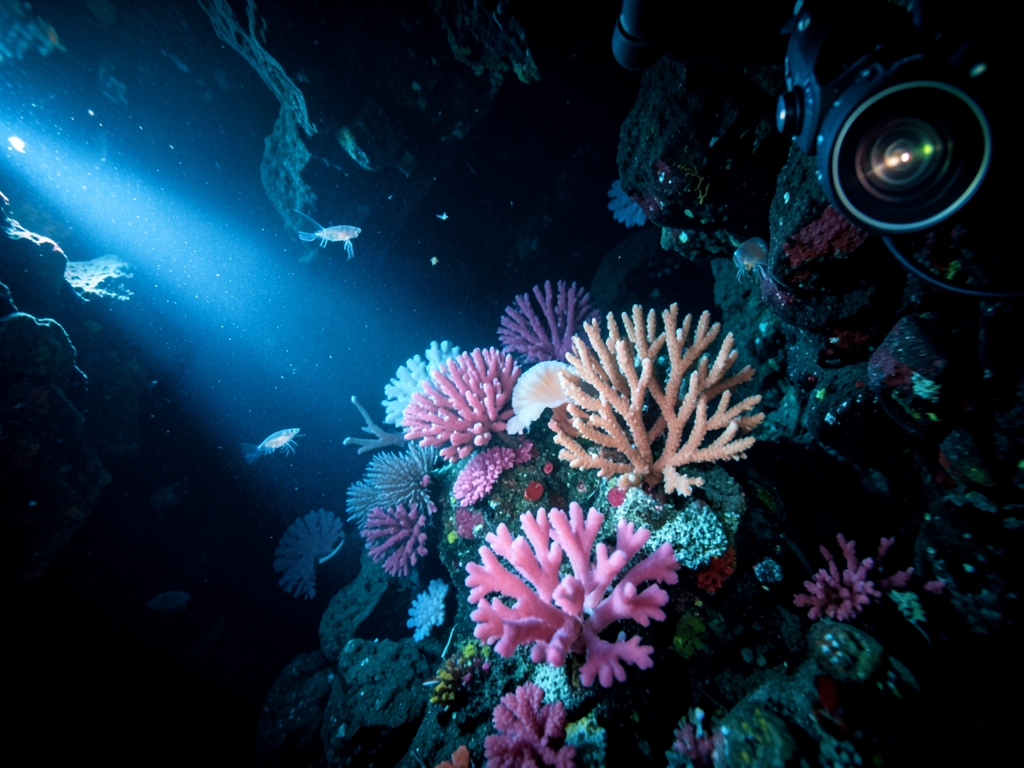
Our understanding of the deep ocean has undergone a profound transformation over recent years, shifting from the traditional view of the abyss as a barren, uniform desert to a recognition of vibrant, complex ecosystems operating entirely without sunlight. Among the most remarkable discoveries in modern marine science is the widespread presence of deep-sea coral reefs thriving in cold, nutrient-rich waters thousands of meters below the surface. Recent oceanographic expeditions utilizing advanced robotic submersibles and high-resolution sonar mapping have revealed extensive reef systems clinging to the steep walls of submarine canyons across the globe. These fragile biological communities represent vital hotspots of marine biodiversity, yet they face unprecedented threats from shifting ocean chemistry, deep-sea fishing activities, and industrial exploration. Protecting these hidden wilderness areas has emerged as one of the most pressing priorities for international conservation science.
Info! Unlike tropical shallow-water reefs that rely on photosynthetic algae called zooxanthellae for energy, deep-sea cold-water corals survive in complete darkness by capturing organic particles drifting through ocean currents.
The Unique Biology and Distribution of Cold-Water Coral Ecosystems
Cold-water corals, predominantly belonging to species such as Lophelia pertusa and various black and gorgonian corals, are remarkably long-lived organisms capable of constructing massive calcium carbonate frameworks over thousands of years. These structural foundations provide essential shelter, feeding grounds, and nursery habitats for countless marine species, including commercially important fish populations, deep-sea sharks, sponges, and rare invertebrates. Because these environments lack sunlight, the entire food web depends entirely on marine snow—a continuous shower of organic detritus, dead plankton, and fecal matter sinking from the sunlit upper layers of the ocean.
Submarine canyons act as natural funnels for these organic nutrients, creating localized hydrodynamic conditions that accelerate currents and deliver high concentrations of food to sessile filter feeders. As a result, the vertical walls of these deep oceanic trenches support astonishing densities of marine life. Recent biological surveys conducted along continental margins have documented previously unknown reef formations spanning kilometers of ocean floor, proving that deep-sea ecosystems are far more interconnected and resilient than scientists previously assumed, while simultaneously highlighting their extreme vulnerability to localized physical disruption.
Human Pressures and Environmental Stressors in the Abyssal Zone
Despite their remote locations deep beneath the surface, cold-water coral reefs are increasingly impacted by human activities and broad-scale environmental shifts. Historically, the greatest direct threat to these ancient structures has been bottom-trawling fisheries, which drag heavy weighted nets across the seafloor, shattering fragile coral branches that take centuries to regrow. Although international bodies and national governments have established protected marine areas in several critical zones, illegal or unregulated deep-sea fishing remains a persistent challenge for enforcement agencies.
In addition to physical destruction, climate change and ocean acidification pose severe systemic threats to deep-sea calcifying organisms. As the oceans absorb excess carbon dioxide and anthropogenic heat from the atmosphere, seawater chemistry undergoes gradual acidification, lowering carbonate ion saturation states. This chemical shift makes it significantly harder for corals to build and maintain their calcium carbonate skeletons. Furthermore, changes in deep-water circulation patterns, declining dissolved oxygen levels, and rising baseline temperatures can trigger mass stress events, threatening entire communities with collapse before they have even been fully documented by science.
Modern Technological Breakthroughs in Deep-Sea Exploration
Mapping and monitoring environments located thousands of meters underwater requires sophisticated engineering and cutting-edge oceanographic technology. Traditional methods of observation, such as weighted dredges, often caused extensive damage to the very habitats researchers were trying to study. Today, marine scientists rely heavily on remotely operated vehicles (ROVs) and autonomous underwater vehicles (AUVs) equipped with high-definition stereoscopic cameras, laser scanners, and precision robotic manipulators.
These advanced technological tools allow researchers to capture centimeter-scale topographic maps of submarine canyons and record detailed behavioral observations of associated fauna without disturbing the substrate. Acoustic multibeam sonar systems mounted on surface research vessels have also revolutionized broad-scale bathymetric mapping, enabling scientists to identify prospective canyon habitats across vast expanses of the ocean floor with unprecedented accuracy. By combining acoustic data with high-resolution visual imagery, marine biologists can construct comprehensive predictive models of where deep-sea corals are most likely to thrive, optimizing the selection process for future marine protected areas.
International Policy, Conservation Strategies, and Future Outlook
Safeguarding deep-sea coral ecosystems requires coordinated global action, stringent regulatory frameworks, and sustained investment in marine science. Many maritime nations have implemented spatial management tools, such as fisheries closures in vulnerable marine areas, to prevent bottom-contact gear from interacting with known coral habitats. However, enforcing these restrictions in international waters—often referred to as the high seas—remains a complex diplomatic and logistical challenge.
Recent international treaties focusing on biodiversity beyond national jurisdiction aim to establish legally binding mechanisms for creating large-scale marine protected areas in international waters. Conservation biologists emphasize that effective protection must extend beyond localized no-fishing zones to address the root causes of climate change and ocean acidification. Without a concerted global reduction in greenhouse gas emissions, even the most remote deep-sea refuges will eventually succumb to warming and chemical shifts.
Ongoing collaborative research initiatives involving interdisciplinary teams of oceanographers, marine ecologists, and data scientists continue to expand our knowledge of the deep ocean, providing the empirical foundation necessary for effective long-term conservation policy.
Frequently Asked Questions
How do deep-sea corals survive without sunlight?
Unlike shallow-water corals that depend on photosynthetic algae, deep-sea cold-water corals survive in complete darkness by filter-feeding on organic particles, nutrients, and microscopic organisms delivered by deep ocean currents.
What are the primary threats to cold-water coral reefs?
The main threats include physical destruction from bottom-trawling fishing gear, industrial deep-sea exploration, and the chemical impacts of ocean acidification and warming seawater caused by climate change.
How do scientists map deep-sea coral ecosystems?
Scientists use a combination of surface-vessel multibeam sonar for broad bathymetric mapping and remotely operated vehicles equipped with high-definition cameras and robotic arms for detailed visual surveys.
Why are submarine canyons important for marine biodiversity?
Submarine canyons act as natural nutrient funnels with accelerated currents, delivering abundant food supplies that support exceptionally high concentrations of deep-sea marine life and complex coral habitats.
The discovery and ongoing documentation of deep-sea coral reefs remind us of how much remains unknown about our planet's vast aquatic realms. As advanced technologies continue to unveil the hidden architecture of submarine canyons, humanity bears a clear responsibility to balance scientific curiosity and economic interest with rigorous, proactive environmental stewardship. Ensuring the survival of these ancient, fragile ecosystems is essential for preserving the rich biological heritage of the deep ocean for future generations.
