

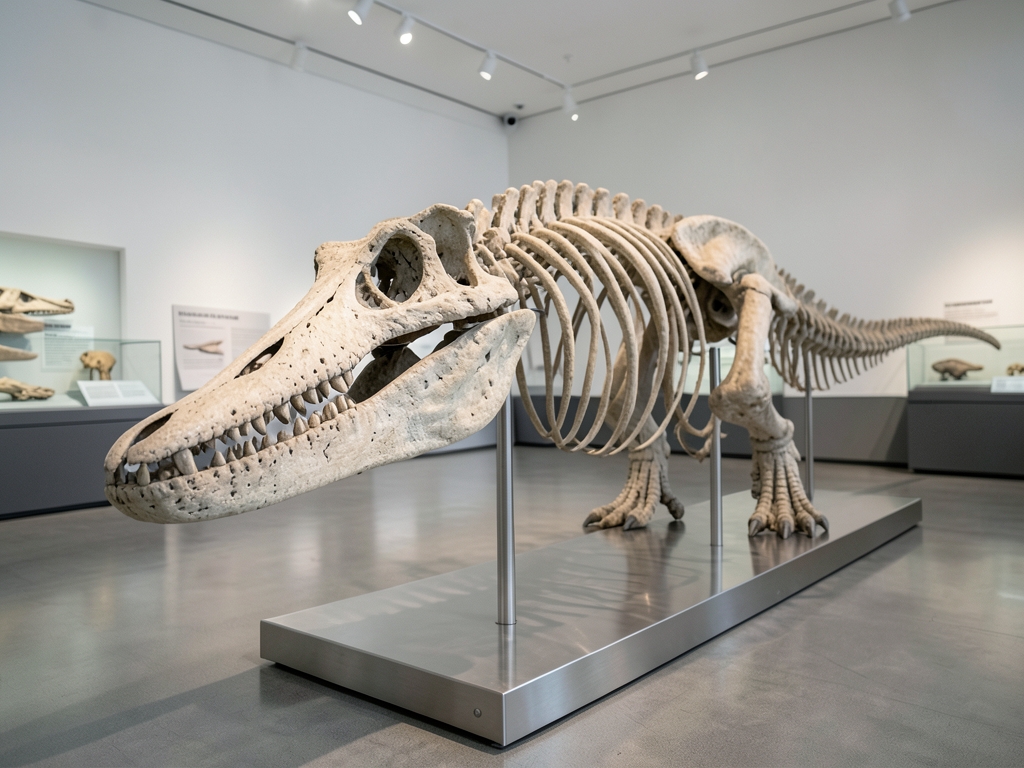
Palaeontology has once again captured public imagination with the unveiling of a remarkably well-preserved, 10-metre ichthyosaur specimen discovered on a secluded beach in Dorset. Researchers from Bristol have meticulously analyzed the remains, estimating that this formidable Jurassic marine reptile lived approximately 174 million years ago. The discovery not only adds a magnificent specimen to the global fossil record but also offers profound insights into the marine ecosystems that dominated ancient European seas during the Middle Jurassic period. As the specimen goes on public display, scientists are sharing details about its excavation, anatomical features, and the broader implications for understanding prehistoric marine life.
The Accidental Discovery on a Secret Dorset Coastline
The journey of this ancient predator from a hidden coastal grave to a museum showcase is a testament to meticulous fieldwork and persistence. Discovered on a clandestine stretch of the Dorset coastline—a region internationally renowned for its fossil-rich Jurassic cliffs—the remains required delicate extraction techniques to prevent structural damage. Coastal erosion continually exposes ancient strata along these shores, but unearthing a complete or nearly complete skeleton of such monumental proportions is an extraordinary event.
Local fossil hunters and academic researchers collaborated closely to secure the bones before tidal action could destroy them. The environment of the secret beach presented unique logistical challenges, demanding that heavy excavation equipment be brought in carefully or that sections be manually lifted by teams of specialists. Once transported to university laboratories, the cleaning and preparation phase took months of painstaking work, removing stubborn matrix rock from the delicate fossilized bone without compromising its integrity.
Anatomy and Scale of a Jurassic Apex Predator
Measuring an impressive 10 metres in length, this ichthyosaur was among the largest predators cruising the ancient seas of what is now the United Kingdom. Ichthyosaurs superficially resembled modern dolphins or fish in body shape due to convergent evolution, but they were actually specialized marine reptiles that thrived for millions of years before disappearing well before the end of the dinosaur era.
The Bristol research team's analysis of the skull, ribcage, and vertebral column reveals several distinct evolutionary adaptations:
- Enormous Eyes: Like other ichthyosaurs, this specimen possesses massive eye sockets designed to support sclerotic rings, allowing the animal to hunt effectively in deep or murky waters where light was scarce.
- Streamlined Hydrodynamics: The elongated snout and rigid spinal structure indicate an animal built for high-speed pursuit of fast-moving prey such as ancient squid and primitive fish.
- Robust Bone Density: Detailed cross-sectional scans of the skeletal elements provide clues about the creature's growth rates, metabolism, and diving capabilities in the prehistoric ocean.
Comparing this specimen with other known finds across Europe helps palaeontologists map out the geographic distribution and ecological dominance of these apex predators during the Toarcian age of the Jurassic period.
Dorset's Jurassic Coast: A Window Into Deep Time
The Dorset coastline is part of the famous Jurassic Coast World Heritage Site, a geological treasure trove spanning 185 million years of Earth history. The rocks exposed along these cliffs tell a dynamic story of changing sea levels, shifting continents, and fluctuating climates. During the time when this 10-metre ichthyosaur swam, the region was covered by a warm, shallow tropical sea teeming with marine life, ranging from microscopic plankton to giant ammonites and massive swimming reptiles.
Palaeontologists emphasize that every new fossil find from this area acts as a crucial data point for reconstructing ancient food webs. By studying how apex predators interacted with their environment 174 million years ago, scientists gain a better perspective on marine biodiversity dynamics over evolutionary timescales. The preservation quality in Dorset remains exceptionally high because the low-oxygen conditions on the ancient seafloor often prevented scavengers from scattering carcasses before they were safely buried in fine sediment.
Implications for Modern Palaeontological Research
The arrival of the ichthyosaur on public display marks the culmination of rigorous scientific scrutiny, but research into the specimen is far from over. Modern analytical tools—including CT scanning, high-resolution digital modeling, and chemical analysis of tooth enamel—allow scientists to ask questions that were unimaginable decades ago. Researchers can now reconstruct internal ear structures to understand balance, analyse isotopic signatures in bone to determine migratory habits, and model swimming mechanics using advanced fluid dynamics software.
The integration of advanced digital scanning with traditional fossil preparation is transforming how palaeontologists study ancient marine reptiles, turning solid stone into detailed biological data.
Furthermore, sharing these findings with the wider scientific community ensures that the Dorset specimen contributes to global studies on marine reptile evolution. As museums increasingly adopt hybrid physical and digital exhibits, visitors can appreciate not only the sheer scale of the skeleton but also the intricate scientific detective work required to understand its life and death.
How old is the newly displayed ichthyosaur specimen?
Researchers from Bristol estimate that the Jurassic marine reptile is approximately 174 million years old, placing it firmly within the Jurassic period.
Where was the fossil discovered?
The 10-metre specimen was discovered on a secret beach along the fossil-rich coast of Dorset, United Kingdom, known for its extensive Jurassic geological formations.
What did ichthyosaurs look like while they were alive?
Ichthyosaurs were marine reptiles that bore a striking physical resemblance to modern dolphins and fish, featuring streamlined bodies, powerful flippers, and large eyes adapted for hunting in aquatic environments.
Where can the public view the new ichthyosaur exhibit?
The fossil has gone on public display following extensive preparation by researchers, allowing visitors to examine the mounted 10-metre skeleton and learn about its historical significance.
Conclusion
The unveiling of the 10-metre Dorset ichthyosaur highlights the enduring allure of palaeontology and the vital importance of preserving our geological heritage. By bridging historical discovery with cutting-edge scientific analysis, researchers continue to unlock the secrets of ancient oceans. This magnificent marine reptile stands as a powerful reminder of the rich, complex history preserved beneath our feet, offering both experts and the general public a breathtaking glimpse into a prehistoric world that vanished millions of years ago.
