

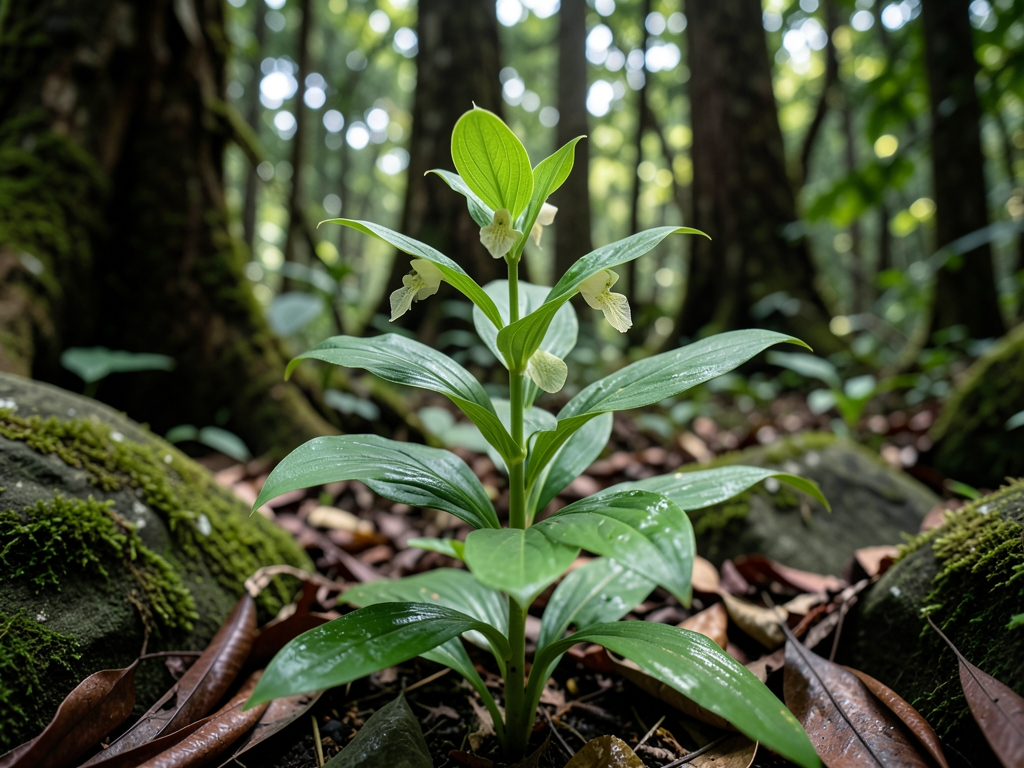
Botanical exploration in the biodiverse landscapes of Northeast India has once again yielded extraordinary findings. Researchers have officially documented two new plant species belonging to the genus Ophiorrhiza in the northeastern state of Arunachal Pradesh. This remarkable discovery underscores the region's status as a critical global biodiversity hotspot while offering fresh insights into the complex ecological dynamics that govern understory plant life in eastern Himalayan forests.
The genus Ophiorrhiza, widely known for its diverse medicinal properties and ecological adaptability, continues to fascinate botanists worldwide. With numerous species distributed across tropical and subtropical regions of Asia, identifying and classifying new members of this genus requires rigorous field surveys, morphological examination, and phylogenetic analysis. The recent finds in Arunachal Pradesh add valuable data to regional flora inventories and emphasize the urgent need for sustained conservation efforts in increasingly vulnerable forest ecosystems.
Understanding the Genus Ophiorrhiza and Its Ecological Role
Plants belonging to the genus Ophiorrhiza typically thrive in damp, shaded understories of tropical and subtropical forests. They are perennial herbs characterized by opposite leaves, stipules between the leaf stalks, and small, tubular flowers often arranged in terminal clusters. One of the most notable features of several species within this genus is the presence of camptothecin, a potent alkaloid with significant anti-cancer properties. Consequently, every new botanical addition to Ophiorrhiza attracts considerable interest from both taxonomists and pharmacological researchers.
Ecologically, these understory plants play a vital role in maintaining the structural integrity and nutrient cycling of forest floors. As components of the dense herbaceous layer, they help stabilize topsoil against heavy monsoon rains, reduce surface runoff, and provide microhabitats for numerous microorganisms and small invertebrates. Documenting their exact distribution helps scientists understand how specialized understory flora responds to local climatic variations, habitat fragmentation, and broader environmental pressures.
The Discovery in Arunachal Pradesh: Fieldwork and Methodology
The discovery of the two new species was the result of extensive botanical expeditions conducted across remote forest tracts in Arunachal Pradesh. Field researchers navigated challenging terrain, unpredictable weather conditions, and dense vegetation to locate, photograph, and collect voucher specimens for detailed laboratory analysis. Discovering novel plant taxa demands meticulous comparison with existing herbarium specimens, historical literature, and digital taxonomic databases to ensure that the newly found populations do not match previously described species.
During their fieldwork, botanists evaluate multiple morphological parameters, including leaf shape, floral structure, hairiness of stems and leaves, seed morphology, and color variations. Once physical samples are safely transported to research facilities, microscopic examinations and molecular barcoding techniques are applied. This multi-layered verification process confirms whether the morphological differences observed in the field represent distinct genetic lineages worthy of classification as entirely new species.
The discovery of previously unknown plant species in the Himalayas highlights how much of the region's biological wealth remains undocumented, making robust field research and taxonomy more vital than ever.
Naming Conventions and Cultural Recognition
Plant nomenclature follows strict international codes governed by the International Code of Nomenclature for algae, fungi, and plants. When researchers identify a new species, they have the privilege of proposing scientific names that often reflect geographical locations, prominent ecological traits, or notable individuals. In the case of these recent Arunachal discoveries, one of the newly documented species was named in honor of Pema Khandu, the Chief Minister of Arunachal Pradesh, acknowledging administrative support for regional conservation initiatives and scientific exploration.
Naming a newly discovered plant after a public figure or local landmark can significantly raise public awareness regarding biodiversity conservation. It bridges the gap between scientific institutions and local communities, fostering a shared sense of pride in regional natural heritage. Furthermore, such recognition often encourages increased local participation in forest protection programs, habitat monitoring, and sustainable land-use planning.
Info! Official plant descriptions are published in peer-reviewed botanical journals only after exhaustive peer review, ensuring that every newly introduced scientific name adheres to rigorous global standards.
Biodiversity Significance of Arunachal Pradesh
Arunachal Pradesh occupies a unique geographical position at the confluence of the Indo-Malayan, Palaearctic, and Sino-Himalayan biogeographic realms. This convergence creates a remarkable array of microclimates, ranging from subtropical valley floors to alpine meadows. Such diverse topography supports an astonishing variety of flora and fauna, many of which are endemic and found nowhere else on Earth.
Botanists have long recognized Arunachal Pradesh as a treasure trove of plant diversity, harboring thousands of flowering plant species, ferns, orchids, and medicinal herbs. However, this rich biodiversity faces mounting challenges from infrastructure development, shifting agricultural practices, timber extraction, and changing precipitation patterns driven by global climate shifts. Documenting new species like the recent Ophiorrhiza additions provides the baseline data necessary for establishing protected areas and formulating effective conservation strategies.
Conservation Challenges and Future Research Directions
Protecting newly discovered plant species requires proactive management strategies that extend beyond traditional protected areas. Many understory herbs are highly sensitive to microclimatic changes, soil disturbance, and the introduction of invasive plant species. When a forest canopy is fragmented or degraded, the increased exposure to sunlight and wind can drastically alter the damp, shaded microhabitats that Ophiorrhiza species require for survival.
Future research in the region will likely focus on mapping the precise population distribution of the newly discovered plants, assessing their conservation status according to International Union for Conservation of Nature (IUCN) criteria, and investigating their chemical constituents for potential pharmacological applications. Collaborative efforts involving academic institutions, state forest departments, and local indigenous communities will be essential to ensure these delicate plants persist in their natural habitats for generations to come.
What genus do the newly discovered plants belong to?
The newly discovered plants belong to the genus Ophiorrhiza, a diverse group of perennial herbs known for thriving in shaded forest understories and containing medically significant compounds.
Where were these new plant species found?
These new plant species were discovered in the remote forest tracts of Arunachal Pradesh, located in the northeastern region of India.
Why is the discovery of new plant species important for conservation?
Discovering new plant species helps establish baseline biodiversity data, highlights vulnerable ecosystems, and guides governments and conservationists in protecting critical habitats from degradation.
How do scientists confirm a newly discovered plant species?
Scientists confirm new plant species through rigorous field collection, detailed morphological examination under microscopes, comparison with existing herbarium records, and molecular DNA barcoding techniques.
The documentation of two new Ophiorrhiza species in Arunachal Pradesh serves as a powerful reminder of the intricate life forms still awaiting discovery in our planet's remaining wild spaces. As scientific methods improve and exploration continues, each new finding deepens our understanding of evolutionary biology and reinforces the imperative to safeguard the fragile ecosystems that sustain global biodiversity.
