

The limits of biological endurance have long fascinated microbiologists, astrobiologists, and geoscientists studying the extreme environments of our planet. When researchers retrieve ancient organic matter from deep within frozen geological formations, they open a rare window into prehistoric ecosystems that existed tens of thousands of years ago. A striking recent experiment involving microbial samples recovered from an excavation tunnel in Alaska has once again pushed the boundaries of what scientists understand about cellular dormancy, long-term cryopreservation, and the remarkable resilience of life in extreme cold.
Permafrost environments act as vast natural freezers, locking away organic compounds, plant fragments, and microscopic life forms for millennia. Within these frozen matrixes, metabolic activity slows down to an almost undetectable whisper. Cellular repair mechanisms stall, and organisms enter a state of profound cryptobiosis. Yet, as researchers continue to extract core samples and analyze subsurface environments, questions persist regarding how long single-celled organisms can endure absolute dormancy without losing the capacity to revive when conditions finally ameliorate.
The Mechanics of Subsurface Cryopreservation in Permafrost
Permafrost covers a significant portion of the Northern Hemisphere, maintaining sub-zero temperatures throughout the year and preserving a historical archive of climatic shifts. The physical conditions inside these deep tunnels are remarkably stable, characterized by perpetual darkness, high pressure, and minimal moisture fluctuations. For microscopic organisms trapped within sediment layers during ancient glacial advances, these conditions can persist uninterrupted for millennia.
Info! Cryopreservation in natural permafrost does not mean cells remain entirely active; rather, internal molecular structures enter a glass-like state where chemical degradation is drastically reduced over geological timescales.
When scientists drill into ancient permafrost to extract samples, maintaining sterile protocols is paramount to prevent modern surface contamination. Specialized coring equipment and clean-room environments ensure that any microbial growth observed later can be definitively traced back to the ancient geological strata. Once samples are brought back to temperature-controlled laboratories, researchers face the delicate task of controlled thawing and nutrient introduction to test whether dormant cells can resume metabolic functions.
Observations Following the Controlled Thaw
In the documented study involving samples retrieved from an Alaskan research tunnel, microbes that had remained locked in ice for up to 40,000 years were subjected to controlled laboratory warming. Initially, the samples appeared inert, consistent with long-term freezing. However, as weeks and months passed under observation, researchers noted significant changes in certain microbial cultures.
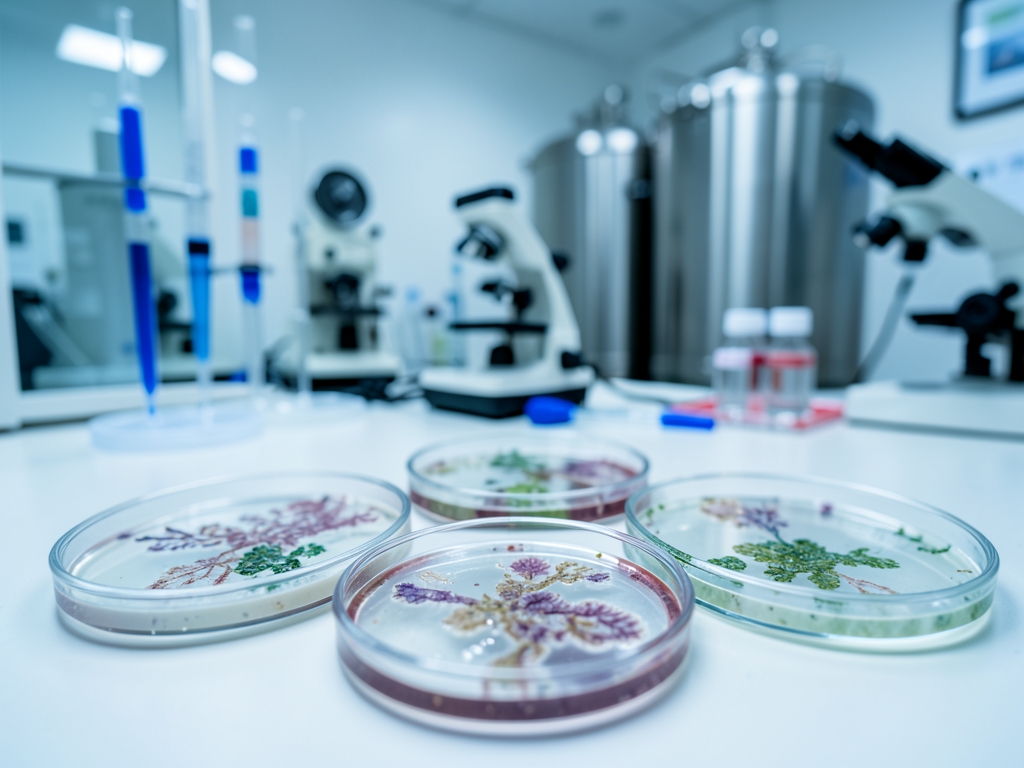
Six months after the initial thaw, specific strains of bacteria had successfully multiplied and formed visible, slimy colonies on nutrient media. This physical manifestation of growth provided tangible proof that the cells had not merely survived the structural stresses of prolonged freezing, but retained the genetic and metabolic machinery necessary to synthesize new cellular components, divide, and colonize their environment.
The ability of ancient microorganisms to transition from multi-millennial dormancy to active colonial growth highlights the profound adaptability of life under extreme environmental pressures.
Implications for Astrobiology and Planetary Protection
The survival and subsequent colonial development of permafrost microbes carry implications that extend far beyond Earth's polar regions. Astrobiologists studying the icy moons of the outer solar system, such as Europa and Enceladus, or analyzing subsurface Martian ice, look to terrestrial extremophiles as analogues for potential extraterrestrial life.
If single-celled organisms can withstand tens of thousands of years in sub-zero geological traps and subsequently revive, similar mechanisms might allow microbial life to persist in extraterrestrial ice deposits. This possibility underscores the importance of strict planetary protection protocols during interplanetary exploration missions, ensuring that spacecraft are thoroughly sterilized to prevent cross-contamination between Earth and potentially habitable alien environments.
| Parameter | Observation Details | Scientific Significance |
|---|---|---|
| Sample Age | Up to 40,000 years | Establishes long-term survival timelines in natural permafrost. |
| Environment | Alaska permafrost tunnel | Provides stable, sub-zero geological preservation conditions. |
| Post-Thaw Result | Slimy colony formation | Demonstrates active cellular division and metabolic recovery. |
| Broader Impact | Astrobiological analogues | Informs search strategies for resilient life forms in icy worlds. |
Challenges in Analyzing Ancient Microbial Genomes
Recovering viable organisms from ancient ice is only the first step in a complex scientific workflow. Researchers must also sequence and analyze the genomes of these revived microbes to understand how their cellular machinery resisted damage from background radiation and chemical degradation over forty millennia.
DNA naturally degrades over time due to hydrolysis and oxidation. The fact that certain microbes retain intact, functional genomes after tens of thousands of years suggests the presence of highly efficient DNA repair enzymes or unique cellular protective agents that prevent widespread genetic fragmentation. Uncovering these natural preservation methods could yield valuable applications in biotechnology, medicine, and long-term biological storage techniques.
- Extract sterile core samples from deep subsurface permafrost formations.
- Transport samples under strict cryogenic conditions to prevent premature thawing.
- Perform controlled laboratory thawing in sterile isolation chambers.
- Introduce specialized nutrient media to encourage metabolic reactivation.
- Monitor cellular division and sequence recovered genomes for analysis.
Broader Environmental Context and Climate Feedbacks
As global temperatures rise and permafrost layers begin to thaw naturally across the Arctic, the release of ancient organic matter and dormant microorganisms becomes an increasingly critical area of study. While laboratory experiments involve controlled thawing of isolated samples, natural permafrost degradation introduces millions of tons of ancient organic carbon and dormant microbes back into active ecological cycles.
Understanding how these ancient microbes interact with modern ecosystems helps scientists model potential carbon feedback loops. When previously frozen organic matter is consumed by revived or modern microorganisms, it can accelerate the release of greenhouse gases such as carbon dioxide and methane into the atmosphere. Consequently, research into permafrost microbiology bridges the gap between evolutionary biology and contemporary climate science.
How long were the Alaska tunnel microbes frozen before thawing?
The microbes analyzed in the study were estimated to have been frozen within the permafrost for up to 40,000 years.
When did the microbes begin forming visible colonies?
After being subjected to controlled laboratory thawing and nutrient introduction, some of the surviving microbes formed visible, slimy colonies approximately six months later.
Why is this research important for astrobiology?
It demonstrates that microbial life can endure prolonged dormancy in extreme cold, offering terrestrial models for how life might survive in subsurface ice on other planets or moons.
What risks are associated with natural permafrost thaw?
Natural thawing releases ancient organic matter and dormant microbes into modern ecosystems, potentially accelerating carbon release and influencing global climate feedback loops.
The revival of ancient microbes from Alaskan permafrost tunnels highlights the astonishing resilience of cellular life. By continuing to examine how organisms endure extended periods of cryptobiosis, scientists gain deeper insights into the fundamental limits of biology, the history of Earth's biosphere, and the potential for life to persist in extreme environments across the universe.
