

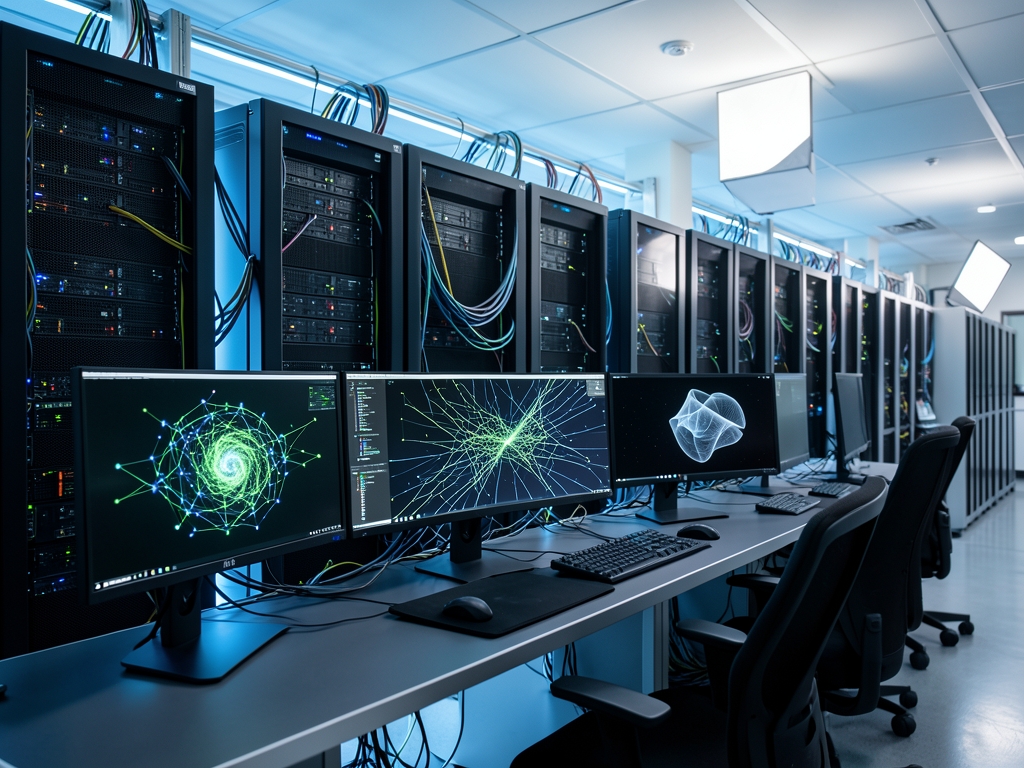
The artificial intelligence landscape has reached a monumental turning point with the formal closure of Advanced Micro Devices' multi-billion-dollar acquisition of World Labs. Valued at an extraordinary $8.2 billion, this strategic corporate transaction represents one of the most significant structural alignments between high-performance silicon engineering and spatial intelligence research in recent history. Alongside the finalisation of the acquisition, the corporate leadership structure has undergone a high-profile transformation, officially welcoming renowned computer scientist Dr. Fei-Fei Li into the role of Chief Scientist. This integration combines World Labs' pioneering advancements in world models with AMD's robust hardware ecosystem, setting a new trajectory for how artificial intelligence interprets, interacts with, and simulates three-dimensional environments.
Strategic Context of the $8.2 Billion Acquisition
The decision by AMD to absorb World Labs underscores an escalating industry-wide race to bridge the gap between traditional data processing and advanced spatial reasoning. For years, major technology enterprises have concentrated their investments heavily on large language models and text-to-text generation capabilities. However, the next frontier of artificial intelligence demands systems that possess a fundamental understanding of physical space, object permanence, physics, and real-world dynamics. World Labs emerged as a premier innovator in this exact domain, focusing on foundational world models capable of processing visual sensory data to construct interactive, multi-dimensional virtual environments.
By securing this acquisition, AMD positions itself directly at the vanguard of physical AI and spatial computing infrastructure. The integration aligns seamlessly with the company's broader hardware roadmap, which increasingly emphasizes high-throughput accelerators, high-bandwidth memory architectures, and scalable data center solutions. Industry analysts note that while designing powerful processors remains vital, the software and model architectures running atop those silicon platforms dictate long-term market dominance. Acquiring World Labs provides AMD with proprietary intellectual property and world-class research talent that can optimize future generations of enterprise hardware specifically for complex spatial workloads.
The convergence of high-performance silicon engineering and advanced spatial intelligence models marks a fundamental shift in how enterprise computing hardware will be architected, deployed, and scaled for complex physical AI applications.
Dr. Fei-Fei Li Assumes the Role of Chief Scientist
A pivotal element of the transaction is the appointment of Dr. Fei-Fei Li as Chief Scientist. Widely celebrated throughout the global scientific community for her foundational contributions to computer vision and deep learning—most notably as the architect behind ImageNet—Dr. Li brings decades of visionary academic and practical expertise to AMD. Her leadership at World Labs established the enterprise as a trailblazer in spatial intelligence, shifting machine learning paradigms beyond simple pattern recognition toward deep, intuitive comprehension of physical environments.
In her new capacity, Dr. Li will steer the overarching scientific vision for spatial intelligence research within AMD, bridging theoretical model development with silicon-level execution. Her involvement is expected to accelerate the creation of hardware-software co-designs that can process massive volumetric datasets efficiently. This leadership appointment signals to the broader technology sector that AMD is deeply committed to foundational research integrity, ensuring that its hardware innovations remain tightly synchronized with the most advanced developments in artificial intelligence algorithms.
Implications for AI Compute Architecture and Hardware Engineering
Processing spatial intelligence models imposes unprecedented demands on underlying computing hardware. Unlike traditional language models that primarily process sequential token streams, spatial models require continuous interpretation of multi-dimensional visual inputs, real-time physics calculations, and volumetric rendering. These computational workloads create severe memory bottlenecks and necessitate specialized execution units capable of handling massive parallel data streams without latency degradation.
Info! Spatial intelligence models require specialized hardware architectures capable of processing volumetric data streams and real-time physical simulations efficiently.
AMD's hardware engineering teams are already examining how upcoming processor architectures can be tailored to support these demanding workflows. The synergy between World Labs' model algorithms and AMD's Instinct accelerators, alongside advanced memory packaging technologies, provides a formidable foundation for enterprise data centers. Organizations deploying local and cloud-based AI infrastructure will likely benefit from improved inference speeds, reduced power consumption, and enhanced capability to run complex simulations natively on silicon optimized for spatial workloads.
Global Industry Impact and Competitive Dynamics
The completion of the World Labs deal intensifies competition across the global semiconductor and artificial intelligence sectors. As enterprises increasingly demand infrastructure capable of supporting embodied AI, robotics, autonomous systems, and industrial simulation, traditional hardware suppliers face mounting pressure to deliver holistic solutions. By uniting advanced silicon manufacturing capabilities with cutting-edge spatial modeling expertise, AMD has established a differentiated competitive advantage against rival firms.
Market observers suggest this transaction could trigger a wave of similar strategic consolidations. Smaller, highly specialized AI research laboratories may seek deep integration with major hardware manufacturers to secure the immense computational power required to train increasingly complex models. Meanwhile, enterprise customers stand to gain access to more cohesive, end-to-end ecosystems where AI models and processor architectures are co-developed from the ground up to maximize performance and minimize operational friction.
Practical Considerations for Enterprise AI Deployment
Organizations evaluating their long-term AI infrastructure strategies must account for the rapid evolution of spatial computing workloads. As foundational world models become standard components of enterprise automation, robotics, and digital twin environments, IT decision-makers should prioritize hardware platforms that offer native support for high-throughput visual and spatial data processing.
- Audit existing enterprise infrastructure to identify potential bottlenecks in processing volumetric or visual AI workloads.
- Monitor upcoming hardware releases and architectural specifications optimized for spatial intelligence and real-time simulation.
- Engage with technology partners to understand roadmap alignment between emerging AI models and enterprise silicon capabilities.
- Develop internal competencies in managing and deploying spatial AI applications for industrial, commercial, or research use cases.
| Aspect | Details | Enterprise Impact |
|---|---|---|
| Transaction Value | $8.2 Billion | Major capital commitment to spatial AI leadership |
| Key Leadership | Dr. Fei-Fei Li (Chief Scientist) | Direct guidance on foundational research and model architecture |
| Core Technology | Spatial Intelligence and World Models | Enhanced capability for physical AI and 3D environment simulation |
| Hardware Synergy | AMD Accelerators and Silicon Ecosystem | Optimized performance for compute-heavy volumetric workloads |
Frequently Asked Questions
What was the total financial value of the AMD and World Labs transaction?
The transaction was valued at $8.2 billion, making it one of the most substantial strategic acquisitions connecting semiconductor hardware engineering with artificial intelligence research.
What role has Dr. Fei-Fei Li assumed following the acquisition?
Dr. Fei-Fei Li has officially assumed the role of Chief Scientist, where she will direct the scientific vision for spatial intelligence research and model architecture within AMD.
How does spatial intelligence differ from traditional language models?
While traditional language models primarily process sequential text tokens, spatial intelligence models focus on understanding physical environments, object permanence, physics, and multi-dimensional visual data to construct interactive virtual representations.
What are the primary implications of this deal for enterprise computing hardware?
The acquisition accelerates hardware-software co-design, enabling future AMD processor architectures to be specifically optimized for the intense computational and memory demands of spatial AI and volumetric simulation workloads.
Conclusion
The successful closure of AMD's acquisition of World Labs and the appointment of Dr. Fei-Fei Li as Chief Scientist mark a transformative milestone for the technology industry. By harmonizing advanced spatial intelligence models with high-performance silicon engineering, AMD has positioned itself at the forefront of the physical AI revolution. As enterprises increasingly adopt spatial computing, robotics, and complex simulation environments, this strategic union provides the robust architectural foundation necessary to power the next generation of intelligent systems.
