

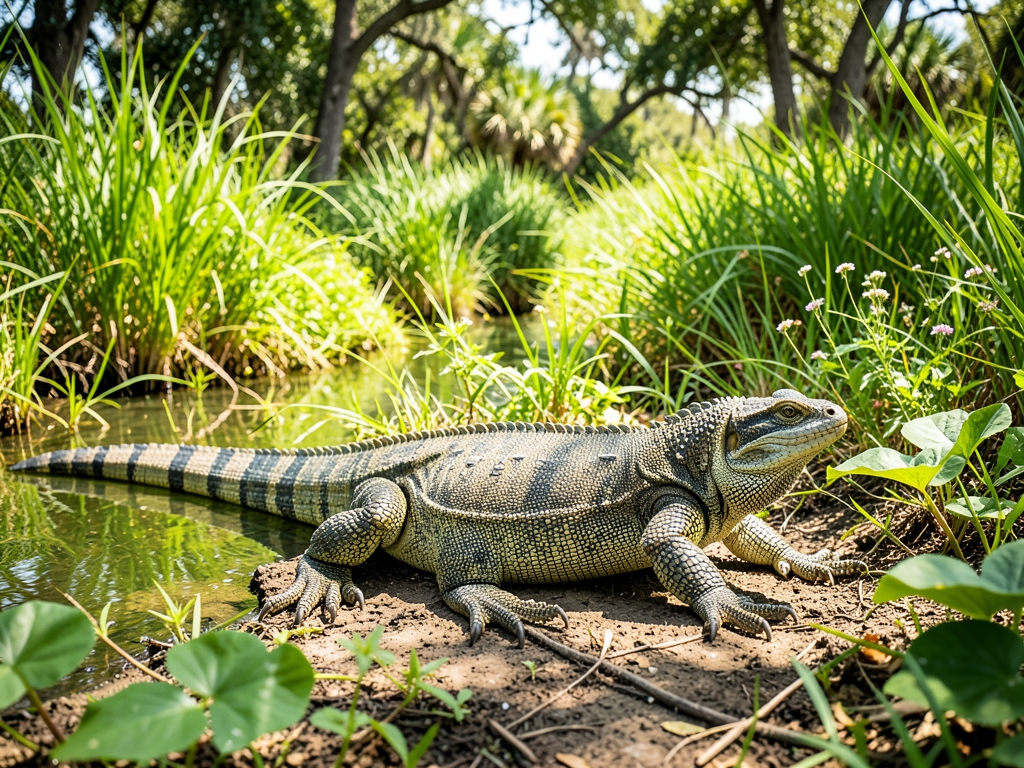
Environmental authorities and wildlife conservationists in South Florida are confronting a mounting ecological crisis as populations of giant lizards expand across local wetlands, suburban canals, and protected natural habitats. Capable of reaching lengths of up to six feet, these formidable reptiles have established thriving breeding populations far beyond their native ranges, putting intense pressure on indigenous wildlife, native fauna, and delicate regional ecosystems. Understanding the drivers behind this biological invasion requires a close examination of how these apex predators adapt to new environments, the specific vulnerabilities of South Florida’s landscapes, and the long-term management strategies required to mitigate further ecological damage.
The arrival and subsequent proliferation of large exotic reptiles in the American Southeast are primarily driven by the international pet trade and subsequent accidental or intentional releases. Over past decades, individuals kept as exotic pets were either released by owners unable to care for their immense size and dietary needs or escaped during severe weather events that compromised outdoor enclosures. Because South Florida features a subtropical climate characterized by warm temperatures, high humidity, and abundant food sources, these reptiles found an ideal surrogate habitat. Without significant natural predators in the region, populations have grown steadily, transforming what was once an isolated exotic pet issue into a widespread conservation emergency.
Ecological Impacts on Native Species and Biodiversity
The introduction of a massive, opportunistic predator into any ecosystem triggers profound cascading effects throughout the local food web. Giant lizards are opportunistic carnivores and generalist feeders, meaning they consume a wide variety of prey including small mammals, wading birds, amphibians, fish, and the eggs of ground-nesting animals. In South Florida, where numerous endemic and threatened species already struggle against habitat loss and urban encroachment, the addition of a heavy-bodied predator accelerates population declines.
Ground-nesting birds, such as various species of rails, herons, and egrets, face immediate threats as these reptiles systematically raid nests for eggs and nestlings. Furthermore, small mammals including marsh rabbits and native rodents experience severe predation pressure, which in turn diminishes the primary food base for native apex predators like the American alligator and the Florida panther. Although mature alligators occasionally prey upon smaller invading reptiles, large monitor-style lizards frequently outcompete native wildlife for basking sites, shelter, and seasonal food resources, shifting the balance of ecological dominance in vulnerable wetlands.
The rapid expansion of large non-native reptiles underscores the fragility of subtropical ecosystems when confronted with opportunistic predators lacking population checks.
Beyond direct predation, these invasive reptiles pose indirect threats through the potential transmission of parasites and pathogens. As exotic species interact with native fauna around shared water sources and feeding grounds, novel pathogens can cross species barriers. Conservation biologists emphasize that even when a native species is not directly consumed by the invader, the chronic physiological stress induced by continuous predator pressure can lower reproductive success and immune competence across entire animal communities.
Habitat Preferences and Behavioral Adaptations
South Florida’s intricate network of freshwater canals, drainage ditches, and levee systems provides an unexpected superhighway for invasive wildlife. These artificial waterways mimic natural riverine environments while offering abundant basking opportunities on concrete banks and easy access to suburban backyards rich in domestic pets, garbage, and ornamental landscaping.
Info! Urban and agricultural canals serve as primary dispersal corridors, enabling invasive reptiles to travel vast distances across county lines undetected.
During cooler winter months, these cold-blooded creatures utilize subterranean burrows, drainage pipes, and stump holes to regulate their body temperature. Their ability to excavate extensive underground burrows not only protects them from seasonal temperature drops but also destabilizes canal banks, compromises flood control infrastructure, and alters the physical structure of local wetlands. This capacity for structural modification sets them apart from smaller invasive species, making habitat reclamation significantly more challenging for municipal and environmental engineers.
Management, Control, and Eradication Challenges
Controlling large, highly adaptable reptile populations presents formidable logistical hurdles for wildlife agencies. Traditional trapping methods often yield inconsistent results because these animals are exceptionally wary, possess acute vision, and inhabit vast, inaccessible wetland tracts. Consequently, wildlife management agencies rely on integrated pest management strategies that combine public reporting, targeted removal by professional handlers, and continuous habitat monitoring.
Public education plays a critical role in slowing the introduction of new individuals into the wild. State and federal agencies continually emphasize strict regulations prohibiting the release of exotic pets, alongside amnesty programs that allow owners to surrender unwanted animals without penalty. However, because established populations are already self-sustaining, removal efforts must focus on containment and population suppression rather than total eradication, which remains exceptionally difficult once an invasive species gains a permanent foothold.
| Management Strategy | Primary Objective | Implementation Challenge |
|---|---|---|
| Targeted Trapping | Remove adult breeding individuals | High wariness and vast terrain |
| Public Reporting Networks | Early detection in new areas | Misidentification by citizens |
| Habitat Modification | Limit basking and nesting sites | Interference with flood control structures |
| Pet Amnesty Programs | Prevent new illegal releases | Reaching unverified exotic pet owners |
The Broader Implications for Global Conservation
The South Florida invasion serves as a sobering case study for global biodiversity conservation in an era of heightened international trade and changing climatic norms. As international commerce transports species across natural biogeographical barriers, regions with warm climates remain acutely vulnerable to biological invasions. Protecting regional ecosystems requires proactive biosecurity measures, rigorous import restrictions, and rapid response protocols capable of neutralizing invasive threats before they achieve critical population mass.
Ultimately, safeguarding South Florida’s unique natural heritage depends on sustained collaboration between academic researchers, government agencies, and local communities. By combining advanced ecological monitoring techniques with persistent field removal operations, conservationists strive to preserve the remaining strongholds for native wildlife and restore ecological equilibrium to the Everglades and surrounding watersheds.
What species of giant lizard is currently invading South Florida?
Several large lizard species, including monitor lizards and large tegus, have established wild populations in South Florida, primarily originating from the exotic pet trade.
How do these giant lizards impact native Florida wildlife?
They pose a severe threat through direct predation on ground-nesting birds, small mammals, and native eggs, while also competing with native species for food and shelter.
Why are South Florida's canals a factor in the invasion?
The extensive network of artificial canals and drainage ditches provides warm water, abundant food sources, and travel corridors that allow the reptiles to spread rapidly across counties.
What is being done to control the spread of these invasive reptiles?
Wildlife agencies utilize targeted trapping, professional removal teams, public reporting hotlines, and pet amnesty programs to manage and suppress established populations.
Addressing the ecological disruption caused by large invasive reptiles demands ongoing vigilance and dedicated resources. As conservation science continues to refine removal and containment techniques, public awareness and responsible pet ownership remain frontline defenses in preventing future biological invasions from compromising regional ecosystems.
