

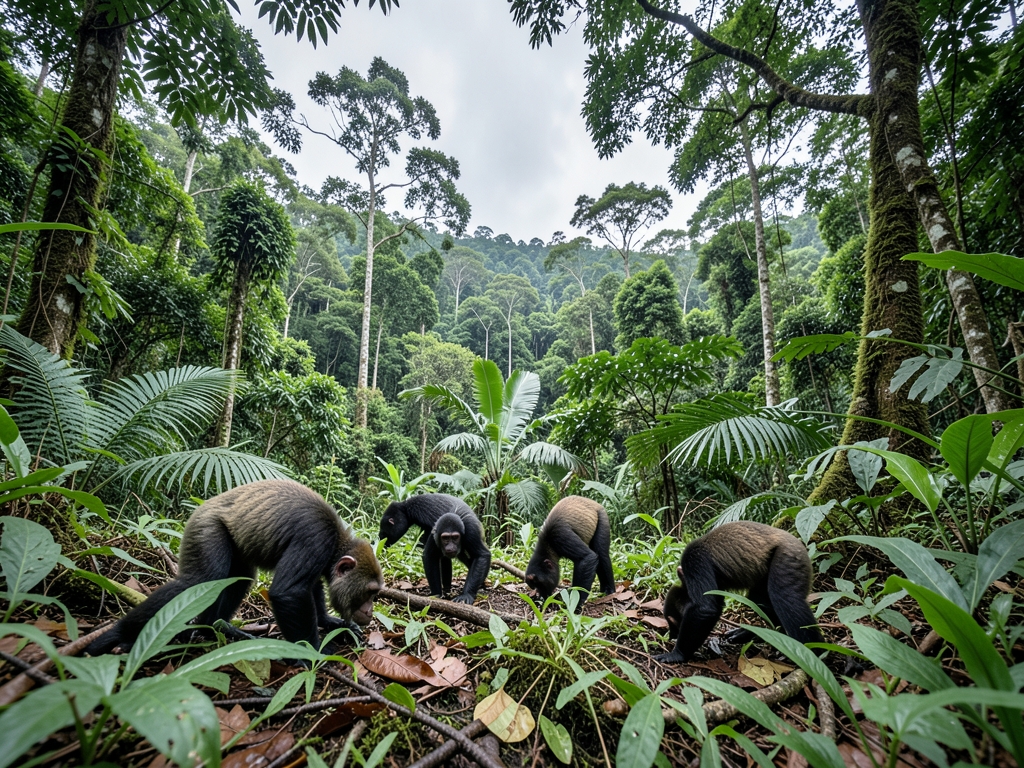
Recent scientific investigations into the physiological health of vulnerable wildlife populations have shed light on an insidious, often overlooked consequence of environmental degradation. While visible deforestation, shrinking territory boundaries, and population fragmentation remain the most prominent metrics of ecological crisis, a new study led by researchers at Northwestern University demonstrates that habitat loss inflicts profound internal damage on endangered primates by severely disrupting their gut microbiomes.
The intricate ecosystems residing within the digestive tracts of wild animals play a vital role in metabolism, immune function, pathogen defense, and overall physiological resilience. When human expansion, agricultural conversion, and resource extraction fracture natural landscapes, the resulting ecological stress reverberates down to the microbial level. Understanding these hidden biological tolls is becoming increasingly critical for modern conservation biologists striving to protect fragile animal populations across the globe.
The Hidden Internal Toll of Deforestation and Fragmentation
For decades, wildlife conservation strategies have primarily focused on macro-level indicators: counting breeding pairs, measuring contiguous forest cover, and tracking anti-poaching metrics. However, advanced genomic sequencing and molecular ecology techniques now allow scientists to peer inside wild animals safely and non-invasively through fecal sample analysis. These methods reveal that a diverse and stable gut microbiome is directly dependent on a varied diet, natural foraging behaviors, and minimal chronic physiological stress.
Info! The gut microbiome acts as a biological buffer, helping animals digest complex plant compounds, synthesize essential nutrients, and fend off opportunistic pathogens in competitive natural environments.
When continuous forests are fragmented into isolated patches, primate groups are frequently forced into smaller home ranges with depleted food availability and lower botanical diversity. This dietary restriction immediately starves beneficial microbial species. Furthermore, elevated stress hormones resulting from human proximity, frequent encounters with agricultural areas, and intergroup competition further alter gut chemistry, creating a hostile internal environment for beneficial bacteria.
How Habitat Degradation Restricts Dietary Diversity and Microbial Health
Wild primates in pristine, expansive habitats consume a wide array of seasonal fruits, leaves, flowers, bark, and insects. Each distinct food source introduces unique chemical compounds and microbial strains that enrich the host's digestive tract. In contrast, primates confined to degraded, human-impacted forests experience severe nutritional bottlenecks.
- Loss of Foraging Range: Reduced territory size limits access to preferred tree species and secondary food resources during lean months.
- Nutritional Monotony: Reliance on a restricted selection of plants reduces microbial richness, weakening metabolic efficiency.
- Increased Parasitic Load: Nutritional stress compromises immune competence, leaving animals more vulnerable to gastrointestinal parasites.
- Edge Effects: Proximity to human settlements introduces novel environmental stressors and potential pathogen spillover risks.
These compounded pressures lead to microbial dysbiosis—a state of microbial imbalance that diminishes an animal's ability to extract necessary calories from scarce food sources. In vulnerable populations already teetering on the brink of extinction, this internal degradation creates a vicious cycle of declining physical condition and reduced reproductive success.
Comparative Insights Across Vulnerable Primate Taxa
The recent findings build upon a growing body of comparative field research examining how different primate species respond to ecological pressures. Researchers have observed distinct patterns of microbiome simplification among lemurs, colobines, and various neotropical monkeys subjected to varying degrees of habitat fragmentation.
| Environmental Stressor | Direct Biological Impact | Long-Term Conservation Consequence |
|---|---|---|
| Forest Fragmentation | Reduced dietary plant diversity | Loss of specialized gut symbionts |
| Human Encroachment | Chronic activation of stress axes | Suppressed immune function and pathogen susceptibility |
| Edge Effects & Agriculture | Exposure to novel diets and livestock microbes | Microbial homogenization and disease transmission risks |
Interestingly, species with highly specialized folivorous diets appear to exhibit different vulnerabilities compared to omnivorous or frugivorous counterparts. While folivores rely on complex microbial fermentation chambers to break down fibrous leaves, the sudden loss of specific secondary food plants can cause catastrophic digestive failures when alternative foliage lacks the necessary chemical precursors.
Implications for Modern Wildlife Conservation Strategies
Recognizing that habitat loss alters wildlife at the microbial level fundamentally shifts how conservationists must approach species management. Preserving large, contiguous tracts of forest is no longer just about spatial area; it is about maintaining the complex ecological networks that sustain internal biological diversity.
Conserving endangered wildlife requires protecting not only the trees above the ground, but the invisible biological webs that keep every individual healthy from within.
Conservation geneticists and microbiome researchers advocate for several proactive measures to integrate microbial health into field management plans:
- Habitat Connectivity Corridors: Establishing forested bridges between isolated protected areas to allow natural dispersal and dietary mixing.
- Non-Invasive Monitoring: Utilizing fecal microbiome profiling as an early-warning biomarker to assess population stress before visible mortality occurs.
- Restoring Botanical Diversity: Planting native food trees in degraded buffer zones to naturally restore nutritional variety.
- Minimizing Anthropogenic Disturbance: Implementing strict zoning around protected reserves to reduce chronic stress from human activities.
Warning! Ignoring internal physiological markers like microbiome degradation risks missing the silent decline of animal populations until recovery becomes biologically impossible.
Frequently Asked Questions About Primate Gut Microbiomes
What is a gut microbiome and why is it important for wild primates?
The gut microbiome consists of trillions of beneficial bacteria, fungi, and other microbes living in the digestive tract. It helps primates digest tough plant matter, synthesize essential vitamins, regulate metabolism, and protect against harmful pathogens.
How does habitat loss directly affect an animal's internal bacteria?
Habitat loss restricts the variety of plants and foods available in an animal's home range. This dietary limitation, combined with the physiological stress of living in smaller, fragmented areas, starves beneficial microbes and reduces overall microbial diversity.
Can researchers study wild primate microbiomes without harming the animals?
Yes. Scientists utilize non-invasive fecal sample collection methods in the field, allowing them to extract DNA and analyze microbial communities without capturing, tranquilizing, or disturbing the animals.
What does this research mean for future conservation efforts?
This research highlights the need to protect large, connected habitats that support diverse diets and low stress levels, ensuring that endangered species maintain both their external environment and internal biological health.
Conclusion
The discovery that habitat loss inflicts a hidden toll on the gut microbiomes of endangered primates underscores the profound complexity of the natural world. Every tree lost and every forest fragmented ripples deep into the physiological foundations of wild species. By expanding conservation science to include microbial ecology, researchers and wildlife managers can develop more effective, holistic strategies to safeguard biodiversity, ensuring that vulnerable animals survive and thrive both inside and out.
