

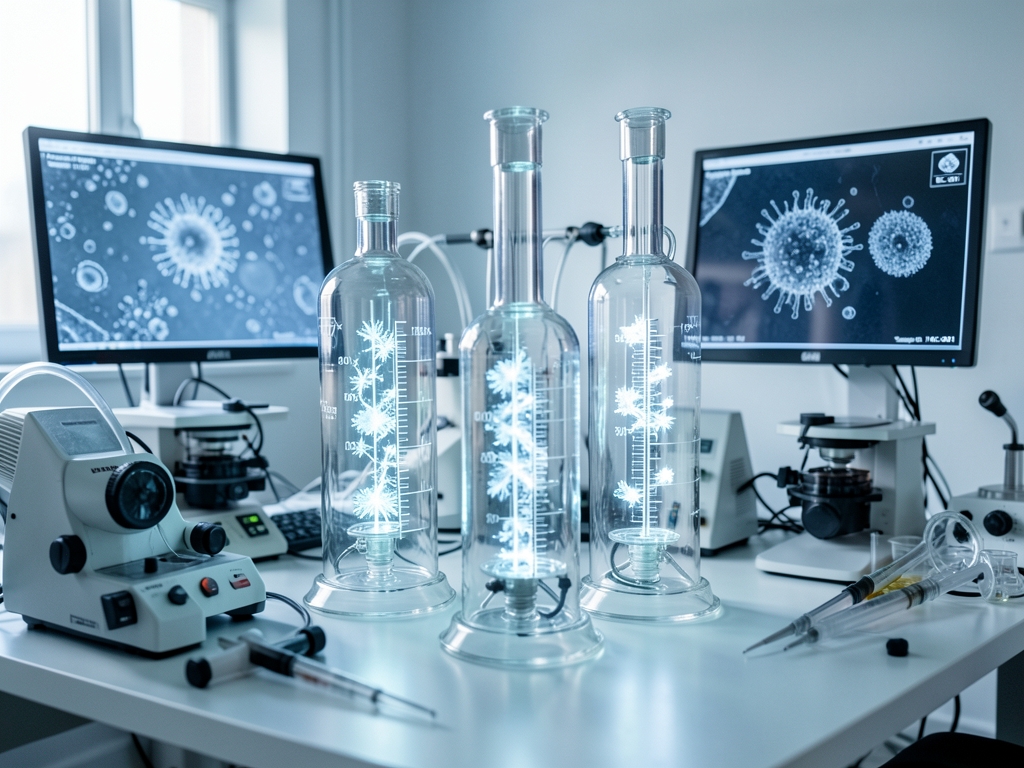
Microbiological research in extreme environments continues to reveal astonishing metabolic pathways that challenge our fundamental understanding of how life sustains itself under harsh conditions. Recent scientific investigations focusing on polar ecosystems have brought to light remarkable adaptations among extremophilic microorganisms residing in the freezing expanses of the Arctic. Among these discoveries, researchers have identified unique bacterial strains capable of utilizing volatile organic compounds—specifically acetone—as a primary resource to drive metabolic processes and synthesize essential organic molecules directly from environmental carbon. This finding not only expands our knowledge of microbial survival strategies in nutrient-deficient cryo-environments but also opens up intriguing possibilities for biotechnological applications involving carbon capture and sustainable biomanufacturing.
The Extremophilic Challenge in Polar Ecosystems
The Arctic environment presents a relentless series of physiological hurdles for living organisms. Sub-zero temperatures, intense seasonal fluctuations in solar radiation, and extremely limited availability of traditional organic nutrients create a habitat where only highly specialized life forms can thrive. For decades, microbiologists have studied how polar microorganisms manage to persist in glacial ice, permafrost, and sub-glacial marine sediments. Traditional models assumed that these communities relied almost exclusively on slow-rate organic decomposition or chemolithoautotrophic pathways driven by simple inorganic compounds.
However, recent laboratory analyses of specialized bacterial isolates recovered from high-latitude ice cores and sediment layers indicate that microbial communities possess a much wider biochemical repertoire than previously documented. These organisms have evolved specialized enzymatic machinery that allows them to scavenge trace atmospheric gases and volatile organic carbon compounds present in trace quantities within ice matrices and polar soils. The ability to harness alternative carbon and energy sources enables these bacterial populations to maintain baseline metabolic activity and cellular repair mechanisms during extended periods when primary productivity drops to near zero.
Understanding Acetone Metabolism in Arctic Microbes
At the center of these recent findings is the unexpected metabolic processing of acetone by specific psychrophilic (cold-adapted) bacterial strains. Acetone, a simple ketone commonly known as an industrial solvent, naturally occurs in trace amounts in the atmosphere through photochemical reactions and biological emissions. In temperate and tropical regions, certain soil bacteria are known to degrade organic pollutants, but the systematic utilization of acetone as a structural building block and energy source in ultra-cold environments represents a significant physiological departure.
Detailed enzymatic assays and genomic sequencing of these Arctic isolates revealed specific gene clusters encoding specialized oxygenases and carboxylase enzymes. These enzymes facilitate the initial activation of the ketone molecule, allowing the bacteria to cleave the carbon-carbon bonds safely without generating toxic cellular byproducts. Once activated, the carbon skeletons derived from acetone are systematically channeled into central metabolic pathways, including the tricarboxylic acid cycle and gluconeogenesis. Through these integrated biochemical routes, the microbes effectively transform a volatile environmental solvent into cellular biomass, effectively creating food and structural components from atmospheric and dissolved carbon sources.
The discovery of volatile organic compound metabolism in polar microorganisms highlights the astonishing biochemical versatility forged by millions of years of evolutionary pressure in extreme environments.
This metabolic agility provides a distinct survival advantage in the high Arctic, where fluctuating ice cover and nutrient scarcity make reliance on stable carbon sources nearly impossible. By tapping into volatile compounds that diffuse through porous ice structures and snow packs, these specialized bacteria bypass the limitations of conventional food webs.
Biochemical Mechanisms of Carbon Assimilation
The biochemical transformation of acetone into living cellular matter requires precise molecular coordination. In normal biological systems, high concentrations of ketones can disrupt cell membranes and interfere with protein folding. Consequently, polar bacteria have evolved robust regulatory networks that tightly control the influx and immediate enzymatic processing of these compounds.
Info! Specialized carboxylase enzymes allow cold-adapted microbes to fix carbon molecules efficiently at temperatures hovering near freezing, where standard enzymatic turnover rates typically plummet.
The integration of carbon derived from acetone into larger organic molecules involves several distinct stages:
- Initial enzymatic oxidation of the ketone substrate using dedicated oxygenase enzyme systems optimized for low-temperature operation.
- Cleavage of the intermediate carbon backbone into smaller, highly reactive acyl-CoA units suitable for entry into central metabolic cycles.
- Direct incorporation of fixed carbon skeletons into amino acid synthesis and lipid bilayer maintenance, ensuring membrane fluidity in freezing conditions.
- Recycling of metabolic cofactors through auxiliary electron transport chains that remain functional even when ambient thermal energy is minimal.
These mechanisms illustrate how extremophiles bypass standard photosynthetic and chemolithoautotrophic dependencies, utilizing unconventional chemical energy to sustain life in Earth's most isolated ecosystems.
Implications for Astrobiology and Biotechnology
Beyond advancing our understanding of terrestrial ecology, these findings carry profound implications for astrobiology and industrial biotechnology. The existence of microorganisms capable of deriving sustenance from volatile organic compounds under freezing conditions expands the parameters for potential habitability on icy planetary bodies within our solar system. Moons such as Enceladus and Europa, as well as the subsurface of Mars, feature cryogenic environments containing various organic molecules and trapped gases. If terrestrial bacteria can utilize compounds like acetone to build cellular mass in Arctic ice, similar metabolic strategies might theoretically support microbial life in extraterrestrial glacial settings.
On Earth, bio-engineers are increasingly looking to extremophilic systems for inspiration in designing advanced carbon-capture and recycling technologies. Industrial processes often generate volatile organic emissions that are difficult and costly to capture using traditional physical-chemical scrubbers. By harnessing the genetic pathways responsible for cold-active ketone degradation, researchers aim to develop engineered bioreactors capable of converting waste industrial gases into high-value biochemicals, single-cell protein feeds, or biodegradable polymers.
| Metabolic Parameter | Standard Mesophilic Bacteria | Arctic Psychrophilic Isolates |
|---|---|---|
| Optimal Growth Temperature | 20°C to 40°C | -2°C to 10°C |
| Primary Carbon Sources | Glucose, Amino Acids, Simple Sugars | Volatile Organic Compounds, Trace Acetone |
| Enzymatic Adaptation | Standard Thermal Stability | High Catalytic Efficiency at Low Kinetic Energy |
| Membrane Composition | Saturated and Monounsaturated Fatty Acids | Highly Polyunsaturated Lipids for Low-Temperature Fluidity |
Broader Ecological Context and Future Research Directions
The identification of acetone-utilizing bacteria in the Arctic also prompts a re-evaluation of global biogeochemical cycles. Volatile organic compounds cycle continuously between the atmosphere, terrestrial biosphere, and cryosphere. Microbial populations acting as sinks for these compounds play an active, albeit previously underappreciated, role in regulating atmospheric chemistry and localized carbon fluxes in polar regions.
Warning! Rapid climate warming in high-latitude regions threatens to alter these delicate microbial communities and disrupt established trace-gas dynamics before scientists can fully catalogue their ecological functions.
Future research initiatives led by international polar consortia plan to map the spatial distribution of these specialized bacterial strains across various permafrost and glacial margins. By combining metagenomic sequencing with stable isotope probing, scientists hope to quantify the exact contribution of volatile organic carbon assimilation to overall microbial biomass production in high-latitude ecosystems. These efforts will deepen our comprehension of how fragile biological networks endure Earth's most extreme climatic shifts.
What specific compound do these Arctic bacteria utilize for food?
Recent scientific findings indicate that specialized Arctic bacterial strains can utilize acetone—a volatile organic compound and simple ketone—along with trace carbon sources to drive metabolic processes and synthesize cellular biomass.
How do these microbes survive freezing polar temperatures?
These extremophilic bacteria possess specialized cold-active enzymes, highly polyunsaturated cell membrane lipids, and unique regulatory gene clusters that allow them to maintain metabolic function and enzymatic turnover near freezing point.
Why is this discovery important for astrobiology?
By demonstrating that microbial life can extract sustenance from volatile organic compounds in cryogenic environments, the research expands our understanding of potential habitability on icy moons and planetary bodies with similar extreme conditions.
Can this research be applied to industrial technology?
Yes, bio-engineers are studying these microbial pathways to develop advanced carbon-capture systems and bioreactors capable of converting industrial volatile emissions into useful biochemicals and sustainable materials.
The discovery of acetone-utilizing bacteria in the frozen north serves as a reminder of the remarkable adaptability of life on Earth. As scientific instruments and analytical techniques become more sophisticated, our appreciation for the hidden metabolic diversity sustaining global ecosystems continues to expand, offering vital insights into both natural evolution and future biotechnological innovations.
