

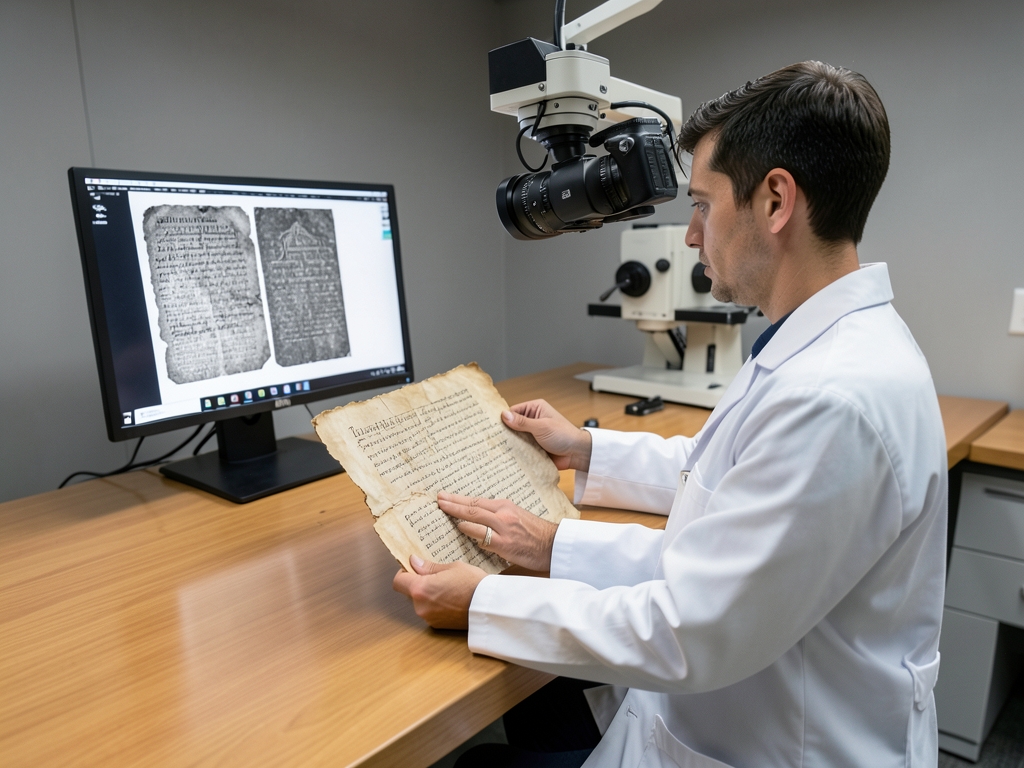
History is rarely written in a single, unbroken narrative. Instead, the story of human civilization survives through fragile fragments—water-damaged parchment, faded cuneiform tablets, crumbling glass plate negatives, and decaying paper records scattered across municipal basements, private collections, and institutional vaults worldwide. For centuries, these invaluable physical artifacts faced a quiet, inevitable erosion caused by acidic ink, fluctuating humidity, handling damage, and natural disasters. Today, a quiet revolution in digital archiving is fundamentally transforming how historians, researchers, and the general public interact with the past. By leveraging advanced spectral imaging, automated transcription software, and cloud-based repository frameworks, modern heritage institutions are rescuing endangered historical documents from obscurity and making them universally accessible.
The urgency of these digitization initiatives cannot be overstated. Recent archival discoveries—ranging from resurfaced colonial records and long-lost theatrical films to centuries-old administrative registers—demonstrate that vast portions of human history remain uncatalogued and physically vulnerable. When institutions implement modern digital preservation pipelines, they do more than simply take pictures of old paper. They establish robust data infrastructures that protect historical continuity, bridge geographic divides, and open new avenues for academic and genealogical research.
The Technical Evolution of Historical Document Preservation
Preserving historical documents has advanced significantly beyond basic flatbed scanning. Early attempts at microfilming in the mid-twentieth century provided a vital safeguard against total loss, but microfilm formats are notoriously difficult to search, prone to degradation, and limited in visual fidelity. Modern digital archiving employs sophisticated hardware and software suites designed to capture every microscopic detail of a historical medium without causing physical stress to delicate materials.
High-resolution overhead planetary scanners, specialized book cradles with non-destructive glass platters, and multi-spectral imaging systems allow archivists to read text that has been obscured by mold, water damage, or over-writing. Multi-spectral imaging, in particular, shines specific wavelengths of light—ranging from ultraviolet to infrared—onto a degraded page. Because different inks and parchment compounds reflect and absorb light unique ways, computers can reconstruct faded or erased text that is completely invisible to the naked eye. This technology has successfully revived palimpsests—medieval manuscripts where original writing was scraped off to reuse the parchment—revealing lost classical treatises and ancient administrative accounts.
Once captured, these high-resolution master files undergo rigorous post-processing. Color calibration ensures digital representations match the exact physical tones of the original artifact, while optical character recognition (OCR) and specialized handwritten text recognition (HTR) models convert visual script into searchable digital text. While printed documents yield easily to standard OCR, historical manuscripts written in archaic cursive scripts require specialized machine-learning models trained on thousands of historical writing styles. These neural networks allow researchers to search millions of handwritten pages in seconds, transforming an impenetrable wall of paper into an indexed database of human experience.
Overcoming Logistical and Financial Barriers in Archival Projects
Despite the immense value of digital preservation, institutions face substantial operational hurdles. Archival digitization projects require meticulous planning, specialized equipment, secure long-term storage infrastructure, and skilled personnel. Many regional archives, religious parishes, and smaller historical societies operate on tight budgets, leaving thousands of irreplaceable local records at risk of permanent decay.
To address these challenges, collaborative funding models and public-private partnerships have become essential. Major research universities, philanthropic foundations, and international heritage organizations frequently partner with local repositories to provide equipment grants, technical training, and cloud hosting services. These partnerships ensure that digitization standards remain high while distributing the financial and technical burden across broader networks.
Furthermore, standardizing metadata is critical to the success of global digital archives. If an archive in Europe digitizes seventeenth-century trade manifests using a proprietary database structure, researchers in the United States may never discover those records through standard search queries. Modern archival frameworks rely on open standards such as Dublin Core and the International Image Interoperability Framework (IIIF). These standards allow digital objects housed in disparate servers across different continents to be viewed, compared, and manipulated within a single web-based interface, democratizing access for scholars worldwide.
Democratizing Access: How Digital Portals Empower the Public
Historically, conducting deep historical research required traveling to physical archives, requesting restricted physical access, and wearing white cotton gloves while examining fragile folios under strict supervision. While physical conservation remains paramount for original artifacts, digital portals have shifted the paradigm from exclusive access to universal availability.
Genealogists, local historians, students, and curious citizens can now explore high-resolution scans of census records, immigration manifests, colonial tax rolls, and ecclesiastical registers from their home computers. This democratization of historical data fosters a deeper connection to local and global heritage. When a person discovers their ancestor's signature on a digitized 19th-century ship passenger list or uncovers the minutes of a centuries-old village council meeting, history ceases to be a distant textbook subject and becomes a personal narrative.
Moreover, digital archives facilitate crowdsourced transcription projects. Many major repositories host volunteer platforms where citizens help transcribe handwritten historical documents. Because automated AI models still struggle with unusual handwriting styles, damaged edges, or archaic spelling conventions, human volunteers play an indispensable role in verifying and correcting machine-generated transcriptions. This collaborative approach accelerates the indexing process while engaging the public directly in the preservation of shared cultural heritage.
Best Practices for Exploring Digital Historical Archives
Navigating large digital archive platforms effectively requires specific research strategies. Whether you are investigating family genealogy, local property history, or broader social movements, utilizing professional search techniques saves time and yields better results.
- Identify Reputable Repositories: Begin your research with established national archives, university digital libraries, and recognized international heritage portals rather than relying solely on generalized web searches.
- Master Advanced Search Operators: Utilize quotation marks for exact phrases, wildcard characters for spelling variations in archaic names, and temporal filters to narrow down specific centuries or decades.
- Understand Cataloguing Hierarchies: Familiarize yourself with how archives organize records by fonds, series, and sub-series rather than treating a digital collection like a simple search engine.
- Cross-Reference Multiple Sources: Verify digital document findings against independent historical records, contemporary newspapers, and peer-reviewed historical studies to ensure contextual accuracy.
By approaching digital archives methodically, researchers can avoid common pitfalls such as misinterpreting fragmented data or overlooking crucial contextual notes provided by archivists.
The Future of Digital Heritage and AI Integration
As artificial intelligence and machine learning continue to mature, the future of historical research holds even greater potential. Next-generation natural language processing models are being developed to translate archaic languages, decode damaged cuneiform fragments, and automatically link related documents across disparate global databases. These tools will enable historians to trace the spread of ideas, trade routes, and demographic shifts with unprecedented precision.
However, digital preservation also introduces new responsibilities. Ensuring the long-term digital preservation of file formats, preventing data corruption, and maintaining cybersecurity across cloud repositories require ongoing technical vigilance. Digital files are not indestructible; without active migration strategies, server redundancy, and format updates, digital records can be lost just as easily as physical paper.
What is multi-spectral imaging in historical archiving?
Multi-spectral imaging uses specific wavelengths of light, ranging from ultraviolet to infrared, to capture photographs of degraded or faded manuscripts. Because different inks and materials reflect light uniquely, computers can reconstruct text that has been erased, water-damaged, or obscured by age.
How do researchers handle handwritten historical documents that OCR cannot read?
Archivists use specialized handwritten text recognition (HTR) software trained on historical writing styles. Additionally, many institutions rely on crowdsourced citizen-science transcription projects where human volunteers help transcribe and verify difficult cursive scripts.
Are digital archives replacing physical museums and libraries?
No, physical conservation remains vital. Original artifacts require specialized physical care to survive. Digital archives serve as complementary tools that provide universal access while reducing physical wear and tear on fragile source materials.
What standards ensure different online archives can share data?
Institutions use open metadata standards such as Dublin Core and the International Image Interoperability Framework (IIIF). These standards allow digital collections hosted on separate servers worldwide to be viewed and cross-referenced within unified research interfaces.
Conclusion
The systematic digitization of historical archives represents a monumental triumph of modern technology applied in service of human memory. By rescuing fragile manuscripts, deploying advanced imaging techniques, and opening secure digital portals to the public, heritage institutions ensure that the struggles, triumphs, and daily realities of past generations are not lost to time. As digital methodologies continue to evolve, they empower anyone with an internet connection to become an explorer of history, bridging the gap between ancient parchment and the modern digital age.
