

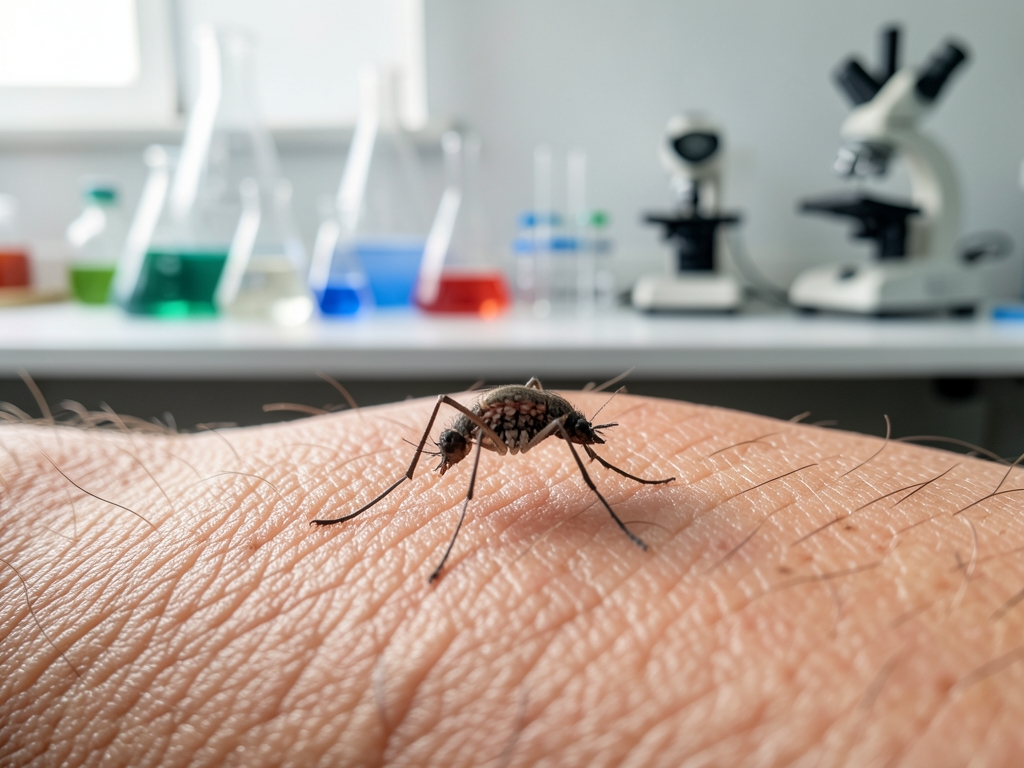
Few minor irritations match the persistent annoyance of being singled out by mosquitoes while companions nearby remain completely untouched. For generations, this phenomenon has been chalked up to old wives' tales, sweet blood, or mere coincidence. However, recent scientific investigations published by entomology and vector biology research groups have begun to untangle the complex biological mechanisms that govern why mosquitoes are aggressively attracted to specific individuals. Understanding these chemical attractants offers more than just backyard comfort; it provides critical insights into how vector-borne diseases spread and how humans might better protect themselves.
The Chemical Signature of Human Attraction
For decades, researchers knew that carbon dioxide exhalation, body heat, and moisture played primary roles in guiding mosquitoes toward their targets. Yet, these universal human traits failed to explain why one person in a crowded room becomes a magnet for bites while another sitting right beside them receives none. Recent studies point directly to complex chemical profiles emitted by the skin, specifically volatile organic compounds generated by normal skin flora and sebum breakdown.
Chief among these compounds are carboxylic acids. Specialized studies examining human skin emanations have demonstrated that individuals who are highly attractive to mosquitoes produce elevated levels of these specific organic acids compared to non-attractive control subjects. These fatty acids are odorless to humans, but to the exceptionally sensitive olfactory receptors of a mosquito, they act as an unmistakable beacon of a suitable blood meal.
Skin microbiota—the diverse community of bacteria living on human skin—plays a crucial role in this process. As these harmless bacteria metabolize secretions from sweat and sebaceous glands, they create the distinct scent profile that varies significantly from person to person. Because an individual's skin microbiome is remarkably stable over time, a person who is attractive to mosquitoes during one season will likely remain so unless fundamental shifts occur in their skin chemistry or diet.
Genetics and Olfactory Receptors in Mosquitoes
While human skin chemistry provides the chemical signature, the mosquito's sensory apparatus determines how those signals are interpreted. Recent breakthroughs in genetic sequencing and neurobiology have revealed how mosquito olfactory systems process multiple sensory inputs simultaneously. Unlike many other insects that rely heavily on a single cue, mosquitoes use a redundant network of odorant receptors.
If one receptor pathway is blocked or saturated, secondary and tertiary pathways compensate, ensuring the insect can still locate its target. This evolutionary redundancy explains why traditional deterrents that target only carbon dioxide detection have historically shown limited effectiveness in field conditions. The mosquito brain integrates heat, humidity, visual contrast, and complex chemical signatures into a unified navigation map.
Furthermore, laboratory experiments comparing different mosquito species and strains indicate that genetic variations within vector populations influence their host preferences. Some strains exhibit a strong anthropophilic preference—meaning they actively seek out humans over other animals—driven by subtle differences in their antennal protein structures. These genetic adaptations highlight an evolutionary arms race between blood-feeding insects and their preferred hosts.
Diet, Metabolism, and Environmental Influences
A common question surrounding mosquito attraction is whether dietary habits can alter an individual's appeal to insects. While popular myths suggest consuming garlic, bananas, or vinegar can dramatically deter or attract mosquitoes, clinical evidence supporting these specific dietary fixes remains largely anecdotal or weak. However, broader metabolic processes do have a measurable impact.
Metabolic rate dictates the volume of carbon dioxide exhaled and the amount of lactic acid produced during perspiration. Individuals with higher metabolic rates, pregnant women, and people engaging in rigorous physical exercise naturally emit higher levels of these primary attractants. In these instances, the increased attraction is less about unique skin chemistry and more about the immediate physiological output of active cellular respiration.
Environmental factors also modulate these interactions. Ambient temperature, humidity levels, and wind velocity alter how volatile organic compounds disperse through the air. On humid, still evenings, chemical plumes linger longer near the ground, making it easier for mosquitoes to track concentration gradients back to their source.
Implications for Disease Prevention and Vector Control
Unlocking the biochemical secrets of mosquito attraction has profound implications for global public health. Mosquitoes remain the world's most lethal animal vector, transmitting devastating pathogens such as malaria, dengue fever, Zika virus, and yellow fever. By understanding precisely what draws insects to human skin, researchers can engineer smarter, more effective surveillance and trapping systems.
Traditional mosquito traps often rely on basic carbon dioxide generators that are bulky, expensive, and require constant replenishment. Modern trap designs increasingly incorporate synthetic blends of carboxylic acids and lactic acid that mimic highly attractive human skin profiles. These advanced lures significantly outperform older models, capturing vastly higher numbers of disease-carrying vectors in residential and agricultural settings.
Info! Research into human skin chemistry and mosquito olfaction is actively shaping the next generation of non-toxic, targeted repellents that disrupt insect receptor neurons rather than merely masking human scents.
In addition to traps, researchers are exploring targeted topical treatments and probiotic washes designed to temporarily alter the skin microbiome. By encouraging the proliferation of beneficial bacteria that do not produce attractive carboxylic acids, scientists hope to develop preventive personal care products that reduce an individual's natural mosquito appeal without harsh chemical insecticides.
Evaluating Current Repellent Technologies
As scientific understanding of mosquito host selection advances, consumer protection methods continue to evolve. Standard repellents such as DEET, picaridin, and oil of lemon eucalyptus remain the gold standard for personal protection. These compounds work primarily by interacting with the insect's olfactory receptors, effectively scrambling their ability to detect skin chemicals like carboxylic acids.
The table below compares the most common protection methods and their underlying mechanisms based on current scientific data:
| Protection Method | Primary Active Ingredient | Mechanism of Action | Effectiveness Duration |
|---|---|---|---|
| Synthetic Repellents | DEET (N,N-Diethyl-meta-toluamide) | Blocks olfactory receptors, confusing mosquito navigation | 4 to 8 hours depending on concentration |
| Plant-Based Repellents | Oil of Lemon Eucalyptus (OLE) | Disrupts insect scent detection via volatile plant oils | 2 to 4 hours |
| Advanced Chemical Traps | Synthetic Carboxylic Acid Blends | Mimics human skin scent to lure vectors away from people | Continuous (device dependent) |
| Physical Barriers | Permethrin-Treated Clothing | Knocks down or repels insects upon contact with fabric | Several weeks through multiple washes |
Practical Guidance for Outdoor Safety
While complete avoidance of mosquitoes is difficult, understanding the science behind their behavior allows for more effective personal protection strategies. Implementing evidence-based precautions significantly lowers the risk of bites and subsequent vector-borne illness, especially during peak mosquito activity windows at dawn and dusk.
- Apply Environmental Protection Agency (EPA)-registered repellents containing DEET, picaridin, or OLE to exposed skin and clothing according to label instructions.
- Wear light-colored, long-sleeved shirts and full-length trousers when spending time outdoors in high-risk areas, as physical barriers prevent direct skin contact.
- Eliminate standing water sources around residential properties weekly, including flower pots, gutters, and discarded containers, to disrupt local mosquito breeding cycles.
- Utilize well-maintained window screens and bed nets treated with approved insecticides when sleeping in open-air or tropical environments.
The ongoing research into why mosquitoes choose certain individuals underscores the incredible complexity of ecological interactions. What begins as an annoying backyard encounter connects directly to sophisticated biochemistry, genetics, and global health initiatives.
Why do mosquitoes bite some people more than others?
Mosquitoes are primarily attracted to specific chemical compounds emitted by human skin, such as carboxylic acids, as well as carbon dioxide and body heat. Variations in skin microbiota and genetics cause different individuals to emit these attractive scents in varying quantities.
Can eating certain foods change whether mosquitoes bite you?
While popular myths suggest foods like garlic or bananas alter mosquito attraction, robust clinical evidence supporting specific dietary deterrents is lacking. Metabolic rates and overall skin chemistry play a much larger role than diet alone.
How do standard insect repellents work?
Most effective repellents, such as DEET or picaridin, work by interacting with the mosquito's olfactory receptors. They temporarily block or confuse the insect's ability to detect human skin odors and carbon dioxide, preventing them from landing.
What role do skin bacteria play in attracting mosquitoes?
Normal skin bacteria break down sweat and sebum secretions into volatile organic compounds. Because different people host unique communities of skin microbes, the resulting scent profile varies, making some individuals significantly more attractive to mosquitoes.
As research continues to decode these intricate sensory pathways, future innovations will likely yield even safer, more precise methods for personal protection and vector management, ultimately transforming how we handle one of nature's most persistent challenges.
